
It takes a brand like Dyson to look at an object you have used since childhood, decide it is fundamentally broken, and spend six years and 661 engineers proving the point. This week Dyson re-engineered a toothbrush – and I got on a Eurostar to Paris to watch it happen.
On Tuesday morning, 1 September, at the Atelier des Lumières – the old iron foundry in the 11th arrondissement that now runs floor-to-ceiling immersive art shows – Sir James Dyson walked on stage and unveiled an entirely new category for the company. Oral care. Specifically, a toothbrush with a camera in it.
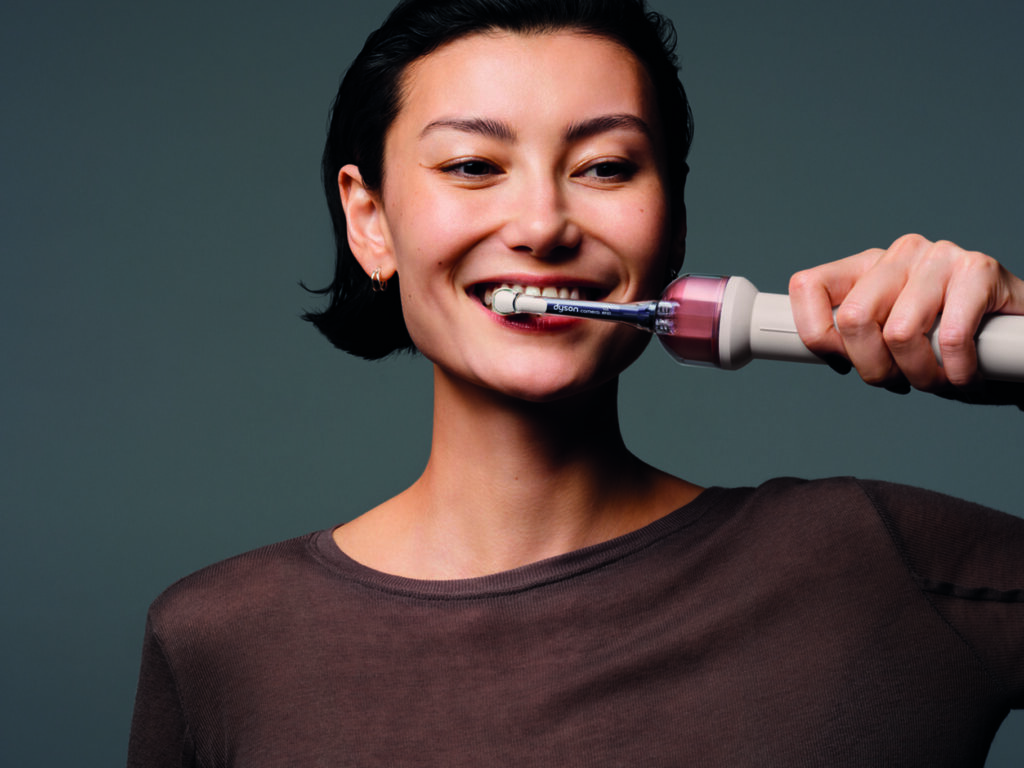
Dyson CameraJet
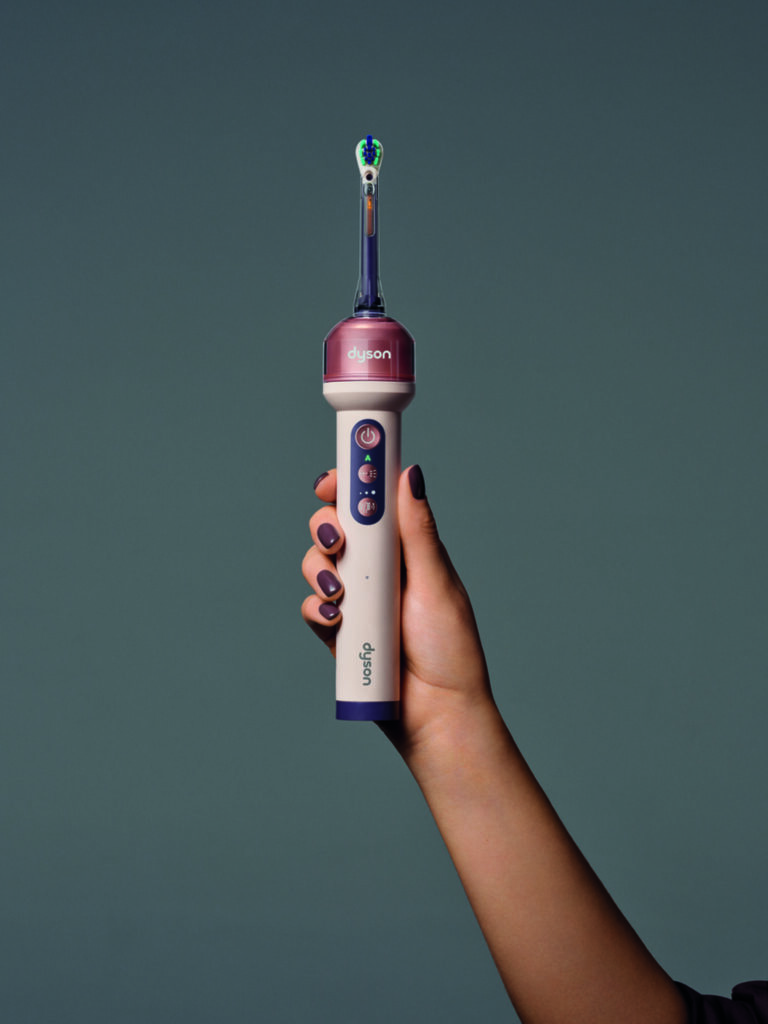
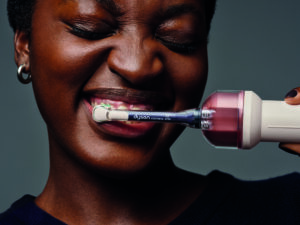
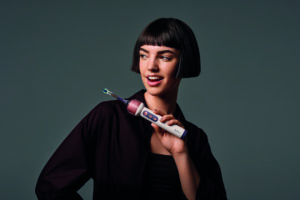
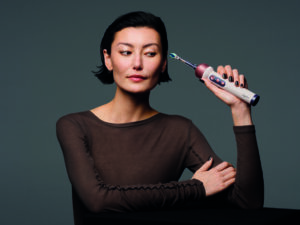
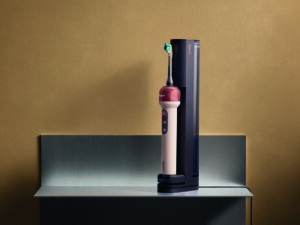
The Dyson CameraJet™ hunts for the gaps between your teeth and fires a jet of mouthrinse into them while you brush. Flossing, brushing and rinsing, collapsed into one two-minute job.
So What Is The Dyson CameraJet?
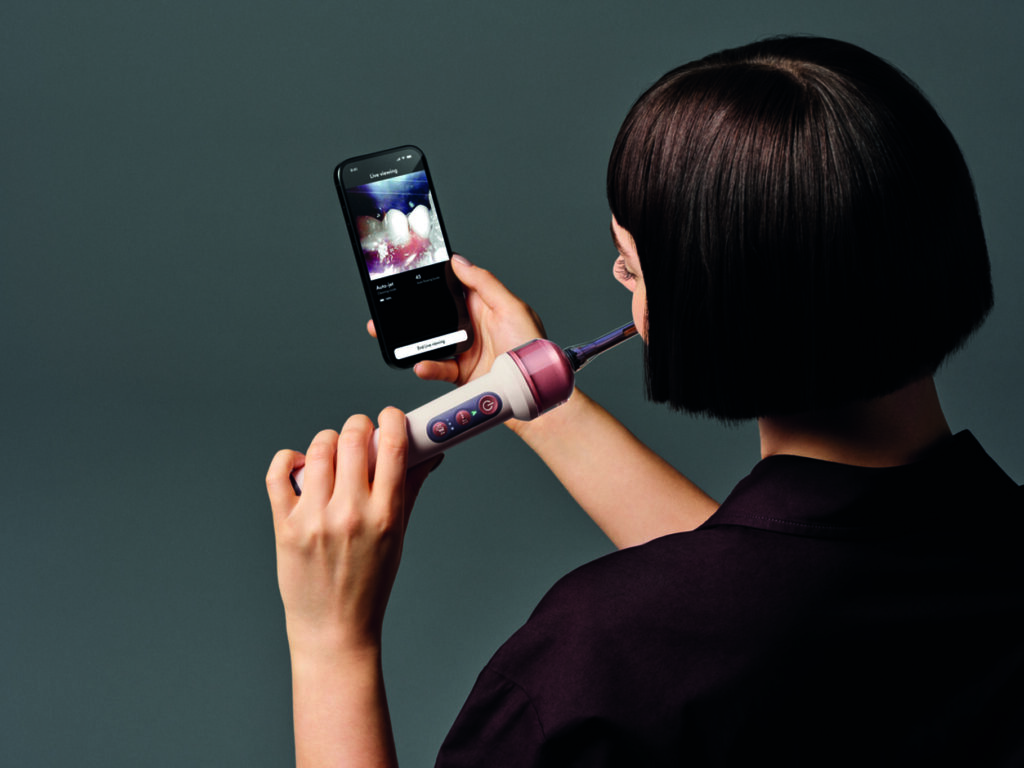
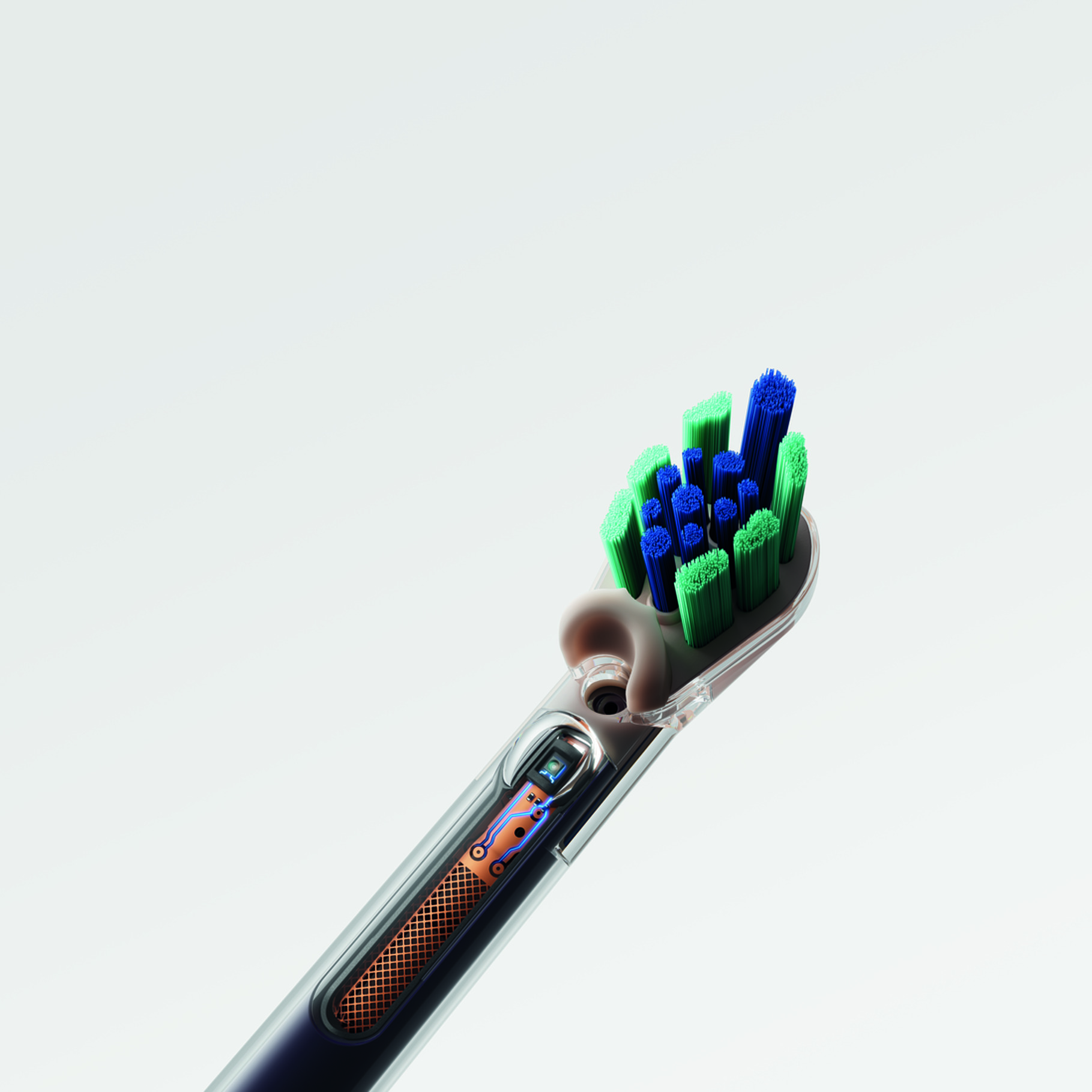
It is a sonic toothbrush with a 100,000-pixel macro lens camera in the head. That camera scans 28 live images a second, looking for interdental gaps – the spaces between your teeth where plaque quietly sets up home. When it spots one, it fires a burst of mouthrinse straight into it within 100 milliseconds. Dyson calls the technology Gap Optical Targeting, and says the machine learning behind it was trained on 470,000 dental images collected during development. The whole thing runs on 16 million lines of code.
Dyson CameraJet
To put that in perspective: your toothbrush now has more software than the Apollo 11 guidance computer, and its only job is to notice you have missed a bit.
The Case Dyson Is Making
The pitch rests on a fairly unflattering picture of how we all actually brush. According to Dyson’s own Oral Care Usage & Attitudes research, nine in ten people do not floss as regularly as they should, and the average person spends 45 seconds brushing – less than half the two minutes dentists ask for. Meanwhile the World Health Organization’s 2025 Global Oral Health Status Report estimates that nearly 3.7 billion people worldwide are affected by oral diseases, and researchers are increasingly interested in the links between gum health and conditions including heart disease and dementia.

Dyson CameraJet
So the logic goes: nobody is going to start flossing. Build the flossing into the brushing instead, “Flossing is an awkward and time-consuming chore. Few of us do it even though we know we should. Dyson engineers and scientists have spent well over a decade understanding oral care regimes and how nasties build up in the mouth. Our research has shown that people consistently miss the areas where plaque forms: the gaps between teeth,” explains James Dyson, Founder and Chief Engineer of Dyson.
“We wanted to solve three fundamental problems: how to see those gaps, remove plaque, how to improve cleaning performance while brushing. By combining a camera, machine learning, precision fluid dynamics, advanced brushing technologies, connectivity and WiFi, Dyson CameraJet introduces an entirely new way to keep your mouth healthy.”
Dyson CameraJet
The Jet Is Cone-Shaped
Most water flossers use what Dyson calls a “needle-type” jet – a narrow, piercing stream. Dyson’s fluid dynamicists argue that this punches a neat hole through plaque without actually shifting it, rather like stabbing a straw through cling film.
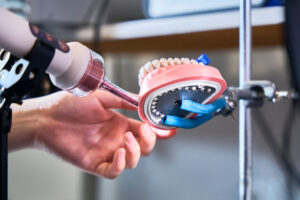
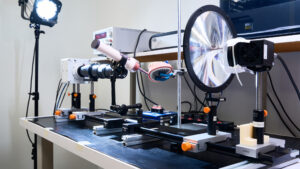
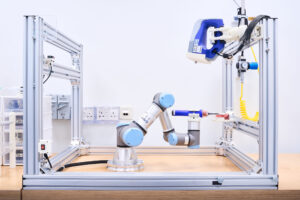
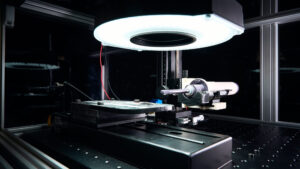
Their answer is a broad conical spray at lower pressure, designed to sweep plaque away rather than perforate it, and to be gentler on gums and enamel while it does. To test any of this without running a clinical trial every time they changed a nozzle, Dyson spent five years developing its own proxy plaque with the National University of Singapore’s Faculty of Dentistry – a synthetic stand-in sticky enough to behave like the real thing in a lab. The needle-versus-cone comparison comes from those lab tests, using Dyson’s own proxy plaque, so treat it as engineering evidence rather than clinical proof.
-
- Dyson CameraJet tech imagery, plain background, JPEG, PSD
-
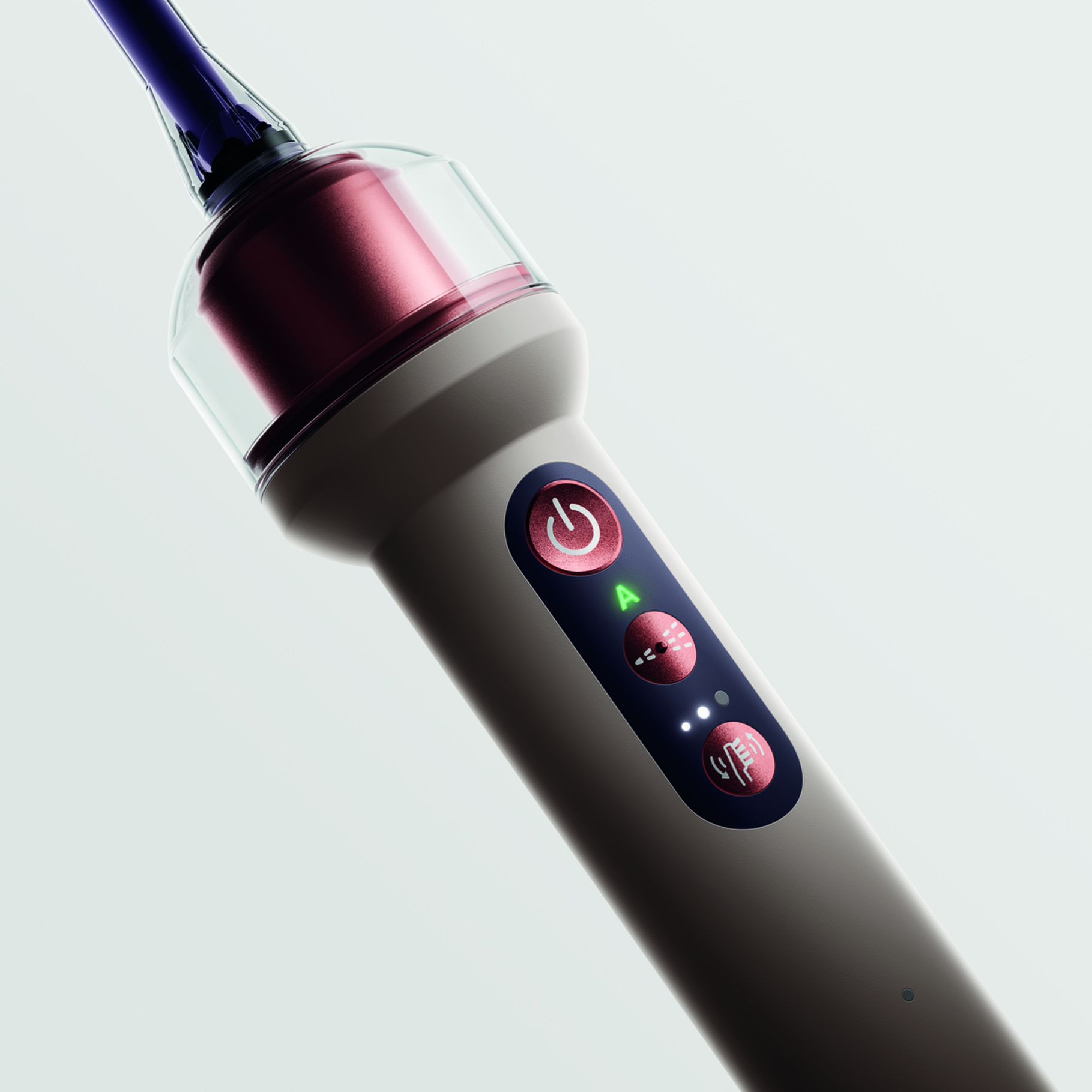
- Dyson CameraJet tech imagery, plain background, JPEG, PSD
There is also an anti-gravity tank, which is a clever bit of plumbing. Conventional systems work like a straw in a cup and can suck in air when you tilt them – exactly what happens when you angle the brush to reach behind your front teeth. Dyson’s 12.5ml tank uses a diaphragm pump and pressure chamber to keep delivering mouthrinse upright, angled or horizontal, so the jet doesn’t fire blanks at the worst possible moment.
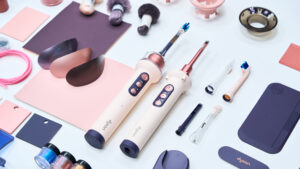
The Brush Head Is Not Flat, Because Your Teeth Aren’t Either
The head uses two bristle types: slightly firmer inner bristles to lift surface stains, softer outer ones to work along the gumline. Dyson also says its engineers watched slow-motion footage of rival sonic brushes and found bristles can stall – the motor is running, but individual bristles jam against the tooth in exactly the hard-to-reach spots you need them most. Its answer is variable sonic oscillation, which changes the angle of oscillation mid-brush to keep everything moving.
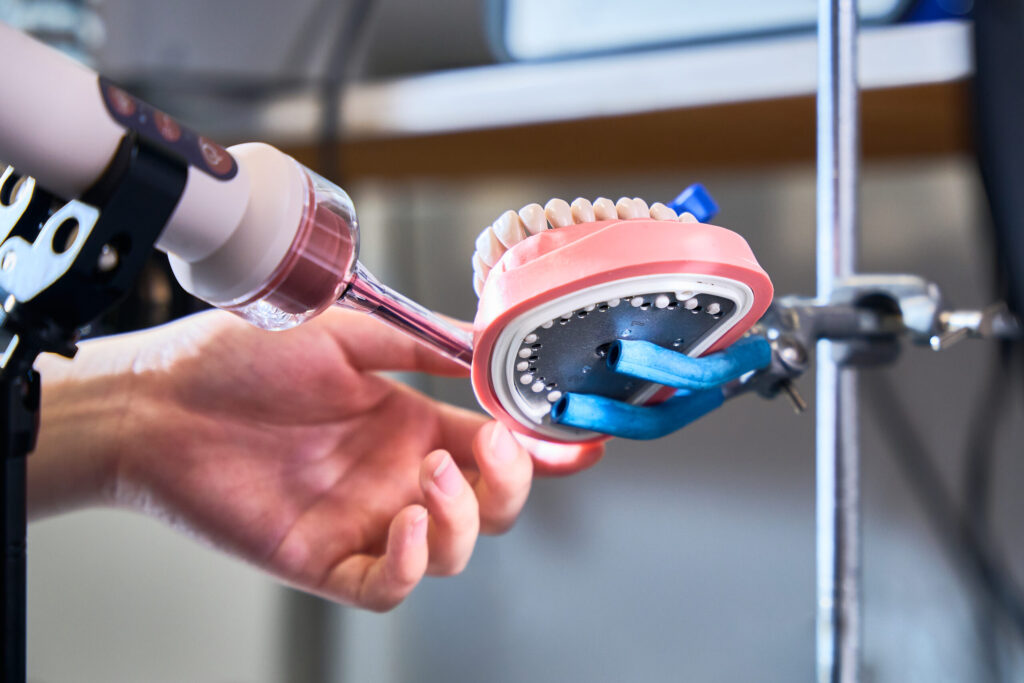
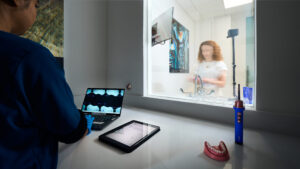
Dyson cites external laboratory testing showing this removes up to 69% more plaque than market-leading premium electric toothbrushes in hard-to-reach areas- in brush-only variable mode, in a lab, which is worth holding in mind. Each head also carries an RFID tag that counts your cleans and nags you when it is time for a new one, and there is a sensitive version for anyone whose gums flinch at the thought of all this.
There Is Toothpaste. Obviously There Is Toothpaste.
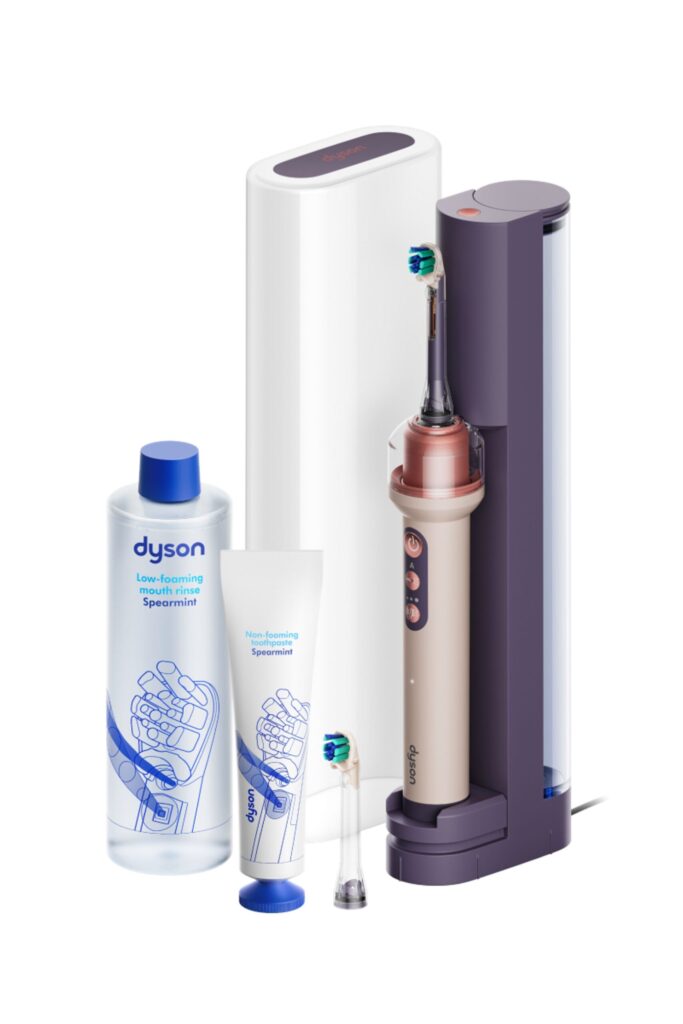
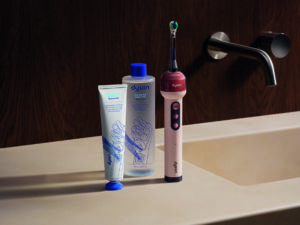
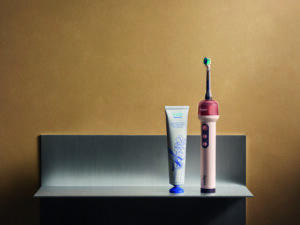
You cannot put a camera in a mouth full of foam, so Dyson has made its own non-foaming toothpaste, formulated without SLS so the lens can actually see, plus a low-foaming mouthrinse designed for the jet.
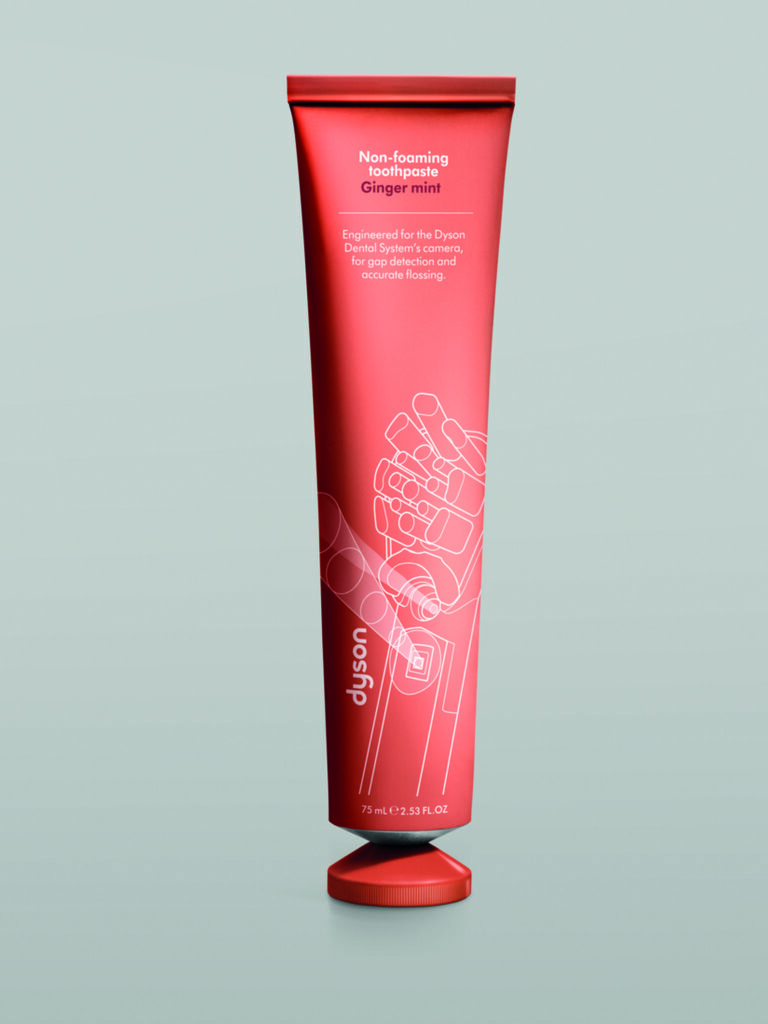
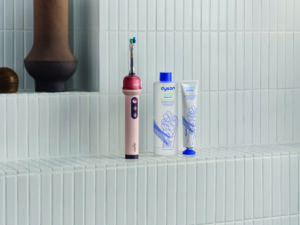
Dyson Dental System, formulations, JPEG, PSD
Both contain sodium fluoride, along with phosphates and xylitol. They come in Ginger Mint and Spearmint, with a Peppermint Sensitive toothpaste for delicate mouths. It is a very Dyson move: build the machine, then re-engineer the consumables.
But Is It Filming You?
The obvious question about a camera in your bathroom. Dyson’s answer: the camera is only active during live viewing or auto-jetting, no images are recorded or stored on the product or in the cloud, and images stay private to the user. The device connects over 2.4GHz Wi-Fi and Bluetooth, and the MyDyson™ app lets you watch the live feed – the camera doubles as a high-quality endoscope, so you can see what your dentist sees – plus coverage mapping, technique feedback and the choice between auto-detect and manual jetting.
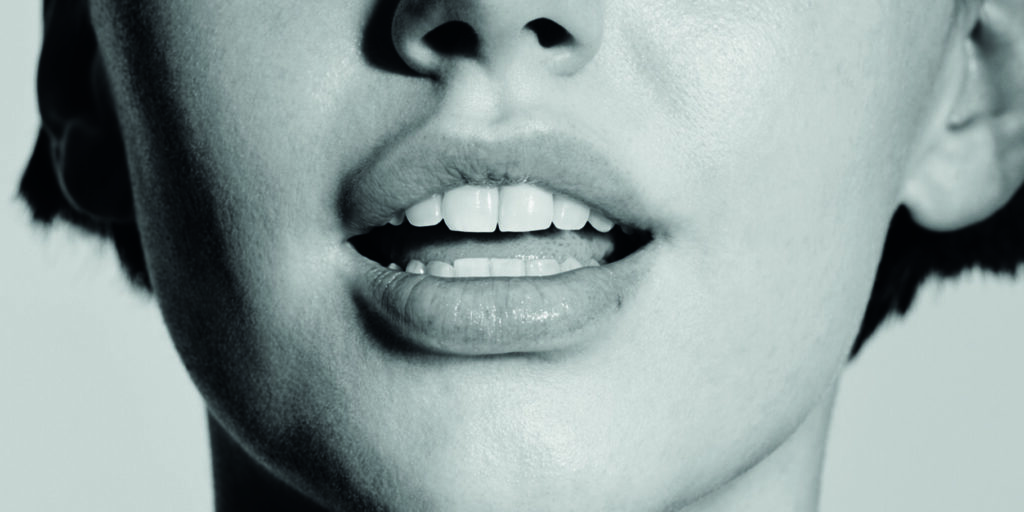
Live-streaming your own molars is not something anyone asked for. It is, we suspect, going to be extremely popular on TikTok.
Dyson CameraJet Price And Release Date
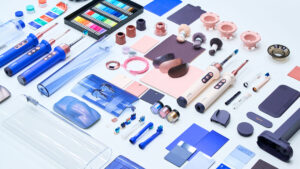
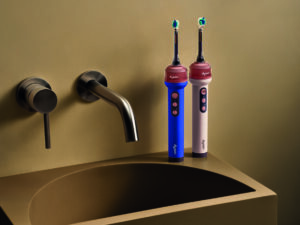
The Dyson Dental System launches on 1 September 2026 in Dyson Demo Stores and selected retailers at £419.99. That gets you the CameraJet™ toothbrush, a charging dock that refills the tank in three seconds, a travel case, and the Dyson toothpaste and mouthrinse. It comes in two colourways: Ceramic Ultra Blue and Ceramic Pink.
For context, a top-of-the-range Oral-B iO Series 10 currently sells from around £280, so Dyson is doing what Dyson always does: arriving at the top of the shelf and expecting you to meet it there. Dyson has also filed 38 patents on this and worked with 30 dental professionals globally during development, which tells you how seriously it intends to defend that position.
Shop Now:
Why We Care
Beauty tech has spent the last two years quietly annexing the bathroom – LED masks, smart mirrors, AI shade-matching – and the oral care aisle was always going to be next. What makes the CameraJet™ interesting is not the price tag but the shift it represents: from devices that clean, to devices that look, decide and act on what they find. Same logic as your Oura ring telling you to go to bed earlier, pointed at your gums.
Every performance claim here is Dyson’s own, lab-tested and caveated, and we will be very interested in what independent reviewers and dentists make of it once units are in the wild. But the underlying insight – that nobody is ever going to floss, so the tech has to do it for us – is unarguably correct. Speaking personally: guilty.






Some of the products and services featured in this article may be from our affiliate partners, which means we may earn a small commission if you make a purchase through these links — at no extra cost to you. Our editorial team only spotlights what we genuinely love and think you will, too.