
Meta’s newest pair of smart glasses has lost its most controversial feature. Meet Ray-Ban Meta Audio: smart glasses with no camera at all.
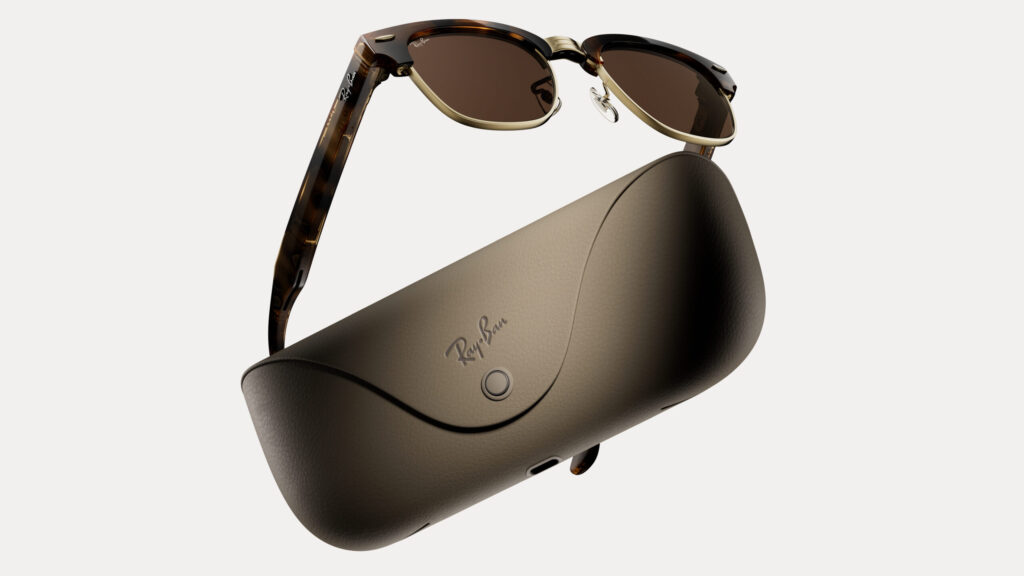
Unveiled at Meta Connect last week, the new frames keep the bits people actually love about the originals – music, podcasts, phone calls and Meta AI, with the sound funnelled straight into your ears – and drop the lens that has turned smart glasses into one of tech’s most divisive accessories. They cost £319 in the UK ($349 in the US), come in two styles, Clubmaster and Burbank, and start shipping on 13 October.
Cue the obvious question: is this Meta hitting the panic button? According to the people who built them, no.
-

- Clubmaster
-

- Burbank
Why Everyone’s Been Side-Eyeing Smart Glasses
Some context. Ever since Meta and Ray-Ban launched their AI-powered glasses in 2023, the camera has been the problem. There have been multiple reports of the devices being used to film women and girls without their consent, with the footage then shared online, as reported by the BBC.
The nicknames haven’t been kind – “creepy glasses” is one of the politer ones – and signing Kylie Jenner as the face of the brand this summer was exciting, but it didn’t quell the backlash. In the UK, JD Wetherspoon pubs, a handful of major theatres, Comic-Con, some schools and Faslane – home of Britain’s nuclear submarines – have all chosen to ban them.
When your accessory is banned from both the pub and a naval base, you have a PR situation. So a camera-free pair, landing now, looked an awful lot like a response.
Meta’s Audio Only Frames Have Been In The Works For Years:
Speaking to The Modems at Meta Connect, Eva Chen – Meta’s Vice President of Fashion Partnerships – revealed that these glasses were in the works long before the public scrutiny ever surfaced.
-

- Eva Chen, VP of Fashion at Meta & Natalie Salmon, Founder of The Modems
-

- The new audio-only Clubmaster Meta glasses
“The audio glasses have been in flight for a long time. I tried them on in January and at that point they were done. It literally was the fully baked glasses. So I think there might be a narrative that this is in response, but it takes more than three months to make smart glasses.”
In other words: fully finished audio-only frames, on her face, months before the headlines about camera-free glasses started. Meta’s official line tallies with that – the company says the product has been in development for two years.
According to Peter Bristol, Meta’s VP of Industrial Design, the decision was practical, “It was just time to expand the portfolio.” Whether you are a Meta Glasses sceptic or not, the result is the same: for the first time, you can get the Ray-Ban Meta experience without anyone across the table wondering whether they’re being filmed.
The Real Pitch: Less Phone, More Life
If the camera was the party trick, audio is the long game – and it’s all about AI agents. Rather than tapping through five apps to get something done, you just… say it.
“The ability to just chat with your agent, have it continue to do things on your behalf behind the scenes so that you’re present and stay in the real world, without constantly checking your phone, is quite powerful,” Bristol explained. “Rather than constantly being in your phone – whether it’s call an Uber, put something on your list of things to do, book a flight – these things can just happen on your behalf.”

His verdict? “It’s potentially the most natural interface, versus a screen.”
Battiston agrees. “What is the next interface to technology? Maybe it’s not screens anymore, or not that much of screens anymore, but something that is more natural,” he says. “It’s right on your face, it’s close to your mouth, it’s close to your ears. So it’s the perfect environment… for exchanging information in the most natural way possible.”
Why we care: Most of us know our screen time is a problem. A pair of glasses that lets you book the Uber, add oat milk to the list and reply to your mum without ever unlocking your phone is a seriously appealing idea – especially when it doesn’t come with the camera. (As a Meta Glasses wearer I can safely say the audio features are the ones I use the most anyways.)
“It’s Going To Be Just Another Pair Of Glasses”
The design brief, according to Battiston, is refreshingly simple. “This is not going to be a computer in the shape of a frame… It’s going to be just another pair of glasses.”
It’s harder than it sounds. “You just 10x the complexity of the equation,” says Bristol. “Now not only do we need to make a compelling product, we also need to make something that works as a personal extension of people’s fashion, people’s aesthetic.” The goal, he says, is “making glasses that people feel comfortable wearing and actually proud to wear, as an extension of their personal brand, their personal expression.”
So, Will The Sceptics Be Won Over?
Bristol’s answer to those who don’t want another gadget wrapped around our heads or glued to our hands – is disarmingly practical: try them. “I think you’ve got to use it. I think it actually does the opposite… it’s actually making things feel less techy,” he says. “The proof will be in it being valuable.”

Chen, meanwhile, thinks the answer is explanation rather than hard sell, and accepting that no two people will wear them the same way. “There will be people who just use it to listen to music or podcasts… and every version of that is okay. It can’t be the same thing to everyone. It shouldn’t be. It’s intensely personal. The way I use them is very different from the way my husband uses his glasses.”
Why Design Drove The Decision
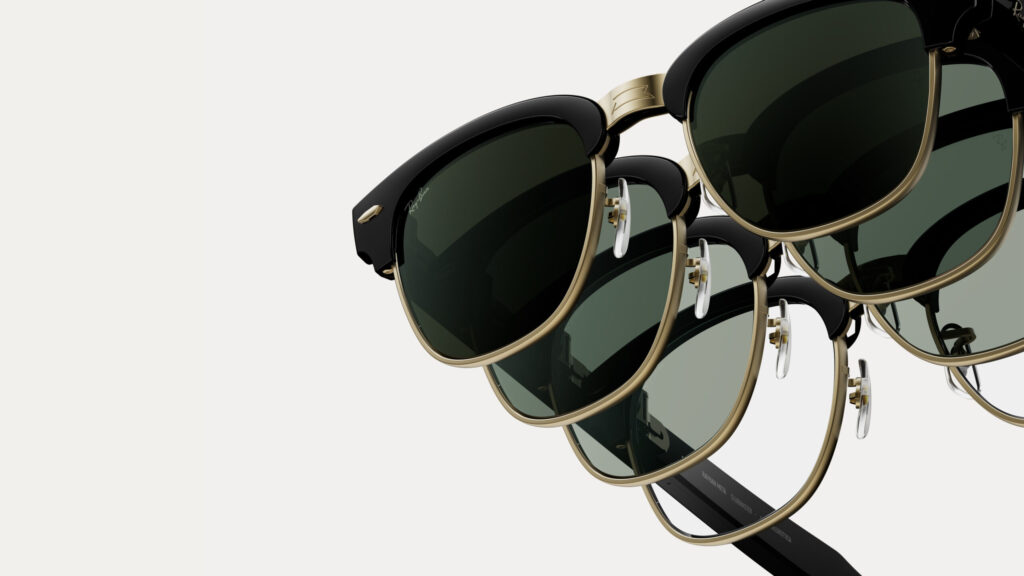
The Clubmaster is the headline act. Peter Bristol, explained, “The Clubmaster has a lot of powerful language already,” he added. “The metal lower rim, the more delicate proportions around the nose, they’re really well suited and have a high character without the camera.”
It’s a frame with enough personality that it doesn’t need a tiny lens in the corner to be interesting. And losing the camera brings practical perks too. The audio-only version is cheaper than its camera-enabled siblings, has a lighter frame (43g) and a battery that lasts up to 12 hours.
For EssilorLuxottica, this is about building out a proper range. “We are expanding the portfolio not just vertically, adding new sizes, but horizontally, adding new categories like audio glasses,” Matteo Battiston, Chief Design Officer, EssilorLuxxottica told us.
What About The Display Glasses?
Meta also makes glasses with a built-in display – so are audio frames just the entry-level option on the way to screens on your face? Not according to Bristol. “I don’t think [display glasses are] going to replace the simple audio glasses. Like any product, there are natural feature tierings that will make sense for certain folks.”
A Quick Word For The Cameras
It’s worth saying that camera-enabled smart glasses aren’t all bad news. The blind and partially sighted community has welcomed them – one user described them to the BBC as a “game-changer”, because the glasses can describe your surroundings out loud and read visible text, like a restaurant menu. Earlier this year, Meta donated 15,000 pairs to a charity for the blind in Ireland.
So the camera isn’t going anywhere. But for anyone who wanted the music, the calls and the AI assistant without the side-eye, there’s finally a pair for you.
Ray-Ban Meta Audio costs £319 and ships from 13 October at meta.com and Ray-Ban.
The Modems’s founder Natalie Salmon attended Meta Connect 2026 as a guest of Meta.
Some of the products and services featured in this article may be from our affiliate partners, which means we may earn a small commission if you make a purchase through these links — at no extra cost to you. Our editorial team only spotlights what we genuinely love and think you will, too.