
The fashion industry has a dirty little secret – it’s thirsty. Very thirsty.
The clothes hanging in UK wardrobes alone have guzzled a staggering 35 trillion litres of water to come to life. To put that into perspective, that’s enough to drain the River Thames 15 times over. But in an era where sustainability isn’t just a buzzword but a necessity, Epson might just have the tech fix we need.
A Drought-Proof Fashion Future? Meet Epson’s Monna Lisa Printer
At the heart of Epson’s revolutionary approach is the Monna Lisa printer, a digital textile printer that utilises Dry Fibre Technology (DFT) to drastically reduce water consumption. Unlike traditional dyeing methods that require vast amounts of water to fix colours onto fabrics, the Monna Lisa printer employs pigment inks that adhere to textiles with minimal liquid use. The DFT process also enables the recycling of textile fibres, transforming used garments into printable non-woven fabric without the need for water-heavy treatments. This groundbreaking technology not only curbs water waste but also helps brands pivot towards circular fashion models, reducing dependency on virgin materials while ensuring high-quality prints and vibrant designs.
Printing giant Epson is no stranger to innovation. From home printers to large-scale digital textile printing, they’ve been at the forefront of tech solutions for years. Now, they’re setting their sights on fashion’s water footprint crisis with their Monna Lisa printer and Dry Fibre Technology (DFT). The result? A way to slash water use by up to 97% in the colour printing stage of clothing production. Yes, you read that right – 97%.
And it couldn’t come at a better time. By 2050, the UK is projected to need 5 billion more litres of water per day to sustain its growing population, economy, and food supply. That’s over two million wheelie bins full of water every single day on top of what we already use. Fashion, as one of the biggest water-guzzlers, desperately needs a rethink.
Water, Water Everywhere – But Not a Drop to Dye
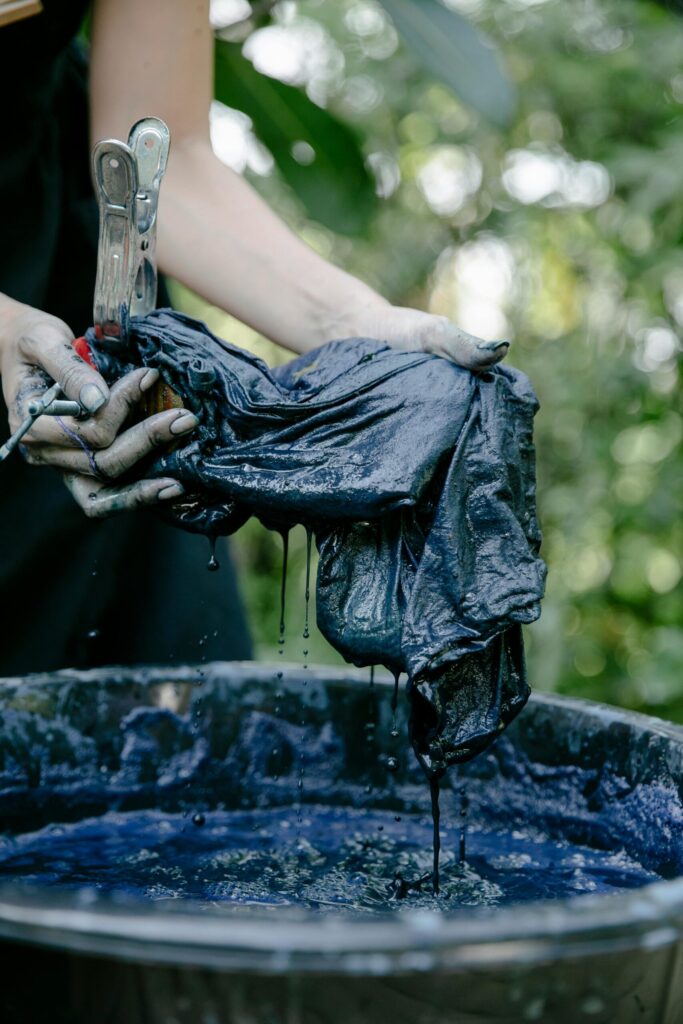
Let’s break it down: Dyeing clothes is one of the biggest culprits when it comes to fashion’s water consumption. A single jacket requires over 3,300 litres of water just for dyeing. A pair of jeans? Up to 18,000 litres. That means your wardrobe isn’t just a collection of statement pieces – it’s a hydrological horror story.
And yet, two-thirds of Brits (62%) admit they’ve never really thought about how their clothes get their colour. The term ‘water footprint’ is virtually unknown in the UK, despite the fact that British consumers own clothes that, collectively, have required trillions of litres of water to produce.
The ‘Water Silks’ Collection: Fashion with a Purpose
To showcase the potential of this game-changing tech, Epson has teamed up with sustainability-focused design studio Patternity to create ‘Water Silks’, a collection of EcoVero silk scarves. Inspired by Europe’s iconic waterways – including London’s Thames, Paris’ Seine, Milan’s Navigli, and Berlin’s Spree – these scarves don’t just look good; they tell a story about the intimate relationship between fashion and the environment.
Anna Murray, Co-Founder & Creative Director at Patternity, explains: “Almost three-quarters of the Earth’s surface is covered by liquid, a fact that has fascinated us since our inception and which made this project all the more exciting to work on.”
Each design reflects the fluidity and symbolism of the rivers they’re inspired by:
- Thames Dark Waters: A nod to the river’s ancient Celtic name, “Tamesis,” meaning dark waters.
- Seine Source: Paying homage to the spiraling shape of Paris’ arrondissements.
- Navigli Ripples: Celebrating Milan’s historic canals and marble distribution routes.
- Spree Stripes: A rhythmic reflection of Berlin’s fashion, music, and design scenes.

The ‘Milan’ Water Silk scarf
Tech to the Rescue: How Digital Printing Could Transform Fashion
Epson’s solution isn’t just about cutting water use; digital textile printing offers multiple sustainability benefits. Traditional printing methods often require excessive stock to be produced in advance, leading to unnecessary waste. With digital printing, on-demand production is possible, significantly reducing unsold inventory. Pollution is another major issue, as the textile industry is responsible for 20% of industrial wastewater worldwide. Digital printing reduces dye contamination, making the process far cleaner. Additionally, with fewer steps and less reliance on water-heavy processes, digital printing slashes energy consumption compared to traditional dyeing methods.
Fashion industry heavyweights are already taking notice. Richard Quinn, the British designer known for his maximalist floral prints, is one of many luxury names embracing Epson’s more sustainable digital textile production methods. Japanese designer Yuima Nakazato has also integrated the technology into his collections, proving that sustainability doesn’t mean sacrificing creativity.
Maria Eagling, Chief Marketing Officer at Epson, sums it up perfectly:,“Fashion is one of the world’s most influential and inspiring industries, but as our research indicates, it also has a significant impact on our planet’s resources.”
Can Epson Lead the Fashion Revolution?
With luxury designers already adopting digital textile printing and brands like Patternity using Epson’s tech to minimise waste while maximising impact, there’s hope that the industry will finally turn the tide on water consumption. The message is clear: fashion doesn’t have to cost the Earth. It just needs the right technology – and a willingness to change.
Want to get your hands on one of Epson x Patternity’s Water Silks scarves? A limited run is available for £115 each on the Patternity online shop, with proceeds supporting the Choose Earth charity. Sustainability never looked so chic.
Some of the products and services featured in this article may be from our affiliate partners, which means we may earn a small commission if you make a purchase through these links — at no extra cost to you. Our editorial team only spotlights what we genuinely love and think you will, too.
4 responses to “Epson’s Monna Lisa Printer Could Help Solve Fashion’s ‘Water Footprint’ Problem”
-
… [Trackback]
[…] Read More here to that Topic: themodems.com/fashion/epsons-monna-lisa-printer-fashion/ […]
-
… [Trackback]
[…] Find More on that Topic: themodems.com/fashion/epsons-monna-lisa-printer-fashion/ […]
-
… [Trackback]
[…] Read More to that Topic: themodems.com/fashion/epsons-monna-lisa-printer-fashion/ […]
-
… [Trackback]
[…] Information on that Topic: themodems.com/fashion/epsons-monna-lisa-printer-fashion/ […]
Leave a Comment