
Why we care: Your face is now a password, a payment method and a data point – scanned at airports, unlocked at checkouts, mapped by systems you never opted into. So perhaps it was inevitable that fashion would respond. Enter DYSKINESIAA: a Paris atelier casting sterling silver “grafts” for the face, marketed with a question that stops the scroll – “what if jewelry could confuse AI?”
Every era gets the jewellery it deserves. The Georgians had mourning rings; the Y2K girls had butterfly clips; and we – the generation whose faces unlock our phones, board our flights and train other people’s algorithms – get a sterling silver prosthetic that sits over the eye socket and dares the machines to try.
The piece in question comes from DYSKINESIAA, the Paris design project announcing its new collection on Instagram with the line: “what if jewelry could confuse AI? from the new DYSKINESIAA collection, custom silver pieces and body objects, handmade in Paris.” On its Reel, the framing is blunter still: “Jewelery against facial recognition”.
A Graft, Not An Accessory:
The Custom Face Piece (£1,119) is not jewellery in any sense your grandmother would recognise. The brand describes it as “A graft worn on the face” – “A piece placed over the eye, sitting against the socket like tissue that was always meant to grow there. Skin becomes host.” If that sentence made you shiver, that’s rather the point: this is wearable sculpture from the uncanny end of fashion, silver moulded into eyelid, brow and nose like a second anatomy.
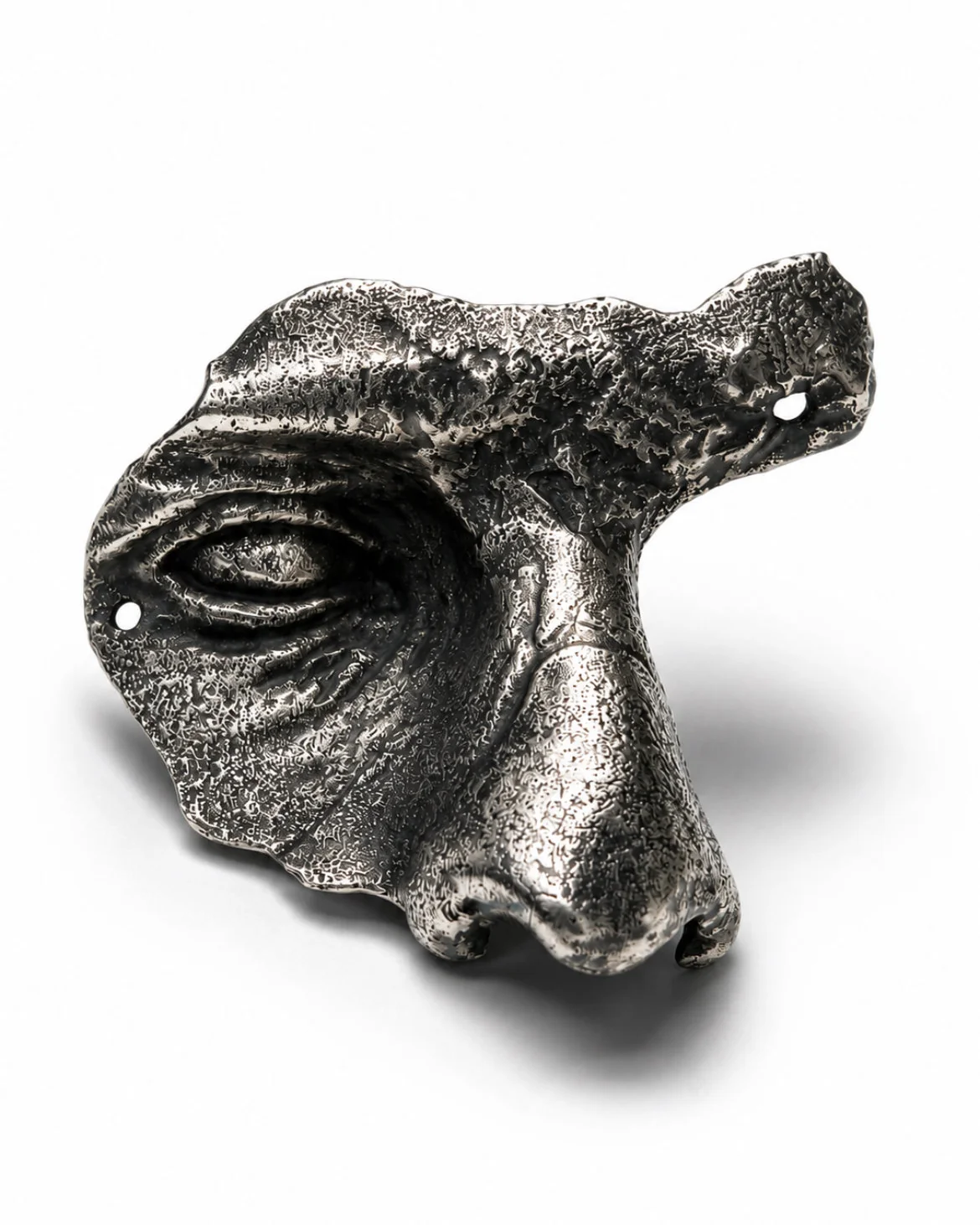
And it is, quite literally, made for your face alone. After ordering, the atelier arranges a remote fitting – “a guided scan of your face, or a simple impression kit we send to your home” – from which the piece is modelled on your features, cast in solid 925 sterling silver and hand-finished in Paris. “We make one at a time, for one face at a time,” the brand says. Production takes two to three weeks; each piece is individually signed; Klarna will split the damage into three instalments of £373.
The 21-Year-Old Behind It:
DYSKINESIAA is the personal project of Ilyasse Ebadi, born in Paris in 2004, who founded the studio in 2024 – which makes him barely older than some of our skincare routines. His design language draws on what the brand calls “anatomical architectures”: vertebrae, knuckles, ribs and tissue, rendered with a reference shelf spanning Maison Margiela, the Bauhaus, Rick Owens and the sixteenth-century anatomist Andreas Vesalius. The studio works in deliberately narrow materials – solid 925 silver, shed snakeskin in resin, vegetable-tanned leather – with no plating, no stock and no overproduction: made-to-order only, “every piece cast for a named client and signed by hand”.
View this post on Instagram
Even the name is a thesis. “DYSKINESIAA is named after dyskinesia, a neurological condition characterised by involuntary movement,” Ebadi explains on his Instagram. “I was drawn to the contradiction of something so often perceived as a defect becoming the starting point of a creative practice. Since the beginning, I’ve been exploring the body through its irregularities rather than its ideals.”
The famous faces are stacking up accordingly. DYSKINESIAA pieces were loaned to A$AP Rocky for the Paris-shot release visuals of DON’T BE DUMB – for Sony Music France and RCA Records, with styling by Victoria Sylvester – while Adam Lambert wore a selection of the studio’s sculptural silver rings “worn across both hands”, per the brand, for the campaign of ADAM, his sixth studio album. Eurovision royalty Loreen took the work on tour too, performing the NRJ Music Tour in Compiègne in the Verteber Bracelet, Memory Bracelet and elements of the Prosthesis Ring set. Add Stormy on the cover of Rolling Stone MENA and features in Vogue and Views France, the two-year-old studio’s client list reads like a festival lineup.
But Does It Actually Beat The Machines?
Here’s where your friendly neighbourhood tech title earns its keep. Anti-surveillance fashion has a real lineage – from “CV dazzle” makeup to adversarial glasses and infrared-blocking hoods – all built on the same idea: disrupt the facial landmarks that recognition systems map. A reflective silver graft covering one eye, the brow and the nose does interfere with several of those landmarks, and highly reflective, irregular surfaces are genuinely awkward for depth-sensing cameras.
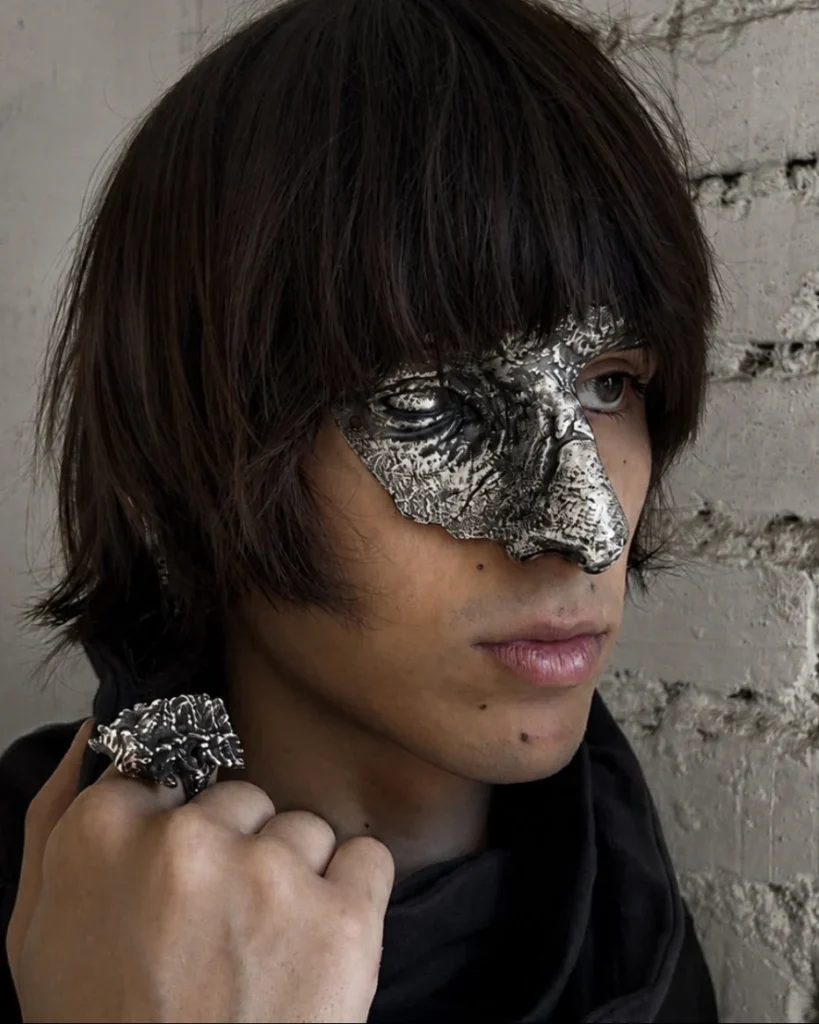
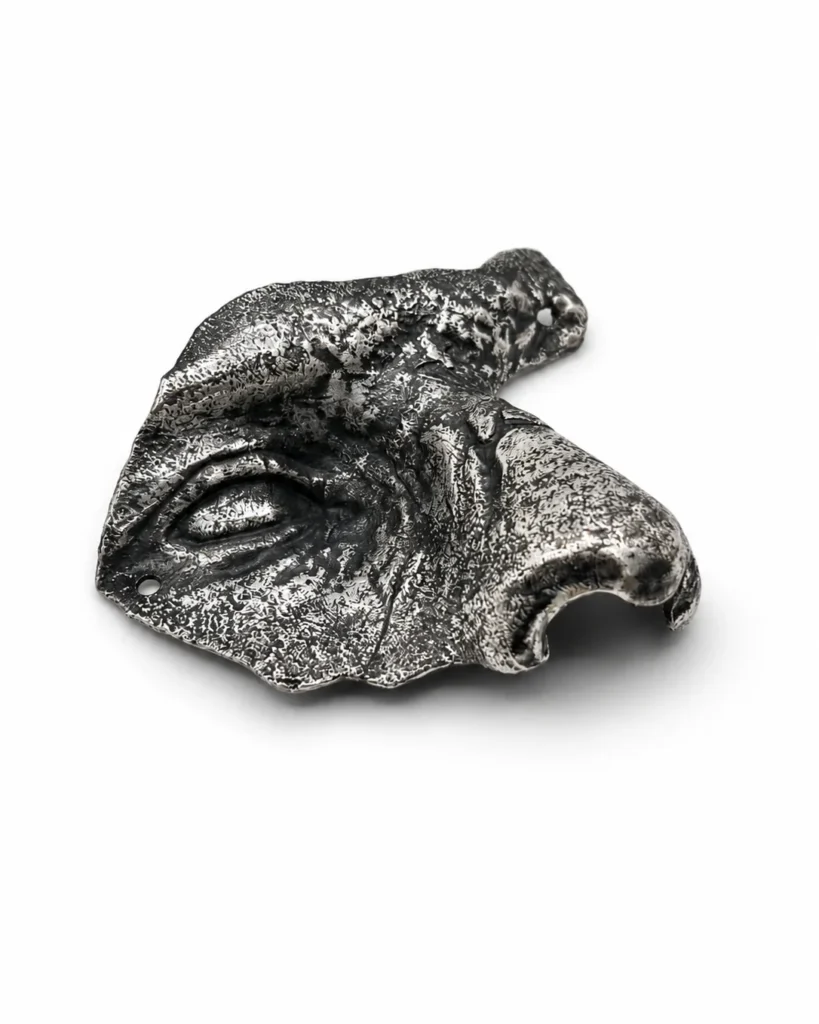
The caveat: no independent testing of this piece against facial recognition systems has been published, and the field has moved fast – modern systems are trained on partially occluded faces (we taught them, collectively, during the mask years) and can identify people from surprisingly little. Researchers have repeatedly shown that yesterday’s adversarial styling stops working as models improve. In other words: treat “jewelery against facial recognition” as a provocation and a design brief rather than a certified privacy tool. If you need to defeat surveillance, this is not your PPE. If you want to walk through a world of cameras wearing a beautiful objection to them – that’s exactly what it is.
The Modems Verdict
In an age when biometric data is harvested by default, a hand-cast silver graft that makes your face partially illegible – to machines and, frankly, to strangers at parties – is fashion doing what fashion does best: turning our collective sentiment into aesthetics. The surveillance economy gets a critique and your face gets a sculpture. And the algorithm gets, at minimum, a very confusing face to identify.
Some of the products and services featured in this article may be from our affiliate partners, which means we may earn a small commission if you make a purchase through these links — at no extra cost to you. Our editorial team only spotlights what we genuinely love and think you will, too.
Leave a Comment