
Every January, the Consumer Electronics Show – better known as CES – descends on Las Vegas. What began as a trade show for televisions and stereo systems has quietly evolved into something far more revealing: a live mood board for how we’ll live, age, groom, eat, rest and relate to technology over the next decade.
CES 2026 felt different. Less about spectacle, and more about utility. Across the show floor, innovation skewed personal: mirrors that scan your skin, robots that fold your laundry, devices that detect allergens before you eat, and beauty tools that feel closer to medical devices than vanity toys.
In short? This was CES for women who want tech that earns its place in their lives. Scroll on for the gadgets and next-gen tech that we loved the most…
From AI Beauty Mirrors to Robot Dogs – The 17 CES Gadgets That Will Define 2026:
1. L’Oréal LED Eye Mask
L’Oréal’s LED Eye Mask was one of the most talked-about beauty launches at CES 2026 – and for once, the hype felt deserved. Designed as ultra-thin, flexible silicone patches, the masks deliver professional-grade light therapy directly to the under-eye area, using targeted red light (630 nm) and near-infrared light (830 nm).
Unlike bulky LED face masks that demand you lie still like a sci-fi extra, this is skincare that fits into real life. Each session runs for just ten minutes and automatically shuts off, making it easy to slot into a morning routine or post-flight recovery ritual. The tech addresses puffiness, discolouration and fine lines – but the real shift here is precision. Instead of blasting the entire face, L’Oréal is zeroing in on the most fragile skin with clinical intent.

Beauty tech goes clinical. L’Oréal’s ultra-thin LED eye mask delivers targeted red and near-infrared light to the most fragile skin on the face – without the sci-fi bulk. Ten minutes. No downtime. Real results.
Credit: L’Oréal
2. Bird Buddy 2 Mini
Yes, CES 2026 had smarter bird feeders than ever – and somehow, that makes perfect sense. The Bird Buddy 2 Mini shrinks the brand’s beloved AI bird-watching feeder into a more affordable, compact design, without compromising performance. Inside is a 2K camera with a 1/2.9” image sensor, HDR imaging, slow-motion video (up to 95fps), and AI-powered bird recognition using both audio and visual cues.
With solar charging, a 3,900mAh battery and portrait/landscape framing modes, the Mini feels like a wellness gadget disguised as nature content. In an era of burnout and screen fatigue, CES revealed that some of the most meaningful tech doesn’t point inward – it points out the window.
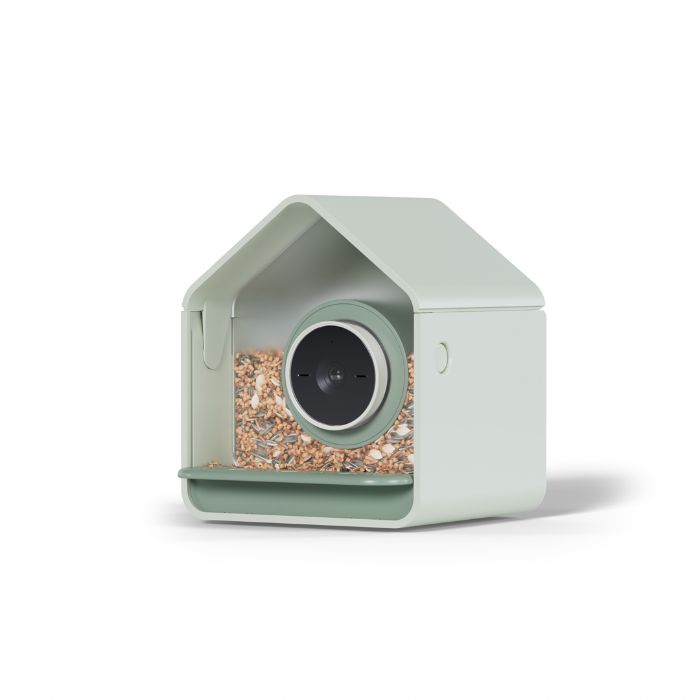
The most calming gadget at CES. Bird Buddy’s AI-powered feeder turns backyard birdwatching into a slow-living wellness ritual – complete with species recognition and solar charging.
Credit: Bird Buddy
3. Seattle Ultrasonics C200 Knife
Every CES needs one object that makes food prep easier – and this year, it was an ultrasonic chef’s knife. The Seattle Ultrasonics C200 looks like a normal, beautifully balanced kitchen knife, forged from Japanese AUS-10 steel hardened to 60HRC. But press the orange button and the blade vibrates more than 30,000 times per second, allowing it to cut with up to 50% less effort.
You can’t see the vibration. You can’t hear it. You can’t feel it in the handle. What you can feel is food slicing cleanly, with less sticking and easier cleanup. Designed for home cooks rather than professionals, the C200 quietly reframes kitchen tech as accessibility tech – reducing strain, improving control, and making cooking more inclusive for those with disabilities. Which, frankly, is the most future-coded move of all.
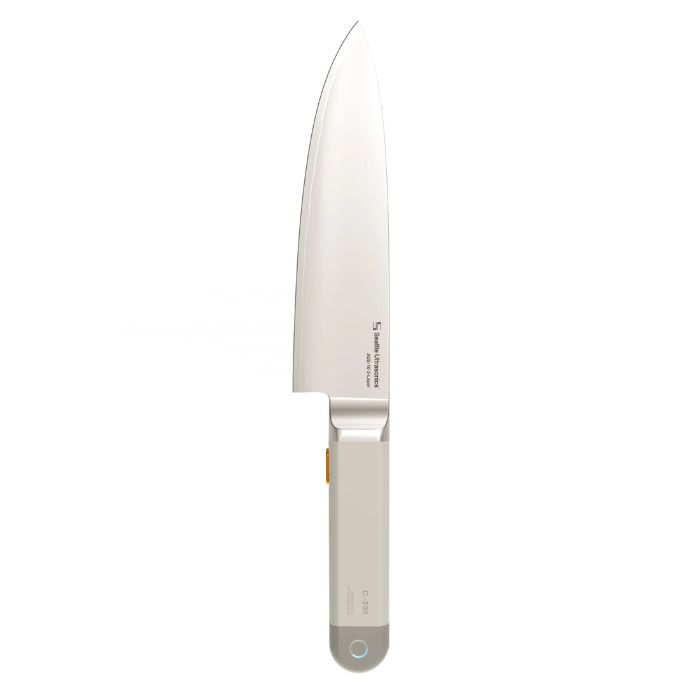
It looks like a chef’s knife – but vibrates at 30,000 times per second. The C200 slices with less effort, less strain, and a quiet nod to accessibility-first design.
Credit: Seattle Ultrasonics
4. LG W6 ‘Wallpaper’ TV
LG resurrecting its 2020 Wallpaper TV line at CES 2026 felt like a victory lap. The LG W6 ‘Wallpaper’ TV revives the ultra-thin OLED concept the brand shelved back in 2020, now enhanced with wireless connectivity via LG’s Zero Connect box. The result? A screen that genuinely looks like it’s painted onto the wall.
The OLED evo W6 isn’t just thin – it’s also architectural. With cables banished and brightness levels boosted, LG has refined the idea into something that finally works for modern living spaces. This is television as interior design. Technology that disappears when not in use. Proof that in 2026, luxury isn’t about more features – it’s about fewer visual compromises.
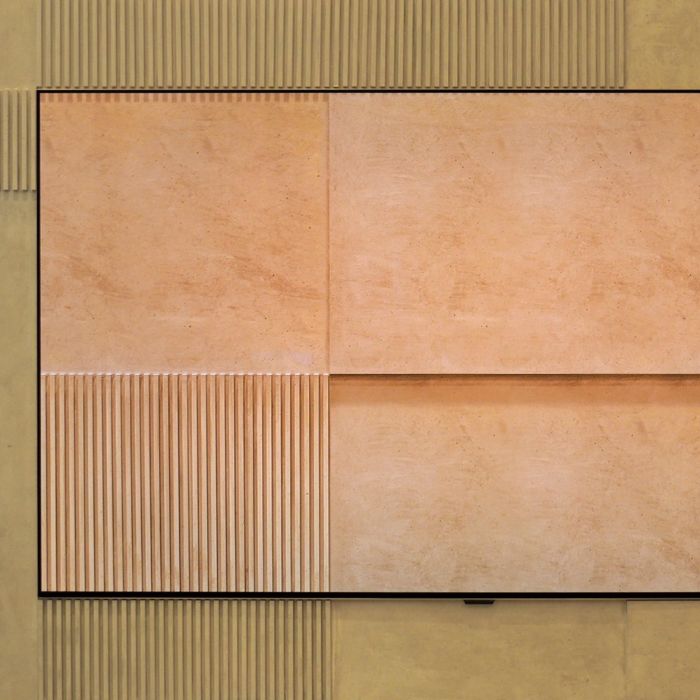
When technology disappears, luxury appears. LG’s Wallpaper TV is so thin it feels architectural – a screen that behaves more like interior design than electronics.
Credit: LG
5. iPolish Digital Nail System
iPolish calls itself the “world’s first digital color-changing nails,” and while that sounds like CES hyperbole, the execution is surprisingly chic. Using press-on nails paired with a compact device and mobile app, users can change nail colors instantly – choosing from over 400 shades without removing the nails themselves. The starter kit launches at $95, positioning it firmly in the ‘affordable’ beauty-tech bracket.
This hits the modular beauty sweet spot – fewer products, less waste, and more personalisation. In a post-fast-fashion, post-overconsumption world, iPolish hints at a future where beauty adapts instead of being replaced.

Over 400 nail colours. Zero removal. iPolish’s digital press-on nails let beauty shift on demand – without waste, mess or repeat purchases.
Credit: iPolish
6. Lollipop Star
Is it ridiculous? Yes. Is it memorable? Absolutely. The Lollipop Star uses bone-conduction technology to transmit sound through your jaw, allowing you to “taste” music while sucking on a lollipop. Bite down, and the sound becomes clearer. Let go, and it fades.
At $8.99 and strictly one-time use, this isn’t a product destined for mass adoption. But it perfectly captures CES’s role as a sandbox – where sensory tech, novelty and experimentation collide. Consider it performance art for your mouth.

You don’t listen to this gadget – you taste it. The Lollipop Star turns music into a jaw-buzzing sensory experiment, equal parts absurd and unforgettable.
Credit: Lollipop Star
7. Vinabot AI Talking Frame
Inspired by the moving oil paintings in Harry Potter, the Vinabot AI Picture Frame transforms static photos into conversational AI avatars.
Upload a photo, add a script, and the frame generates a talking video capable of interacting with users – whether it’s a celebrity likeness, fictional character or personal memory. It’s set to launch on Kickstarter, and while questions around consent and deepfakes remain, the emotional pull is undeniable.
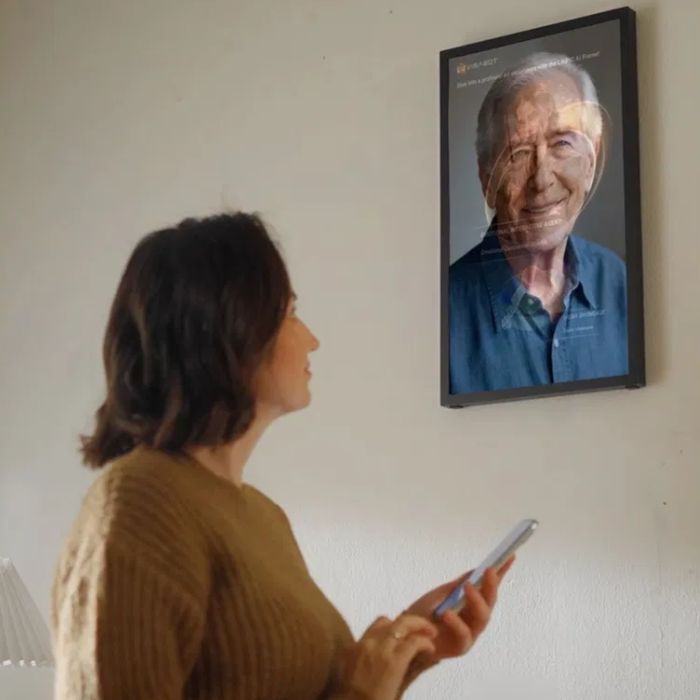
Photos that talk back. Vinabot’s AI frame animates still images into conversational avatars – blurring the line between memory, media and machine.
Credit: Vinabot
8. Glyde AI-Powered Hair Clipper
Glyde claims to be the world’s first ‘smart’ hair clipper – and at CES 2026, it made a convincing case. Using AI sensors to track speed, tilt and angle, the clipper adjusts in real time to prevent uneven fades or overcuts. Users select styles from an app, and the device compensates for human error as you go.
It’s beauty tech that acknowledges an everyday reality: most people are not professional hair stylists, but still want professional results.

The clipper that corrects you in real time. Glyde’s AI-powered hair tool adjusts speed and angle automatically – professional results without professional skills.
Credit: Glyde
9. Tombot ‘Jennie’ Robotic Dog
Among all the AI demos at CES 2026, none drew bigger smiles than Tombot’s robotic dog, Jennie. Designed for people who can’t safely care for a live animal – including those with dementia, anxiety, depression or mobility challenges – Jennie responds to touch, wags her tail, barks for treats and tracks faces with uncanny warmth.
Tombot’s mission is explicit: companionship without responsibility. And while robotic pets raise philosophical questions, the emotional impact is immediate. Sometimes tech’s highest calling isn’t efficiency – it’s comfort.

Not a toy. Not a pet. Jennie is companionship without responsibility – designed to comfort those who need connection most.
Credit: Tombot
10. NOSH AI Cooker
NOSH’s AI-powered cooker looks like a microwave but behaves like a private chef.
Users load ingredients into separate compartments, and the machine handles timing, temperature and sequencing to produce a finished meal. No constant stirring. No multitasking. NOSH doesn’t promise gourmet perfection; it promises relief. And that may be the more radical innovation.
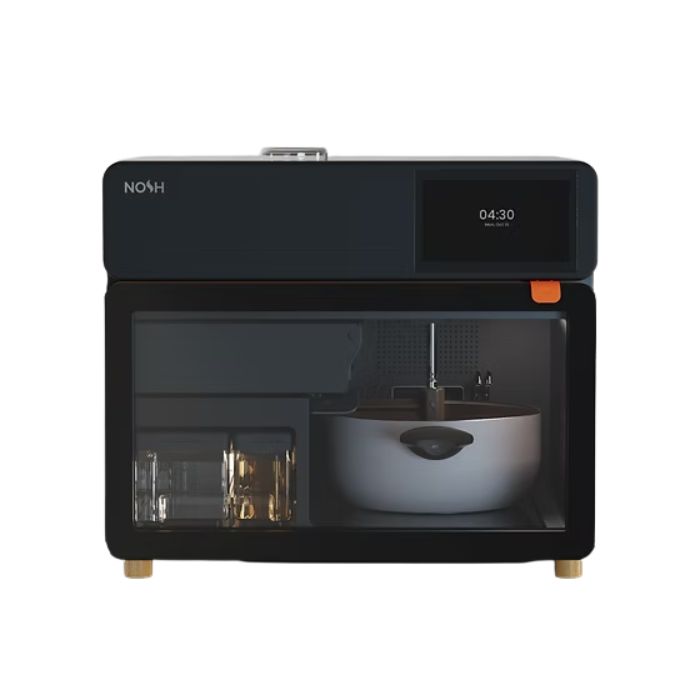
NOSH’s AI cooker handles timing, heat and sequencing so dinner happens without the mental load.
Credit: NOSH
11. LG CLOiD Home Robot
LG’s CLOiD robot represents the company’s “Zero Labor Home” vision – and CES 2026 marked its first public demonstration.
According to LG Electronics, CLOiD is designed to “reduce the time and physical effort required for everyday chores,” using AI, vision-based robotics and integration with the ThinQ ecosystem. Laundry folding. Dish unloading. Food serving. This is domestic tech aimed squarely at cognitive load – and invaluable relief for the collective invisible labour disproportionately carried by women.
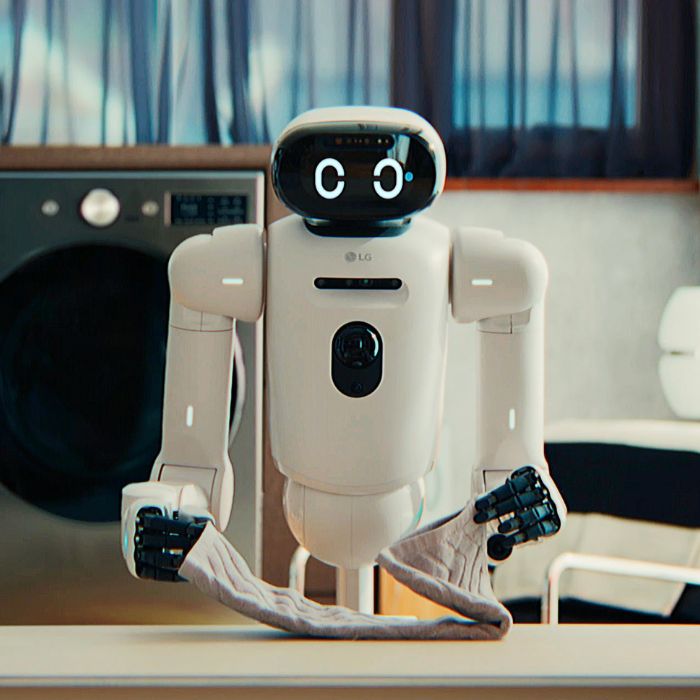
The future of housework doesn’t look like hustle – it looks like delegation. LG’s CLOiD robot folds laundry, unloads dishes and serves food, designed to reduce the invisible cognitive load of modern life.
Credit: LG Electronics
12. Samsung Micro LED Beauty Mirror
Samsung’s AI beauty mirror scans your face in under 30 seconds, analysing wrinkles, pigmentation, pores and redness using data from 20,000 clinically labelled skin images. The mirror looks reflective, but hides a display layer and camera within an aluminium-niobium micro-pattern structure. After analysis, it delivers an “AI Skin Report” and generates skincare recommendations via QR code.
It’s beauty retail and diagnostics – all rolled into one reflective surface. And while concerns around data privacy remain, the appeal is obvious: personalisation without guesswork.
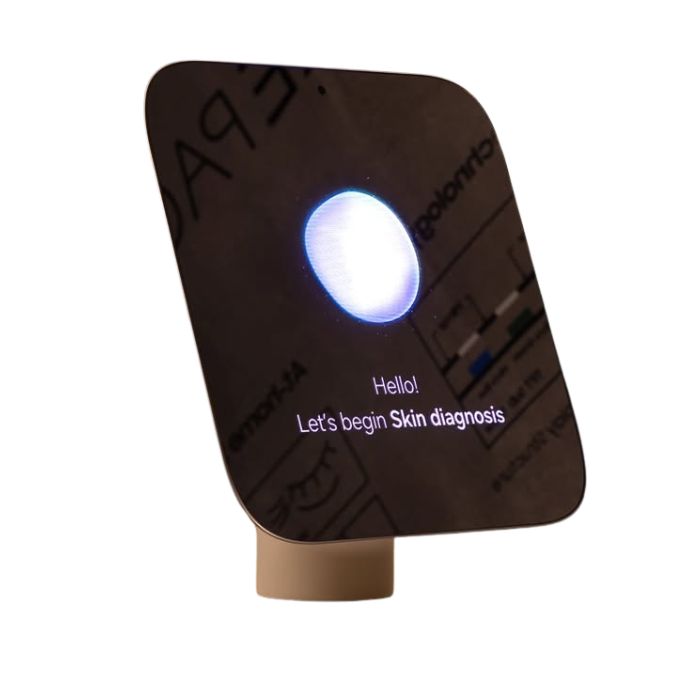
It looks like a mirror. It behaves like a dermatologist. Samsung’s AI-powered beauty mirror scans skin in seconds, delivering data-led insights without guesswork.
Credit: Samsung
13. Govee Ceiling Light Ultra

14. Y-Brush Diagnostic Toothbrush
Y-Brush’s AI-powered toothbrush claims to detect biomarkers linked to over 300 diseases, including diabetes, liver oxidative stress and gum disease.
Using saliva analysis and machine learning, the device reframes oral care as early-warning health tech. While clinical validation will be key, CES 2026 made one thing clear: the bathroom is becoming a diagnostic space.
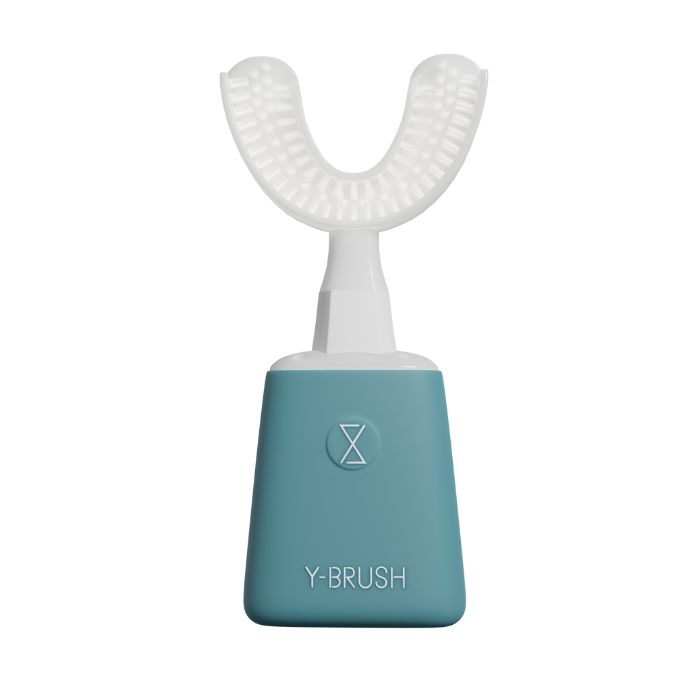
Your toothbrush just became a health scanner. Y-Brush uses saliva analysis and AI to flag early biomarkers – reframing oral care as preventative medicine.
Credit: Y-Brush
15. Allergen Alert Portable Food Scanner
Allergen Alert debuted at CES 2026 as one of the most quietly revolutionary devices on display. Developed as a spin-off from bioMérieux, the portable scanner allows users to test food for allergens and gluten by inserting a small sample into a single-use pouch. Results appear within minutes.
This is lab-level safety, democratised – and for the 250 million people worldwide living with food allergies – it’s potentially life-changing.
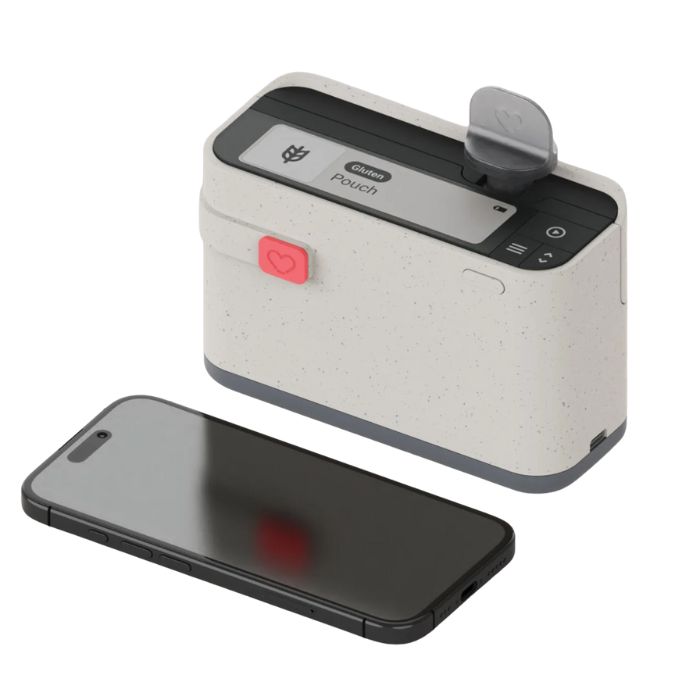
Test before you trust. Allergen Alert turns lab-grade food safety into a pocket-sized ritual – offering peace of mind in minutes.
Credit: Allergen Alert
16. Luna Band Screen-Free Fitness Tracker
The Luna Band offers a Whoop-style, screen-free fitness tracker without the subscription model.
With voice commands and app-based insights, it caters to users who want health data without constant notifications. In 2026, it looks like gadget restraint is the new premium feature.

No screen. No subscription. No noise. The Luna Band tracks health quietly – proving that in 2026, restraint is the real luxury.
Credit: Luna
17. Victrola Soundstage
Some of the products and services featured in this article may be from our affiliate partners, which means we may earn a small commission if you make a purchase through these links — at no extra cost to you. Our editorial team only spotlights what we genuinely love and think you will, too.
7 responses to “The 17 Best New Gadgets We Saw at CES 2026 – From AI Beauty Tech to Home Robots”
-
… [Trackback]
[…] Information to that Topic: themodems.com/tech/best-new-gadgets-ces-2026-beauty-tech-ai-home-robots/ […]
-
… [Trackback]
[…] Read More to that Topic: themodems.com/tech/best-new-gadgets-ces-2026-beauty-tech-ai-home-robots/ […]
-
… [Trackback]
[…] Find More on that Topic: themodems.com/tech/best-new-gadgets-ces-2026-beauty-tech-ai-home-robots/ […]
-
… [Trackback]
[…] Find More on on that Topic: themodems.com/tech/best-new-gadgets-ces-2026-beauty-tech-ai-home-robots/ […]
-
… [Trackback]
[…] Find More Info here to that Topic: themodems.com/tech/best-new-gadgets-ces-2026-beauty-tech-ai-home-robots/ […]
-
… [Trackback]
[…] Info on that Topic: themodems.com/tech/best-new-gadgets-ces-2026-beauty-tech-ai-home-robots/ […]
-
… [Trackback]
[…] Read More on that Topic: themodems.com/tech/best-new-gadgets-ces-2026-beauty-tech-ai-home-robots/ […]
Leave a Comment