
For the best part of a decade, beauty tech has been obsessed with one square foot of you. Your face has been photographed, mapped, scored and prescribed for by more algorithms than most people realise: the skin-analysis mirror at the counter, the selfie tool on the brand’s website, the app that rates your pores at 7am and suggests a serum. The rest of the body, meanwhile, has been left to a body lotion chosen mostly on scent and whether the bottle looked nice next to the bath.
Haut.AI, the Estonian-founded skin-AI company whose technology already sits behind a lot of those facial-analysis tools including Neutrogena and Ulta Beauty, has decided that the other 90 per cent of you is overdue some attention.
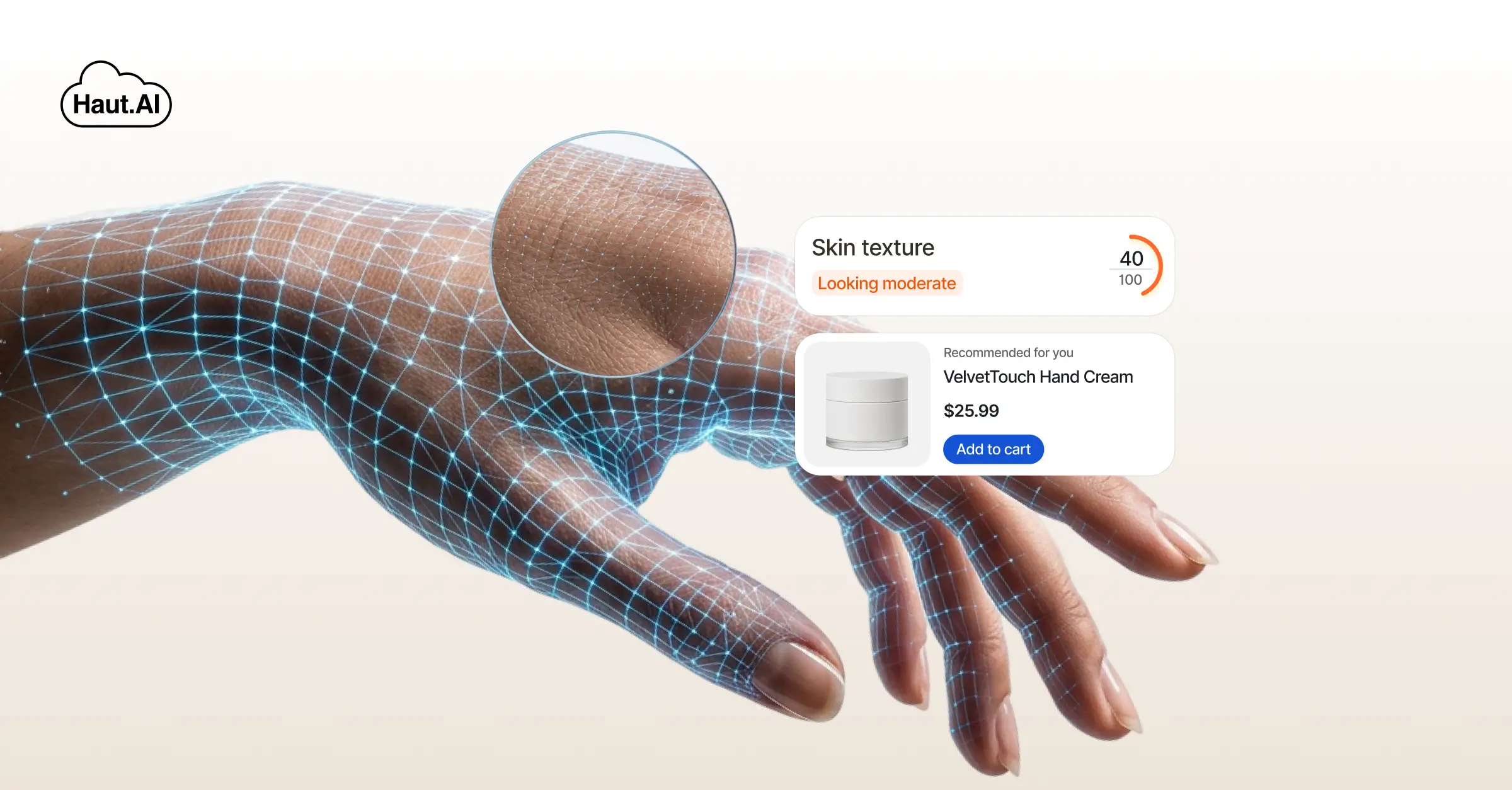
Its new platform, Body Analysis, is exactly what it sounds like: an AI that reads the skin on your neck, torso, arms, hands, legs and feet, and hands the results to brands so they can recommend the right product for each bit of you.
What Haut.AI has built
The technical claim is that one model does the whole job. Rather than a separate tool for hands and another for legs, Body Analysis runs what the company describes as a single AI segmentation model across every region, trained on more than 100,000 skin images spanning multiple body parts and skin types. It returns quantitative data (think dryness, texture, pigmentation), and the point is that a brand can then match a product to a specific concern on a specific limb.
Haut.AI’s CEO and co-founder Anastasia Georgiovskaya put the case plainly: “Body skin is just as complex as facial skin, yet while the beauty industry has developed sophisticated systems for facial skin analysis and recommendations, brands have lacked the infrastructure needed to deliver the same level of intelligence and personalisation for body care.”
She was equally candid about why body care has been such a low-expectation category. “Consumers rarely expect body care products to deliver visible results beyond basic moisturisation, largely because products are not properly matched to their individual skin needs,” Georgiovskaya said in the announcement.
The fix, in her words: “Body Analysis changes that by providing objective, quantitative skin data across the full body through a unified AI model, enabling more precise product recommendations, better consumer outcomes and stronger long-term trust in the category.”
The numbers behind the pitch
Haut.AI released the platform alongside a consumer survey that, unsurprisingly, supports the thesis, but the figures are worth reading in their own right because they say something about how many of us feel about our skin below the jaw.
According to the company’s research, nearly 40 per cent of respondents feel insecure showing their body skin, and 35 per cent don’t know what products to use for it. Dryness and hyperpigmentation came out as the top body concerns.
The two numbers brands will care about most: 62 per cent of respondents said they were interested in, or already using, AI for skincare or body-care advice, and 74 per cent believed AI could make their body-care routine more effective. In other words, the permission is already there. People are not squeamish about a machine reading their skin. They are squeamish about buying a fourth body oil that does nothing.
Why this is a bigger deal than it sounds
It is easy to file this under “AI does more AI things”. But the reason it matters is structural. The beauty industry’s entire personalisation machine (the quizzes, the diagnostics, the algorithmic “your routine” pages) has been built for the face because that is where the data was. Selfies are abundant; photographs of your own shins are not.
By building a body-wide model and offering it to brands as infrastructure, Haut.AI is effectively extending the face-care playbook to everything from body serums and stretch-mark treatments to hand creams and foot care.
That is a commercial story as much as a technological one. Body care has become one of beauty’s growth engines, riding the same “skinification” wave that gave us body serums, body retinol and the concept of a bathroom shelf for your knees. What it has lacked is a reason to trade up. If a brand can tell you, with a number attached, that the skin on your forearms is dehydrated in a way your décolletage is not, the upsell writes itself.
Where to keep your scepticism
Then there is the photograph itself. Facial analysis works because we are all extremely practised at taking pictures of our faces in decent light. Body analysis asks people to photograph parts of themselves they may feel, per Haut.AI’s own survey, insecure about, in whatever bathroom lighting they have. How well the model copes with real-world images (bad angles, tan lines, fake tan, tattoos, a range of skin tones) is the thing to watch, and it is the thing brands should be asking about before they switch it on.

And there is the privacy question that hovers over every “upload a picture of your body” product. Haut.AI has positioned itself for years as the responsible, dermatology-adjacent end of skin AI, but the more of you a tool can see, the more it is worth asking where the images go, how long they stay, and who else learns from them.
The Modems take
The face got the algorithm first because the face got the camera first. Now that the technology exists to read the rest of us, expect body care to stop being the category you buy on autopilot and start being the category with a diagnostic.
Whether that is liberating or exhausting will depend on how it is used. If it means fewer bottles that do nothing and a hand cream that actually addresses your hands, we are, cautiously, in favour. Either way, the bathroom shelf just got a lot smarter, and it now goes all the way down to your feet.
Body analysis – Your AI skincare assistant: Try it here.
Some of the products and services featured in this article may be from our affiliate partners, which means we may earn a small commission if you make a purchase through these links — at no extra cost to you. Our editorial team only spotlights what we genuinely love and think you will, too.
Leave a Comment