
Every parent of a nine-year-old is currently running the same doomed calculation: give them a phone and hand over the internet, or don’t and watch them become the only child that you can’t contact in an emergency.
Sayph is a British startup betting there is a third option – and it has just won a Gold at the ‘MadeForMums Awards’ for it.
What Sayph Actually Is:
Sayph is a purpose-built child-safe smartphone for ages 8 to 16. Crucially, it is not a chunky plastic brick that screams “my parents don’t trust me” across the playground. It runs on Samsung hardware and looks like a proper phone, which is roughly 80% of the battle.
What it runs is a bespoke, restrictive-by-design operating system. The device does calls, one-to-one messaging and GPS location tracking. That is it. No social media, web browser, app store or algorithmic feed of any kind.

You cannot download TikTok onto it because there is nowhere to download TikTok from. There is no workaround, no sideload and no clever loophole which could be discovered by a determined Year 7.
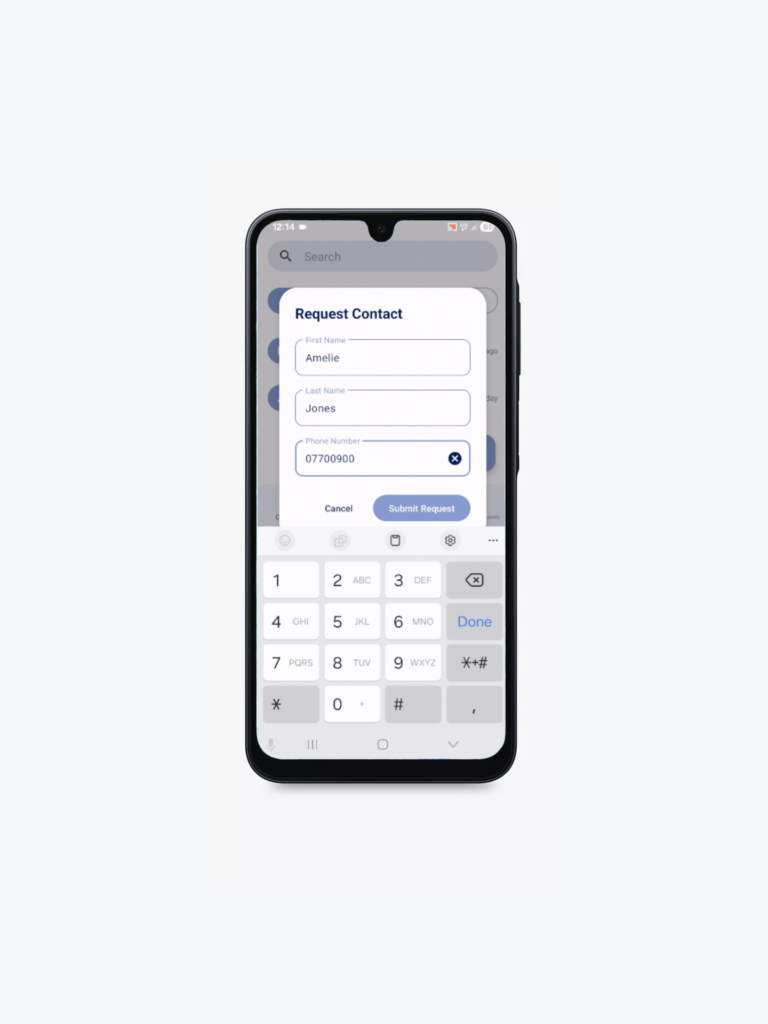
Contacts are restricted to a parent-approved list, which is managed remotely through a companion web app.
The parental-controls industry has spent a decade selling us the idea that the answer is better monitoring – more dashboards, more alerts, more screen-time graphs. Sayph’s argument is architectural rather than supervisory: build a device where the risky features do not exist, and you do not need to police it. That is a meaningfully different bet, and it is the same one driving school phone bans and the ‘Smartphone Free Childhood’ movement.
“Let’s be plain about the problem: The companies behind the apps on a typical phone are not neutral, not always on the side of parents, and their apps are not built for children’s developing minds. Many smartphone apps are engineered – deliberately, expertly, by some of the cleverest people alive – to capture your child’s attention and hold it. Endless feeds; notifications designed to draw them in; algorithms deciding what a nine-year-old sees next. That isn’t something you, as a parent, can control or monitor with the right screen-time settings. It’s the business model. And it works like that regardless of whether it’s good for your child,” explain Co-founders Ben Humphrey and Ami Penolver.
The Two New Features
Sayph has just updated the device with two additions, both of which reveal how carefully the device’s controls have been thought about.
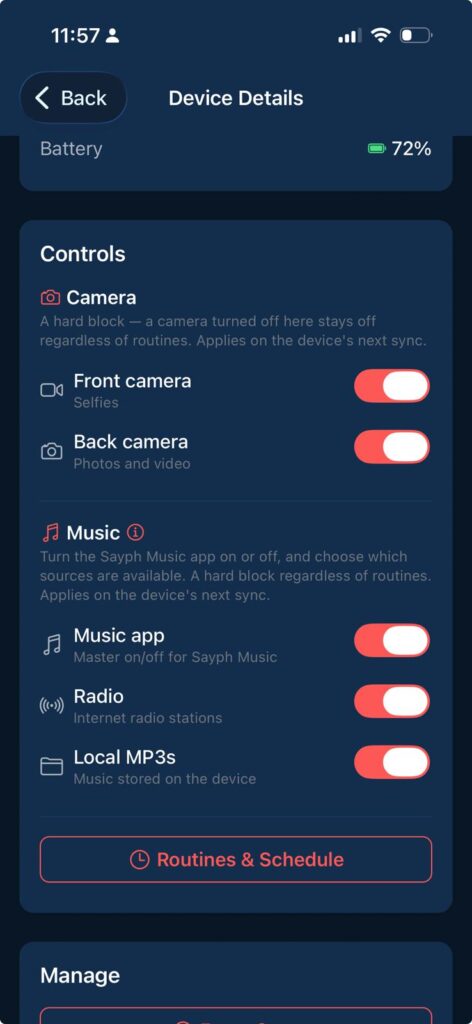
Sayph Music is an audio-only feature giving young users access to popular UK radio stations – BBC Radio 1, Radio 2, Heart, Capital and Virgin – plus local MP3 playback via microSD card. This means they can listen to music without video feeds or a ‘Big Tech’ algorithm learning what keeps your 11-year-old awake.
It is a small feature with insight behind it: kids do not need an infinite feed. Often they just want something to listen to on the bus.
The camera toggle is the more pointed addition. Parents can now independently switch the front and rear cameras on or off through the companion app – so you can allow the back camera for photographing the dog while keeping the front-facing one disabled entirely.
Sayph says the feature was developed with feedback from parents and from advocacy groups ‘Smartphone Free Childhood’ and Papaya. And the built-in camera is deliberately filter-free, which is significant design decision. No beauty filters, means there is no subtle messaging towards beautification or insecurity around how a child looks. Important for a generation whose relationship with their own reflection is being shaped by software and selfies.
What It Costs
£189 for the device, plus a £4.99 monthly parental control subscription. Sayph positions this as one of the most affordable dedicated child-safe smartphones in the UK.
Over two years, that is roughly £309 all in. Cheaper than most flagship handsets, more expensive than a hand-me-down with screen time switched on – and the subscription is not optional, since it is what runs the controls.
There is also a social impact model built in. For every 10 devices bought through a school, one is donated to a Pupil Premium child; for every 100 sold overall, one goes to a looked-after child.
The Influencer Test
Sayph’s Gold in the Best Child-Friendly Phone category at the ‘MadeForMums Awards’ was judged by industry experts and real parents – which, in this category, is the review that actually converts.
Parent creator Louise Boyce (aka: @mamastillgotit) recently featured the phone, describing how it gives both her and her soon-to-be Year 6 son peace of mind, and praising the fact that with zero app distractions he is not permanently glued to a screen.
The Caveats
Two things worth considering with before you order one:
First – If a child’s friendship group organises itself on WhatsApp or Snapchat, a device that cannot run either will leave a child outside the conversation. Sayph’s answer is essentially that this is the point – but it lands very differently in a school where everyone has an iPhone versus one where several families have made the same choice. Sayph’s school-donation model suggests it knows adoption works best in clusters.
Second – This is a growing category rather than a lone product. There are basic handsets, filtered Android builds and monitoring-first devices already competing for the same worried parent. What Sayph is selling is the combination: real Samsung hardware, a proper phone silhouette, and an OS with the doors genuinely bricked up rather than merely locked.
The Modems Take
For years the only options were total exposure or total exclusion. A middle option, built properly and priced sensibly, is overdue.
The co-founders Humphrey and Penolver – who are both parents – have said, “You don’t have to choose between giving your child their independence and protecting their childhood. That’s the whole reason Sayph exists.”
“We’re not anti-technology. We’re pro-real-life, pro-play, pro-childhood.”
We couldn’t agree more.
Some of the products and services featured in this article may be from our affiliate partners, which means we may earn a small commission if you make a purchase through these links — at no extra cost to you. Our editorial team only spotlights what we genuinely love and think you will, too.