
In the ever-blurring space where technology meets culture, a new fault line has appeared – and it runs straight through Hollywood, publishing houses and recording studios.
Scarlett Johansson, alongside Cate Blanchett, Olivia Munn, Breaking Bad’s Vince Gilligan and musicians including REM, Cyndi Lauper and Simon Le Bon, has signed an open letter accusing tech companies of “theft” in how artificial intelligence models are trained.
The letter, published as part of the Human Artistry Campaign’s Stealing Isn’t Innovation movement, argues that some AI companies are using copyrighted creative work without permission – and without compensation – to build lucrative platforms. Its message is blunt and deliberately unglamorous: “Stealing our work is not innovation. It’s not progress. It’s theft – plain and simple.”
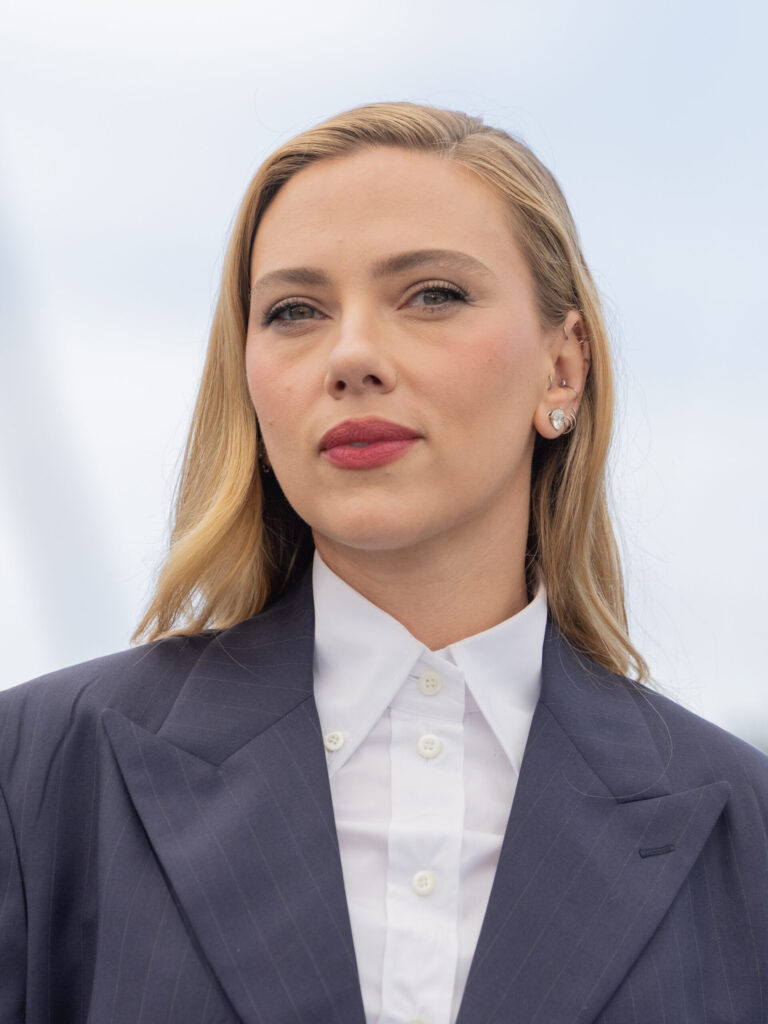
Scarlett Johansson joins a growing group of artists calling out the use of copyrighted creative work to train AI models without permission or compensation — reigniting the global debate around AI ethics, creator rights and consent.
Credit: Creative Comms
At the heart of the protest is a concern many creatives – especially women working across media, beauty, fashion and culture – quietly share: that the tools promising to “empower creativity” may actually hollow it out.
The open letter states: “America’s creative community is the envy of the world and creates jobs, economic growth, and exports. But rather than respect and protect this valuable asset, some of the biggest tech companies, many backed by private equity and other funders, are using American creators’ work to build AI platforms without authorisation or regard for copyright law.”
This isn’t Johansson’s first brush with AI controversy. She previously spoke out after OpenAI launched a ChatGPT voice assistant that sounded strikingly similar to her own. Johansson said she was “shocked” and “angered” at how “eerily similar” the chatbot was, prompting OpenAI to say it would “pause” the use of the voice. The incident crystallised a fear shared by actors, voice artists and creators everywhere: if your voice, image or style can be replicated instantly, what exactly still belongs to you?
Importantly, the Human Artistry Campaign isn’t anti-technology. In fact, its principles read less like a rejection of AI and more like a framework for making it fair. The campaign acknowledges that “developments in artificial intelligence are exciting and could advance the world farther than we ever thought possible.” But it draws a clear boundary: “AI can never replace human expression and artistry.”
That distinction matters. As the letter explains, “Creative works shape our identity, values, and worldview… Only humans are capable of communicating the endless intricacies, nuances, and complications of the human condition through art.” In other words, algorithms can remix, predict and generate – but meaning still comes from lived experience.
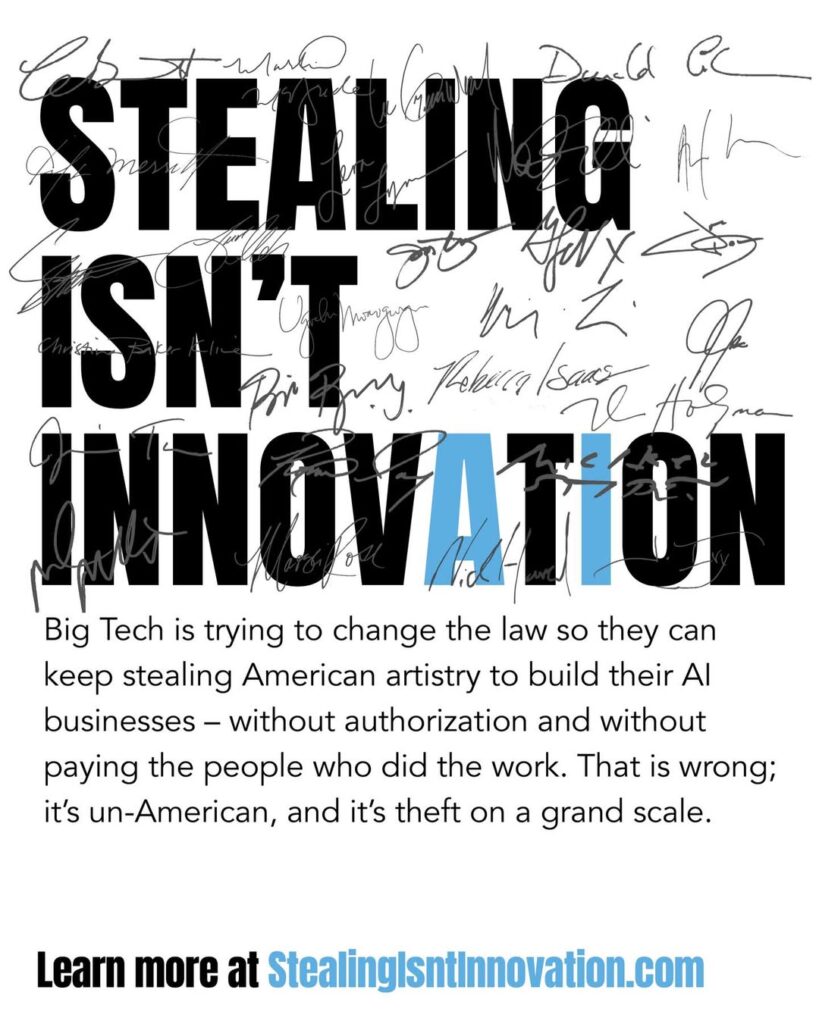
“Stealing isn’t innovation.” A powerful message from the Human Artistry Campaign, backed by actors, musicians and writers, calling out Big Tech’s use of copyrighted work to build AI systems without permission or pay.
Credit: Human Artistry Campaign / Stealing Isn’t Innovation
One of the campaign’s core principles is that “the use of copyrighted works, and the use of voices and likenesses of professional performers, requires authorization and free-market licensing from all rights holders.” This isn’t about shutting down innovation; it’s about consent, transparency and fair compensation. Another principle is even more direct: “AI must not receive exemptions from copyright, right of publicity, or other intellectual property rights.”
AI tools already shape everything from writing captions to editing videos to generating mood boards. Used responsibly, they can be powerful collaborators. Used carelessly, they risk becoming extractive machines that profit from creative labour without credit.
The campaign also stresses the importance of trust and transparency, calling for “complete record keeping of copyrighted works, performances, and likenesses” used in training AI systems. It adds that “content generated solely by AI should be labeled,” allowing consumers to understand what they’re seeing – and creators to protect their work.
Perhaps the most telling line in the letter is also the most hopeful: “It is possible to have it all. We can have advanced, rapidly developing AI and ensure creators’ rights are respected.”
The question now isn’t whether AI will shape the future of creativity – it already is. The real question is whether it will do so with permission, partnership and respect, or by quietly taking what it didn’t create.
Some of the products and services featured in this article may be from our affiliate partners, which means we may earn a small commission if you make a purchase through these links — at no extra cost to you. Our editorial team only spotlights what we genuinely love and think you will, too.
Leave a Comment