
For many women, getting home isn’t about convenience or cost-effectiveness. It’s about calculation and safety.
Keys between fingers. Fake phone calls. Sharing live locations. Double-checking licence plates. Sitting behind a stranger at night and hoping for the best.
Ride-hailing apps promised liberation. Too often, they delivered anxiety with the worry of unvetted drivers and personal safety. Now, a new taxi service hailing from Silicon Valley thinks it has a solution – and it doesn’t involve a driver at all.
In 2026, Waymo, Google’s autonomous vehicle company, plans to launch its fully driverless ride-hailing service in London, allowing passengers to summon a car with no human behind the wheel. No conversation. No judgement. No risk of unwanted attention from the front seat.
“Great news, Londoners! We’re bringing our fully autonomous ride-hailing service across the pond, where we intend to offer rides – with no human behind the wheel – in 2026,” Waymo announced in an an official statement.
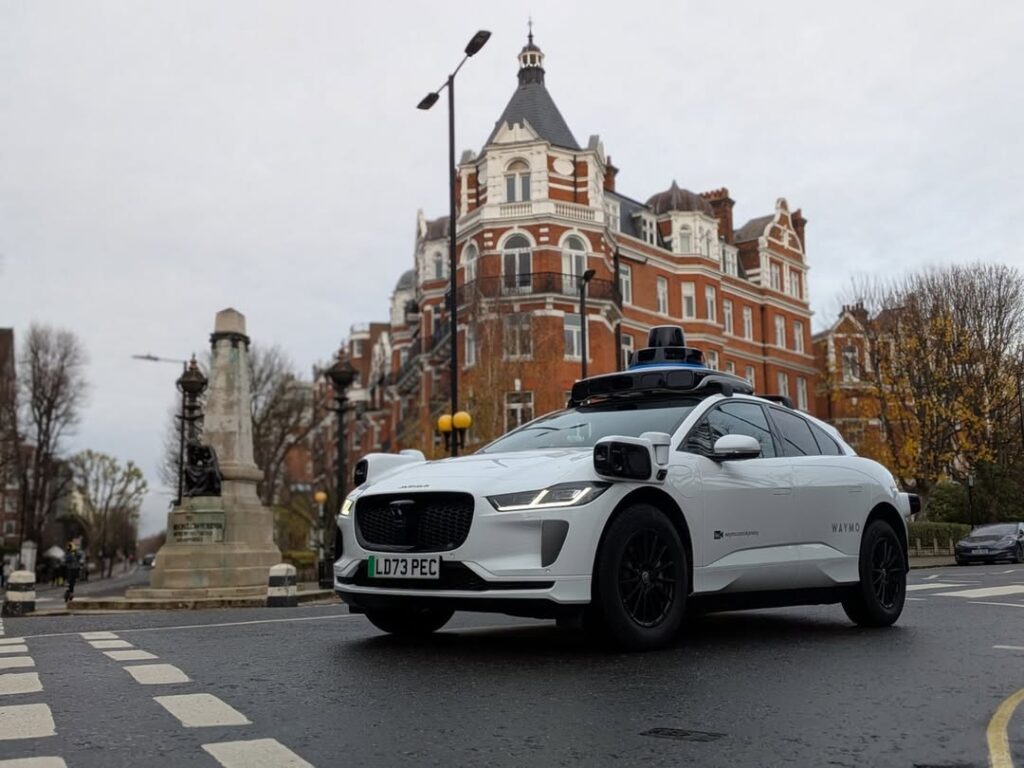
A Waymo autonomous vehicle navigates a London neighbourhood, hinting at how driverless ride-hailing could soon slot into everyday life – and potentially reshape how women move through cities at night.
Credit: Waymo
For a city grappling with persistent concerns around taxi safety – particularly for women – Waymo’s arrival raises a provocative question: could a robot car actually be safer than a human driver?
How Waymo Works – and Why London Matters
Waymo’s service will operate via the Waymo app, integrating into London’s existing transport ecosystem of buses, tubes, bikes and pedestrians. The fleet will be run in partnership with Moove, a global fleet operations company, while Waymo works with UK regulators to secure approval.
In the US, Waymo is no longer experimental. Its autonomous system – known as the Waymo Driver – has already:
- Driven over 100 million fully autonomous miles
- Delivered more than 10 million paid rides
- Operated in cities including San Francisco, Los Angeles and Phoenix
“We’re thrilled to bring the reliability, safety and magic of Waymo to Londoners,” said Tekedra Mawakana, co-CEO of Waymo. “Waymo is making roads safer and transportation more accessible where we operate. We’ve demonstrated how to responsibly scale fully autonomous ride-hailing, and we can’t wait to expand the benefits of our technology to the United Kingdom.”
London isn’t a random expansion. Waymo already has engineering hubs in London and Oxford, focusing on large-scale simulation – a critical training method for autonomous driving. The company also partners with Jaguar Land Rover, whose all-electric I-PACE vehicles are already running Waymo’s technology in the US and Japan.
The Female Safety Question No One Can Ignore
Autonomous vehicles are often framed as a transport or tech story. For women, they’re something else entirely: a personal safety story.
Reports of sexual assault in taxis and private hire vehicles (PHVs) have been a serious concern in London for years. According to Transport for London (TfL) data, there were 204 sexual offences reported in 2023 relating to journeys in taxis and PHVs – including 10 rapes. The figures from previous years show similarly troubling patterns:
- 2022: 222 total offences (23 rape)
- 2021: 182 total offences (20 rape)
- 2020: 137 total offences (23 rape)
- 2019: 235 total offences (26 rape)
Police and support organisations widely acknowledge that sexual offences are significantly under-reported, meaning the true numbers are likely higher.
The common thread? Women travelling alone, often at night, sometimes after drinking – and placed in close proximity to a male stranger with control of the vehicle. Waymo’s proposition removes that variable entirely.
Does the Data Support the Hype?
Waymo claims its vehicles are already dramatically safer than human drivers.
According to company data, Waymo vehicles are involved in:
- Five times fewer injury-causing collisions
- Twelve times fewer injury-causing collisions with pedestrians
- 78% fewer injury-causing collisions compared to a human driving the same distance
“Autonomous vehicles, such as Waymo, hold the potential to significantly improve road safety because, quite simply, the human driver is removed,” said James Gibson, Executive Director of Road Safety GB. “The data shows that the Waymo vehicles have performed far safer compared to human drivers across more than 100 million autonomous miles. Rolling out autonomous vehicles in a progressive yet measured way will be the best approach.”
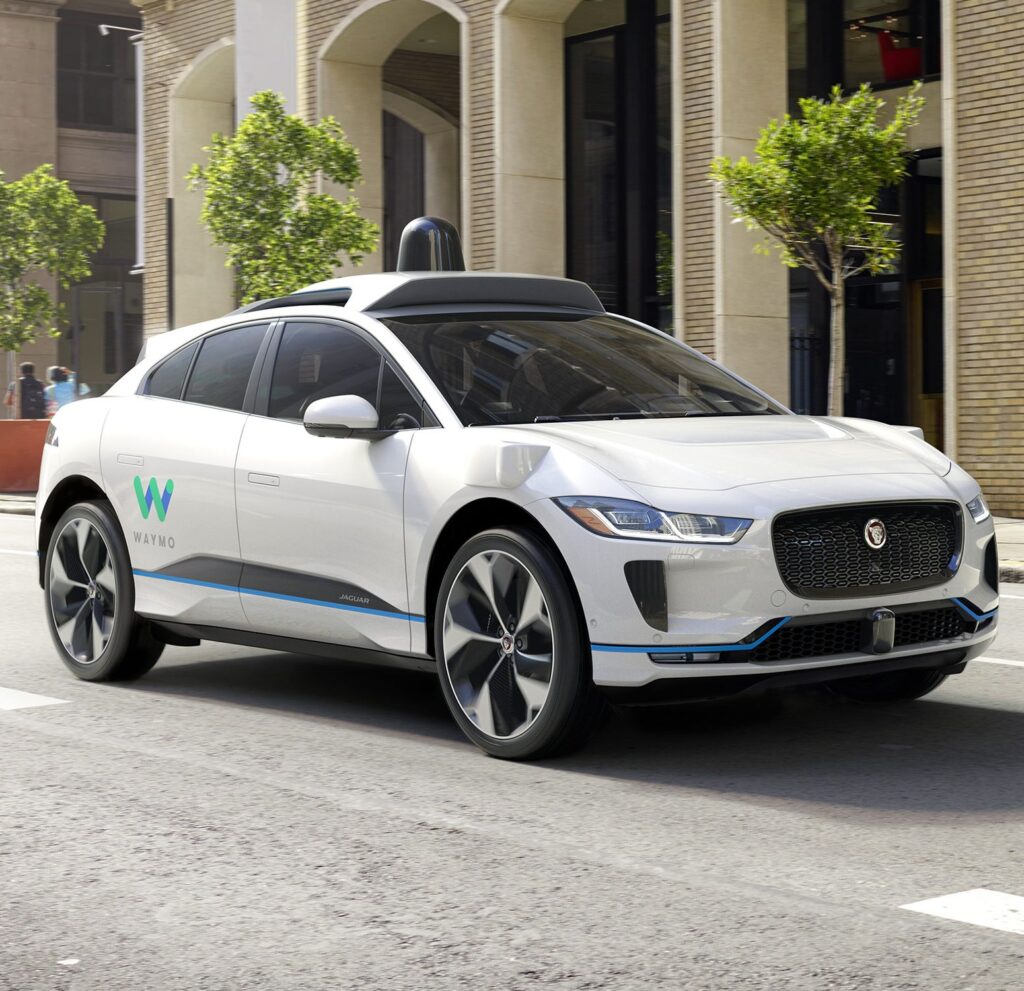
Already operating in major US cities, Waymo’s autonomous cars have clocked millions of miles without a human driver – data the company says proves driverless tech could be safer than traditional taxis.
Credit: Waymo
Accessibility, Independence – and Who Gets Left Behind
Beyond gendered safety, Waymo’s arrival could also reshape mobility for people historically underserved by transport systems.
“The planned introduction of Waymo in the UK represents the potential for the dawn of a new era in independent mobility options for blind and partially sighted people,” said Robin Spinks, Head of Inclusive Design at RNIB,“Autonomous vehicles systems should be accessible to everyone and we’re working with the community and our industry partners to ensure that the rollout of this technology prioritises the safety and diverse needs of riders and pedestrians.”
The Waymo Driver uses 360-degree perception – combining lidar, radar, cameras and AI – to “see” hundreds of metres ahead, predict movement, and navigate complex urban streets. In theory, it offers something radical: mobility without negotiation.
The Bigger Picture: Tech, Trust and Control
Still, trust is earned, not coded. London’s streets are chaotic, historic, emotional places. The idea of handing over control – especially in vulnerable moments – won’t come easily. For some women, a driverless car may feel liberating. For others, unsettling.
But perhaps that tension is the point. Autonomous vehicles force us to ask uncomfortable questions about who we trust – humans or systems – and why.
As Secretary of State for Transport Heidi Alexander put it, “Boosting the AV sector will increase accessible transport options alongside bringing jobs, investment, and opportunities to the UK. Cutting edge investment like this will help us deliver our mission to be world-leaders in new technology.”
Whether Waymo becomes a feminist transport revolution or just another tech experiment remains to be seen. But one thing is clear: women’s safety can no longer be an afterthought in mobility design.
And for once, the future might be arriving without a man in the driver’s seat.
Support Information
If you have been affected by sexual assault or harassment, support is available:
- In an emergency or if the suspect is still present: Call 999
- For non-emergency reporting: Call 101 or report online via the Metropolitan Police
- For incidents on the Tube or rail: Text British Transport Police on 61016
- Confidential support: Rape Crisis offers free, specialist support for survivors
You are not alone – and help is available.
Some of the products and services featured in this article may be from our affiliate partners, which means we may earn a small commission if you make a purchase through these links — at no extra cost to you. Our editorial team only spotlights what we genuinely love and think you will, too.
8 responses to “Safer For Women Than Taxis? Waymo’s Driverless Cars Coming To London In 2026”
-
… [Trackback]
[…] Read More to that Topic: themodems.com/tech/waymo-london-safer-for-women-than-taxis-2026/ […]
-
… [Trackback]
[…] Info on that Topic: themodems.com/tech/waymo-london-safer-for-women-than-taxis-2026/ […]
-
… [Trackback]
[…] Read More on to that Topic: themodems.com/tech/waymo-london-safer-for-women-than-taxis-2026/ […]
-
… [Trackback]
[…] Find More here to that Topic: themodems.com/tech/waymo-london-safer-for-women-than-taxis-2026/ […]
-
… [Trackback]
[…] Read More Information here on that Topic: themodems.com/tech/waymo-london-safer-for-women-than-taxis-2026/ […]
-
… [Trackback]
[…] Read More here to that Topic: themodems.com/tech/waymo-london-safer-for-women-than-taxis-2026/ […]
-
… [Trackback]
[…] Read More on that Topic: themodems.com/tech/waymo-london-safer-for-women-than-taxis-2026/ […]
-
… [Trackback]
[…] Find More on that Topic: themodems.com/tech/waymo-london-safer-for-women-than-taxis-2026/ […]
Leave a Comment