
If you have ever left a meeting energised by what was decided and then immediately deflated by the realisation that you now have to actually do all of it – write the recap, update the tracker, build the deck, chase the three people who went quiet – then Zoom has built something aimed squarely at your particular flavour of dread.
It’s called ZoomMate, an AI workspace built into Zoom Workplace and pitched, with no small ambition, as “your personal AI teammate for the workday.” The premise is that most AI tools to date have been very good at documenting conversations – transcribing them, summarising them, filing them away – and then, in Zoom’s own pointed phrasing, quietly handing the real work back to you. ZoomMate’s claim is that it closes the gap between, as the company puts it, “we agreed in the meeting” and “it’s done.”
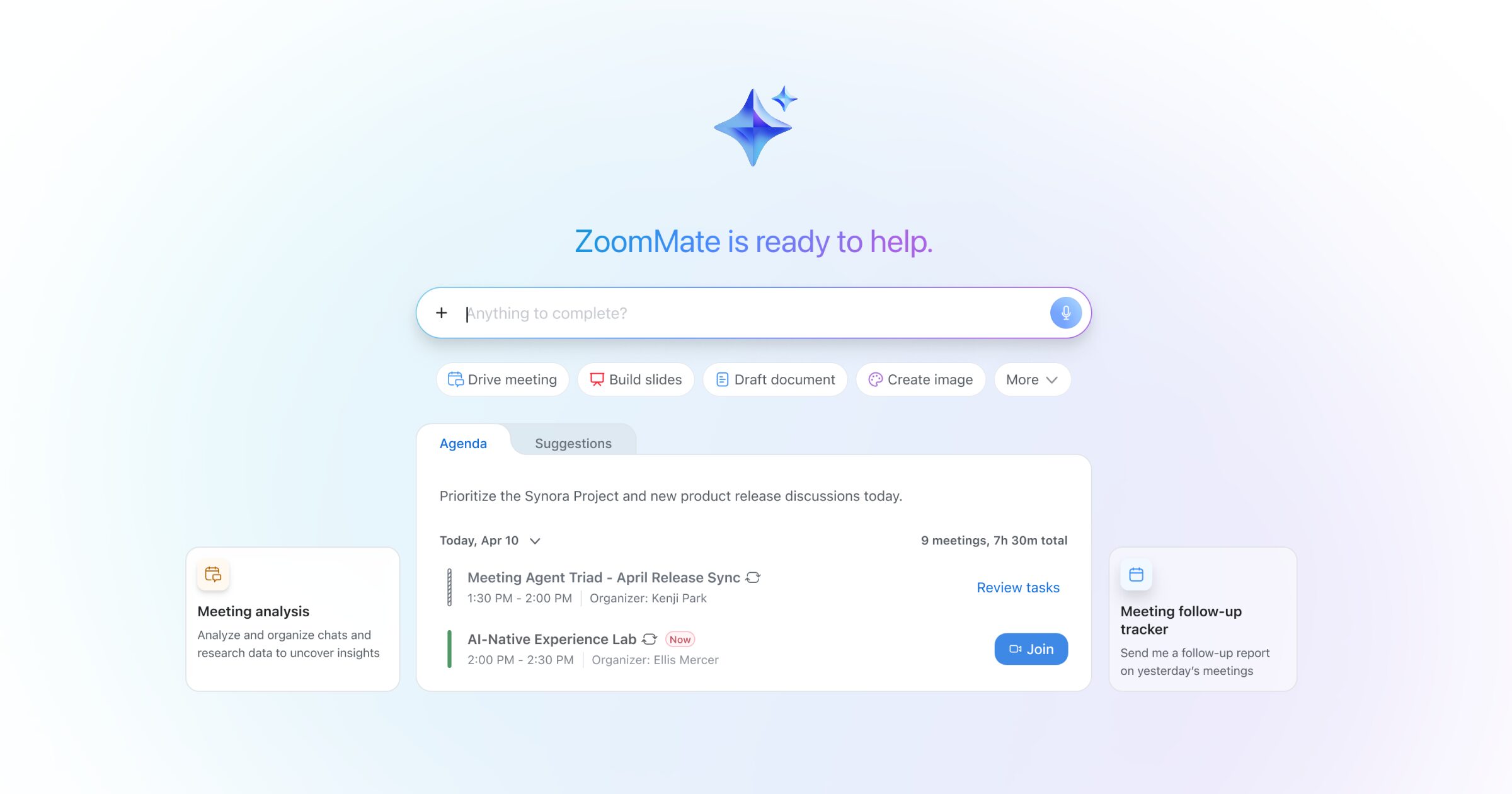
That gap is not a marketing invention. Zoom cites McKinsey’s Superagency in the Workplace report, which found that 92% of companies plan to increase AI spending over the next three years, yet only 1% of leaders say their organisation has reached AI maturity. Translation: everyone is buying AI; almost no one feels they’ve actually got it working. The bottleneck, the argument goes, isn’t ambition – it’s the distance between a conversation and a finished task.
ZoomMate organises itself around three verbs that map neatly onto a normal week: find, take action, and create. The first is agentic search. Instead of remembering which of your seven apps a piece of information lives in, you ask a question in plain language and ZoomMate searches across the systems you’ve connected – Google Drive, Salesforce, ServiceNow, Confluence, OneDrive, Box, plus Zoom’s own meeting and chat history – and returns a synthesised, cited answer rather than a list of links. Two features here matter more than the demo flash: it’s context-aware (it tries to understand what kind of question you’re asking and where the answer is likely to live), and it’s permissions-aware (you only see what you already have access to, so it won’t accidentally surface the salary spreadsheet you weren’t supposed to find).
The second verb is where it gets more interesting, and more worth scrutinising. ZoomMate’s orchestration layer can assign tasks, kick off multi-step workflows, update systems of record and automate the recurring admin that quietly eats a calendar. You can describe a workflow in natural language – Zoom’s example is “when someone files a support ticket about pricing, route it to the sales team and post a notification in the deal channel” – or build one visually, with approval checkpoints so a human stays in the loop where it counts. There are also custom “agents,” configured to understand a specific team or product line, that live inside Zoom chats and channels. Notably, Zoom’s own materials flag that agents will only be available later in June 2026 – a useful reminder that some of the most eye-catching capabilities are still arriving.
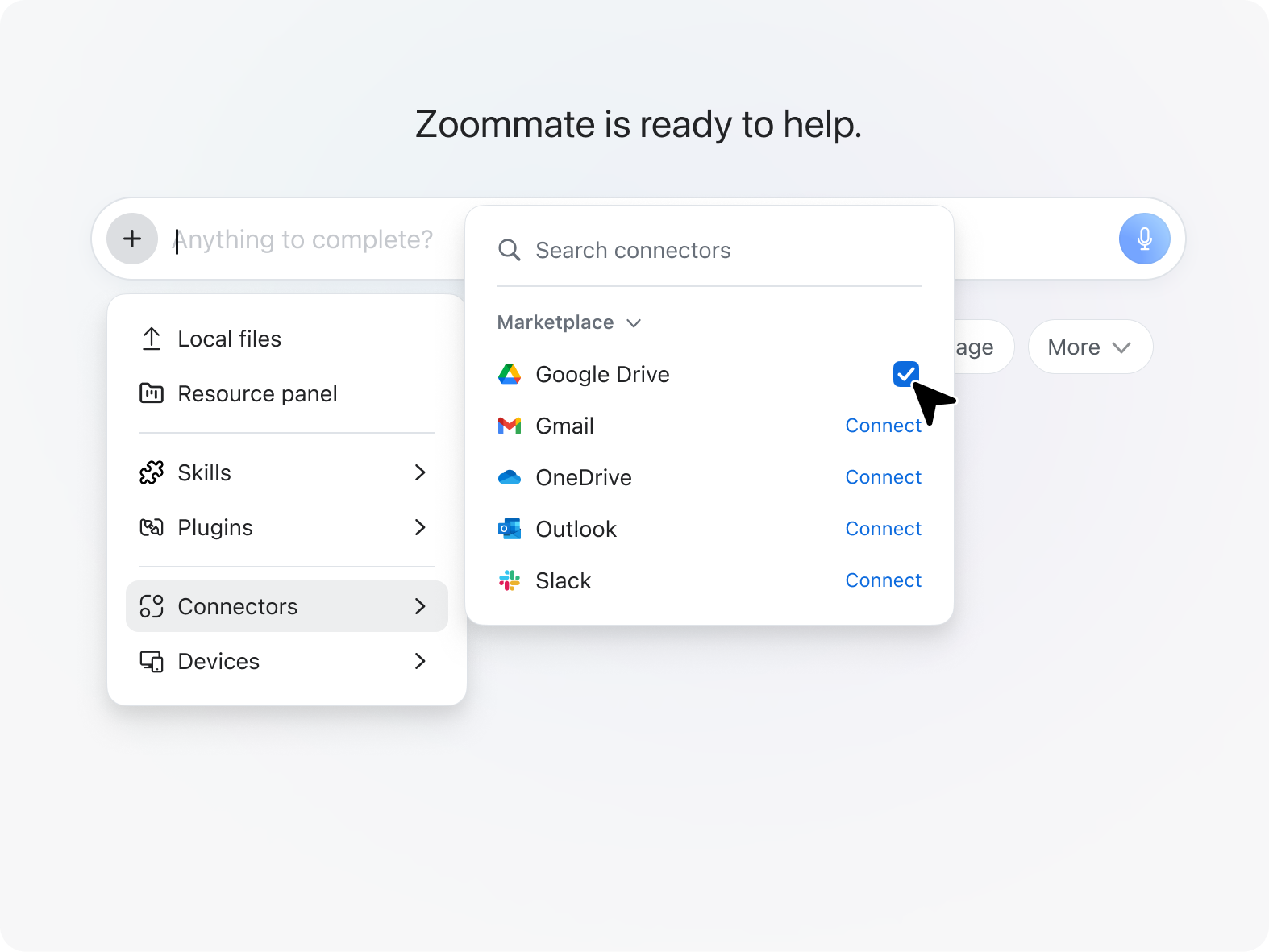
The third verb, create, is the one most likely to resonate with anyone whose job involves turning conversations into deliverables. Zoom’s AI Productivity Suite – Slides, Sheets, Paper and Canvas – generates first drafts grounded in the discussions that prompted them. The deck for next week’s customer review is drafted from your last three calls with that client, the CRM record and the brief you typed in chat. The Q3 status report assembles itself from actual project conversations rather than your hazy memory. You still edit, decide and ship; you just start at “first usable draft” instead of a blinking cursor.
It is worth being clear-eyed about the framing, because Zoom certainly is. This is a product launch, and the case is being made by the company selling it. The supporting numbers come from Zoom’s own 2026 GenAI ROI Study, a survey of 500 US-based knowledge workers: Zoom AI users report reclaiming three to six hours a week from meeting prep and follow-up, 72% rate AI’s business impact as high or extremely high (versus 63% for the broader generative AI market), and 86% of GenAI users overall report improved productivity once AI is embedded in their workflow. Encouraging, but self-reported and self-commissioned – read accordingly.
What does feel genuinely directional is the bet underneath it. The first wave of workplace AI gave us better notes. The next wave, if Zoom is right, goes after the hours between the conversation and the completed task – the follow-up emails, the status decks, the CRM updates, the slow translation of what was said into what gets done. For a generation of women who carry a disproportionate amount of that invisible, coordinating, “just circling back” labour, an assistant that absorbs it is either a genuine unlock or one more system to babysit.
The honest answer is that we don’t know yet. The most advanced features run as metered services on AI credits, availability varies by customer type and region, and the agents aren’t even fully live. But the direction of travel is clear, and it’s pointed at the least glamorous, most time-shredding part of modern work. If it delivers even half of what it promises, the quiet victory won’t be flashier meetings. It’ll be getting your Sunday night back.
Some of the products and services featured in this article may be from our affiliate partners, which means we may earn a small commission if you make a purchase through these links — at no extra cost to you. Our editorial team only spotlights what we genuinely love and think you will, too.
One response to “Your Meetings Generate Homework. ZoomMate Wants to Do It for You”
-
I wonder how ZoomMate compares to other AI tools. Seems like it could streamline a lot of meetings.

Leave a Comment