
Beauty tech is evolving faster than your skincare clutter list, and PRP – short for Platelet-Rich Plasma – still holds a special kind of glow-up allure. You know the pitch: a dash of your own blood, spun smartly, and reinjected to revive collagen, boost glow, or even reinvigorate thinning hair. But behind that alchemy lies a technical battlefield: not all PRP is made equally.
Two critical elements dictate success: system quality and biological purity. Low-end devices may produce a diluted brew mixed with red or white blood cells (hello, counterproductive inflammation), while premium medical systems aim to isolate a potent cocktail of platelets and growth factors. And that difference can literally mean the difference between seeing a glow and seeing… nothing.
RELATED ARTICLES:
20 Beauty Tech Start Ups To Have On Your Radar in 2025
The Rise of Luxe At-Home Beauty Gadgets: What’s Behind the Trend
“We only use medical-grade PRP systems that produce a higher concentration of platelets and growth factors,” explains Dr Hayder Ria, aesthetic doctor and founder of Harley Street Dermal.
“This ensures the plasma we inject is as pure and potent as possible. When the quality is right, PRP can truly regenerate tissue – improving skin structure, boosting elasticity, and encouraging new hair growth. When it’s not, you simply don’t get those same cellular benefits.” It’s a terse, clinical way of saying: your results depend on the precision of the spin.
The Science:
The process is deceptively simple: draw blood (like a regular lab test), spin it in a centrifuge, isolate the plasma rich in platelets and growth factors, then inject that elixir into skin or scalp. Once delivered, the growth factors initiate cascades of healing, collagen synthesis, and cellular rejuvenation.
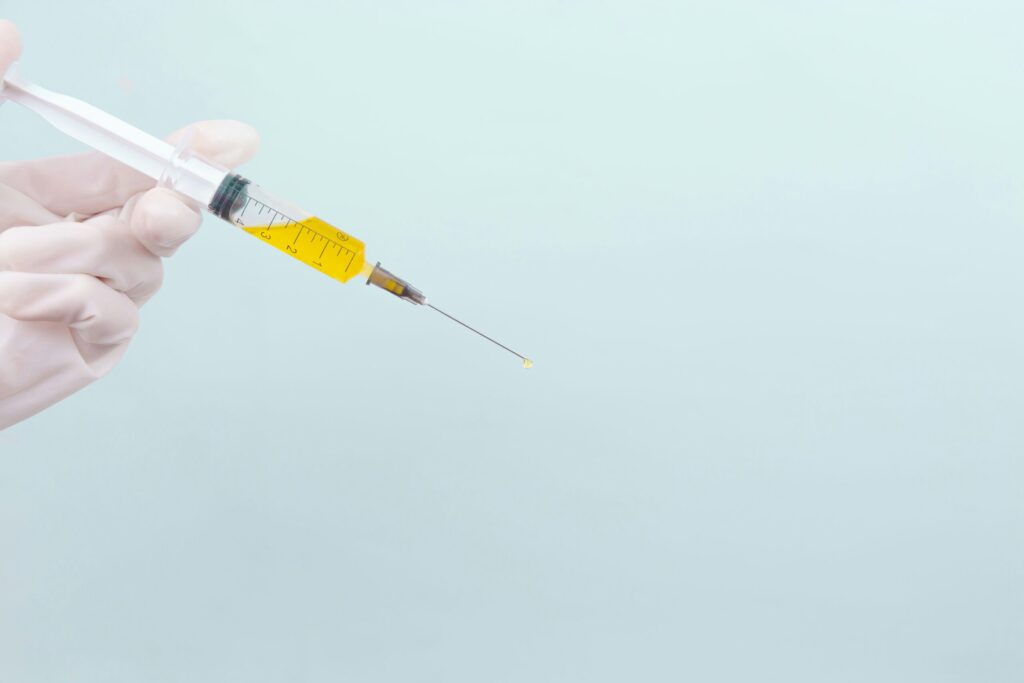
PRP (Platelet-Rich Plasma) is the golden elixir behind regenerative beauty treatments that promise glow, growth, and collagen revival.
Yet – and this is the tech twist – the centrifuge parameters (speed, duration, rotor design) and separator technology (how it filters out unwanted cells) determine how clean and rich that final fluid really is. A sloppy spin equals a less effective treatment.
Clinics using substandard kits might deliver a soggy mix crowded by unwanted cellular “noise” – which can blunt benefits or even cause irritation. On the flip side, clean, well-engineered systems deliver a high-signal, growth-factor rich plasma that gives your cells something worth bingeing on.
Why the “Divide” Matters for Skin & Hair
Because PRP is an autologous (your-own-body) procedure, it’s inherently safer than many injectables or aggressive resurfacing. When done right, it doesn’t just gloss the surface – it tweaks the system under the hood. Repaired tissue architecture, improved elasticity, stronger follicles – it’s like sending your skin (or hair) to tech camp.
But skip the quality control, and you risk underwhelming outcomes. No glow, no bounce, maybe redness – essentially, you paid for the concept, not the effect.
Broader Context: PRP in the Age of Beauty Tech
In the broader sphere of aesthetic tech, PRP sits at an interesting intersection: it’s biological and technologic. It’s the sort of treatment that can appeal to tech-savvy millennials who don’t just want pretty skin – they want smart skin.
As the beauty gadget boom accelerates, with devices like LED masks, microcurrent tools, and microneedling systems capturing headlines and wallets, PRP competes not by gimmicks but by precision and purity. It must deliver at a cellular level – not just in marketing speak.
RELATED ARTICLES:
Best Beauty Tech Instagram Accounts To Follow In 2025
Beauty Tech Brand Lustre ClearSkin Is About To Be Everywhere
How to Judge Your Next PRP Appointment
- Check the concentration. Good clinics should share platelet counts or fold-increase over baseline.
- Inquire about purity. Are red or white cells present?
- Observe their protocol. Good tech means standardised workflows – e.g. consistent spin times, sterile tubes.
- Manage expectations. PRP is gradual. Don’t expect overnight glow, but over weeks to months, you should see change.
RELATED ARTICLES:
Kim Byung Hoon is South Korea’s Newest Beauty Tech Billionaire
L’Oréal Beauty Tech Atelier: Here’s How To Enter
As the beauty tech and biohacking boom continues l PRP stands out as one of the few treatments where your own biology is at the core – but only effective when the engineering behind it is rigorous.
Because when the spinning is precise, the results can shine. But when it’s sloppy? That’s when the divide becomes obvious: a glowing meme versus a meh moment.
Some of the products and services featured in this article may be from our affiliate partners, which means we may earn a small commission if you make a purchase through these links — at no extra cost to you. Our editorial team only spotlights what we genuinely love and think you will, too.
5 responses to “Why Some ‘Liquid Gold’ PRP Treatments Work Better Than Others: A Tech-Driven Breakdown”
-
… [Trackback]
[…] Information on that Topic: themodems.com/beauty/why-some-prp-treatments-work-better-than-others/ […]
-
… [Trackback]
[…] Find More to that Topic: themodems.com/beauty/why-some-prp-treatments-work-better-than-others/ […]
-
… [Trackback]
[…] There you can find 77049 more Information on that Topic: themodems.com/beauty/why-some-prp-treatments-work-better-than-others/ […]
-
… [Trackback]
[…] There you can find 72343 more Info on that Topic: themodems.com/beauty/why-some-prp-treatments-work-better-than-others/ […]
-
… [Trackback]
[…] Find More on to that Topic: themodems.com/beauty/why-some-prp-treatments-work-better-than-others/ […]
Leave a Comment