
Dr Sumbul Desai is Apple’s Vice President of Health, and has become one of the driving forces behind the company’s most ambitious wellbeing innovations. A physician, engineer and former Stanford academic, Dr Desai now leads Apple’s global health strategy – the reason your wrist can spot a heart irregularity, track your menstrual cycle, or nudge you to breathe.
The Modems joined a small group of editors for an intimate lunch at Apple’s Battersea HQ, as she introduced us to Apple Watch Series 11 – a thinner, tougher and smarter evolution of the world’s best-selling watch, designed around two quietly transformative goals: helping users recognise patterns of chronic high blood pressure and finally getting better sleep. The new model debuts hypertension notifications and a sleep score that turns your nightly data into real-life insights, layered over the latest watchOS 26 updates that make staying healthy feel less like homework and more like habit.
RELATED ARTICLES:
Apple Is Working On An AI Health Tool
Wearable Tech Is The UK’s Biggest Wellness Trend
Apple’s framing is clear. Series 11 brings “the most comprehensive set of health features yet,” with up to 24 hours of battery life and Ion-X glass that’s 2x more scratch-resistant, so you can wear it through the day and into the night without anxiety. But the philosophy matters as much as the features. Dr Desai puts it simply: “We really think about health holistically… Our goal is really to empower our users to live the healthiest life they can possible by empowering them with information that is actionable.”
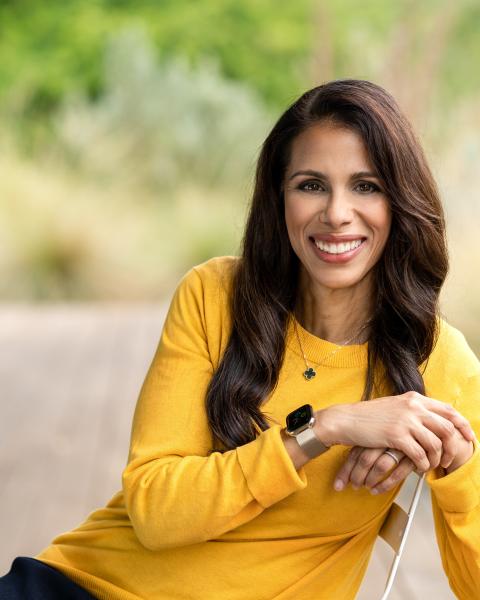
From Stanford to Cupertino, Dr Sumbul Desai’s vision bridges medicine and technology – transforming the Apple Watch into a personal health companion for millions.
Hypertension notifications: a nudge before a crisis:
Hypertension is common, consequential and often invisible until it isn’t. The Series 11 approach is pattern-first. “For example, the hypertension feature that you saw – it took us years to build, actually, because we ran a number of studies to make sure that we could actually validate it,” Dr Desai says. It monitors photoplethysmography signals – that familiar green light – over time and looks for sustained patterns that correlate with chronic high blood pressure.
This is not a cuff and not a diagnosis. It is a smart early warning. “That light shines into your wrist, and what we are able to do is from the blood flow that comes from beats of your heart, we’re able to actually measure the pattern. And that pattern, if it correlates with hypertension, that’s when we notify you.” The point is not to medicalise your every heartbeat, but to prompt a GP conversation with proper measurements long before symptoms crash your calendar.
RELATED ARTICLES:
Why Are Doctors Skeptical About Wearable Tech?
21 Features We Loved from Apple’s WWDC24
Hypertension is not just your parents’ problem. “Sometimes people think about high blood pressure as a disease of the elderly. It’s actually not,” she stresses. “The earlier that you can focus on it, the better it is for your heart, and we really want you to be proactive and preventative around your health.” For millennial women, that means clocking stress, salt, alcohol, sleep and exercise – the unsexy levers that quietly dial risk up or down.
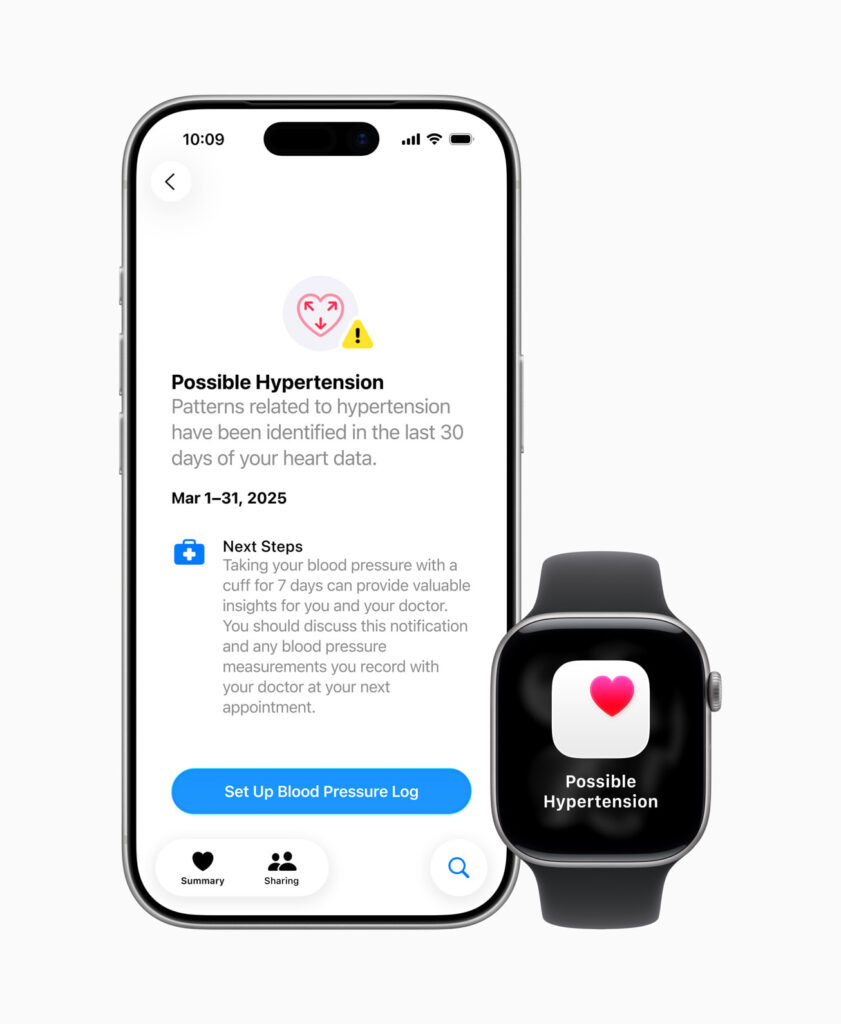
The Series 11 introduces hypertension notifications that spot 30-day patterns of raised blood pressure – empowering users to act before symptoms appear.
“According to the World Health Organization, hypertension is the most frequently present risk factor for non-communicable diseases worldwide. Despite this, it is also the most neglected traditional risk factor, which is an important missed opportunity for prevention,” explains Professor Angela H.E.M. Maas, FESC in her paper Hypertension in women: no ‘silent’ lady-killer published in the e-Journal of Cardiology Practice, Vol. 17, No. 21, “As women have unique phases in life that may disclose a higher susceptibility to develop hypertension, we focus on female patients. Only half of all patients with hypertension are currently treated appropriately – and this accounts even more for women than for men.”
Apple’s development lens is threefold: science, actionability and privacy. “We’re big believers in actionability with data, not just giving you data for data’s sake.” And on privacy: “Anything health related… is encrypted on your device… For the hypertension feature, if it notices any measurements, it’s on your watch or is processed on the phone. It’s never processed in a cloud… The privacy that you expect from your doctors, you should expect from your technology.” That stance matters when sensitive health insights live on your wrist.
RELATED ARTICLES:
Apple Is Working On “AI Doctors”
Apple Watch can detect Covid-19 one week before regular symptoms
Sleep score: from vibes to variables:
Apple has tracked sleep for years. The new sleep score is the translation layer – a lightweight, readable number designed to help you spot patterns and nudge routines. “Sleep score… is just a fun light way for you to understand your sleep,” says Dr Desai. The aim is gentle clarity, not perfectionism. “We want people to understand that if they can start noticing patterns about their sleep… when they sleep better, or if they exercise later, did that impact their sleep.”
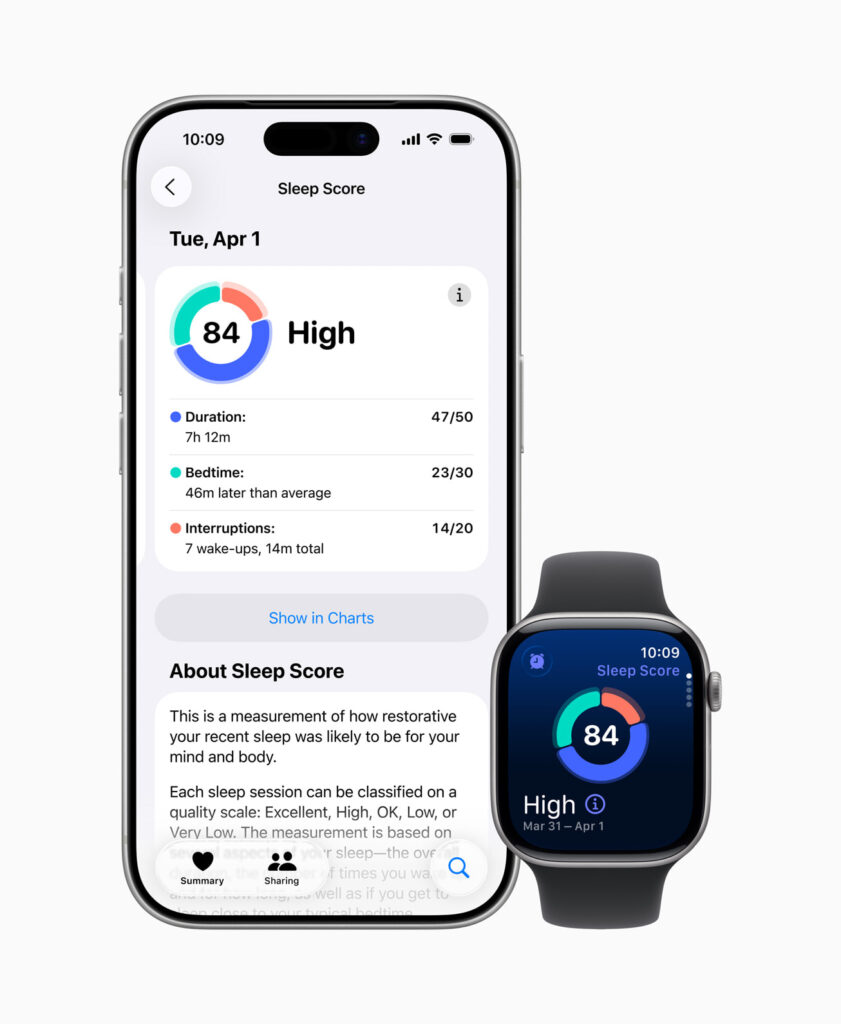
Apple’s new Sleep Score turns your night into data you can actually use – measuring duration, bedtime consistency and interruptions to show how restorative your rest really was.
Sleep is a mental health multiplier. Dr Desai is candid about her own experience. “When I was nursing with my third child, I started feeling very down… The most enlightening thing that my physician told me to do is drop a midnight pump. And just by sleeping, I had improved my mental health.” The same logic scales to our readers juggling careers, kids, side hustles and skin cycles – sleep is the first domino.
RELATED ARTICLES:
10 Best Sleep Tech Gadgets for Better Rest
10 Best Sleep & Meditation Apps
Sleep literacy is especially urgent for teens, the Gen Alpha and Gen Z in your life. “At certain ages… it’s 9 to 12 hours of sleep that people require,” Dr Desai notes, echoing experts who link poor adolescent sleep to anxiety and low mood. While Apple Watch is marketed to adults, the cultural lesson lands for everyone at the dinner table: bedtime is brain care.
So how does a score become a habit? Pair the number with a weekly review. If late-night workouts tank your score, shift them earlier. If pasta and pinot torpedo REM, test a 2-hour cut-off. If a Sunday phone detox boosts consistency, keep it. The watch supplies the mirror; you supply the micro-experiments.
RELATED ARTICLES:
WHOOP Just Got A Major Upgrade
Apple is about to dominate fitness streaming
How Apple builds health features users will actually use:
Some ideas start as letters and emails from users explains Dr Desai. Elevated heart rates led to high and low heart rate notifications; irregular patterns led to “irregular rhythm notification.” Others start with hardware capabilities and long research arcs, as with hypertension. The bar is high because the audience is everyone. “When you do consumer products like this… we really spend a lot of time being very rigorous on diversity of population.” The signal Apple watches for held across demographics, and “we do use a lot of algorithmic AI NML machine learning to be able to take all of those data points and be able to compare against a traditional blood pressure cuff.”
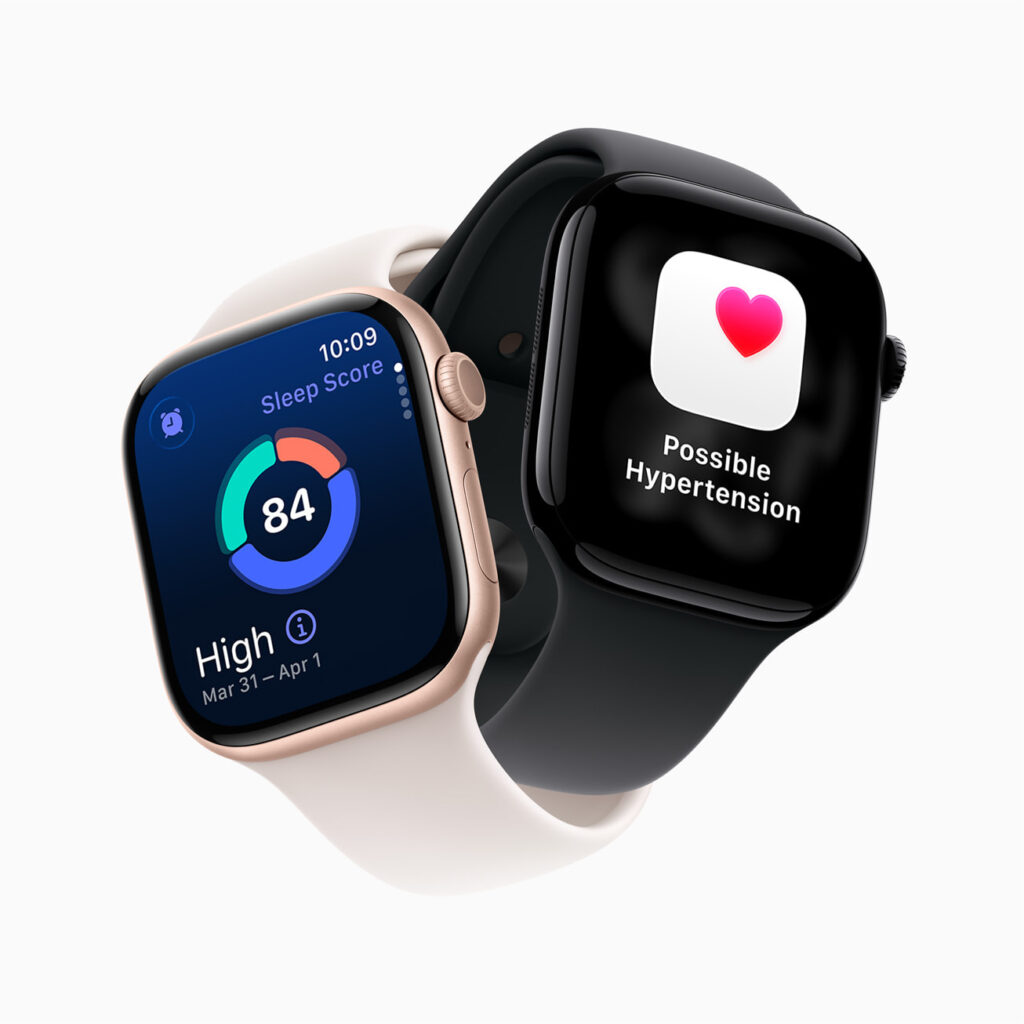
From Sleep Score to Hypertension alerts, the new Apple Watch Series 11 makes health tracking more intuitive, personal and stylish than ever.
All of this is in service of one question: will it change behaviour? The answer depends on what happens after the notification. The playbook we heard is pragmatic: surface a sustained pattern, keep the analysis on-device, and make the next step obvious – book a GP, bring your data, and discuss lifestyle or medication if needed.
RELATED ARTICLES:
Why Are Doctors Skeptical About Wearable Tech?
21 Features We Loved from Apple’s WWDC24
How To Use It Like A Modems IT-Girl:
- Turn it on – enable hypertension notifications and sleep tracking, then let the watch collect 30 days of baseline data.
- Make it actionable – a sustained high-BP pattern is your cue for a GP appointment with a proper cuff. Bring your Health export.
- Audit your app stack – prune anything with sketchy privacy nutrition labels. Health data is not content; it is you.
- Run weekly sleep retros – check the trends tab every Sunday and change exactly one habit for seven days.
- Stack gentle cues – set wind-down, charge the watch during dinner, keep the bedroom cool and dark. Small frictions add up.
- Track stress adjacencies – caffeine, alcohol, sodium and late exercise show up fast in both BP patterns and sleep score.
RELATED ARTICLES:
10 Best Sleep Tech Gadgets for Better Rest
Wearable Tech Is The UK’s Biggest Wellness Trend
Hypertension notifications and sleep score are not diagnoses – they are early warnings and behaviour mirrors. What makes Apple’s take notable is the trio Dr Desai kept returning to: scientific validation, actionability and on-device privacy.
“Anything we tell you, we want it to be actionable,” she says. If that sounds like a wellness cliché, the difference is receipts – a 30-day pattern on your wrist and one small habit you can actually change this week.
Some of the products and services featured in this article may be from our affiliate partners, which means we may earn a small commission if you make a purchase through these links — at no extra cost to you. Our editorial team only spotlights what we genuinely love and think you will, too.
8 responses to “Apple’s VP of Health Sumbul Desai MD On How To Sleep Better And Live Longer With The Series 11 Watch”
-
… [Trackback]
[…] Find More here on that Topic: themodems.com/health/apple-vp-of-health-sumbul-desai-md-exclusive-interview/ […]
-
… [Trackback]
[…] Find More on to that Topic: themodems.com/health/apple-vp-of-health-sumbul-desai-md-exclusive-interview/ […]
-
… [Trackback]
[…] Read More here to that Topic: themodems.com/health/apple-vp-of-health-sumbul-desai-md-exclusive-interview/ […]
-
… [Trackback]
[…] Read More here on that Topic: themodems.com/health/apple-vp-of-health-sumbul-desai-md-exclusive-interview/ […]
-
… [Trackback]
[…] Here you can find 39287 additional Information to that Topic: themodems.com/health/apple-vp-of-health-sumbul-desai-md-exclusive-interview/ […]
-
… [Trackback]
[…] Information to that Topic: themodems.com/health/apple-vp-of-health-sumbul-desai-md-exclusive-interview/ […]
-
… [Trackback]
[…] Read More Info here on that Topic: themodems.com/health/apple-vp-of-health-sumbul-desai-md-exclusive-interview/ […]
-
… [Trackback]
[…] Read More to that Topic: themodems.com/health/apple-vp-of-health-sumbul-desai-md-exclusive-interview/ […]
Leave a Comment