
At a time when screen time feels like a global addiction, the most compelling conversation about our collective digital wellbeing isn’t coming from Silicon Valley – it’s coming from Kensington Palace.
On Sunday 23rd November, The Royal Foundation Centre for Early Childhood, spearheaded by Her Royal Highness The Princess of Wales, announced a new £100,000 research project to study “technoference”: the quasi-invisible interference caused by digital devices during family life.
The study aims to uncover why 62% of adults admit they’re distracted by phones when spending time with family – and why 83% of parents with under-fives say they need more support. In an age where toddlers tap screens before they can tie shoelaces, Princess Kate is asking a deceptively simple question: What is the cost of divided attention?
Biohacking Beauty: Why Microbiome Skincare Matters
The AI Puppy Trend: How Gen Z Are Reinventing Digital Companionship
Far from demonising technology the Centre’s new study will examine how, when, and why parents turn to their devices – and test practical ways to reduce that interference. Unlike previous research that focuses mainly on screen-time effects on children, this project zooms in on the subtler, often invisible habits of adults. Because the truth is: this isn’t about the kids scrolling. It’s about the adults scrolling while kids are building their entire emotional architecture around those interactions.
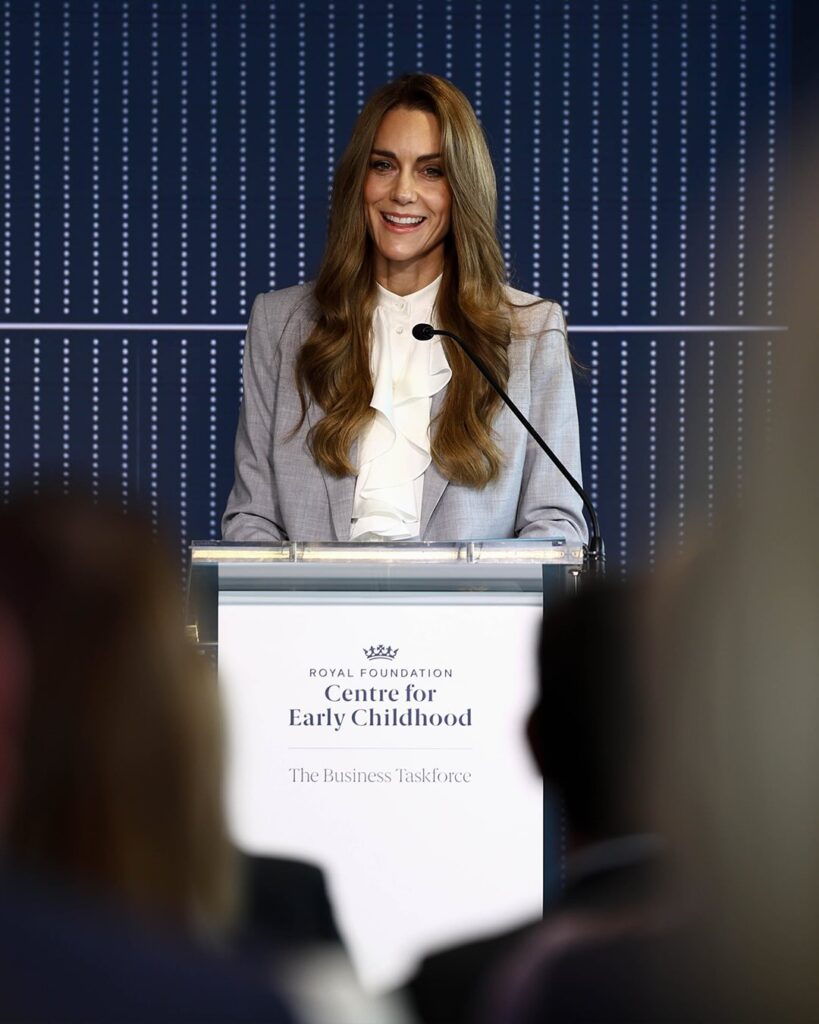
When Princess Kate talks early childhood – business leaders listen. The future of emotional skills (and maybe your screen time habits) start right here.
Credit: @earlychildhood
Christian Guy, Executive Director of The Centre, put it bluntly, “There have been numerous studies about how digital devices impact relationships, but there is currently a lack of evidence about what is causing people to turn to their digital devices at times when it is interrupting family life.” In other words: we know screens are distracting – but we don’t necessarily know why parents pick them up in those moments.
Does Driving an EV Make You Hotter? Gen Z Says Yes
Inside IKEA’s New Smart Home Tech
This announcement follows The Centre’s recent Future Workforce Summit, where Princess Kate emphasised that technological progress must not eclipse the human foundations children need most: consistent, nurturing relationships. It’s an idea she expands on in her essay The Power of Human Connection in a Distracted World, which was written in collaboration with psychiatrist and psychoanalyst Professor Robert Waldinger who is Director of the Harvard Study of Adult Development.
“What keeps us happy and healthy as we go through life?” she asks in the essay. The answer, she writes, is ironically ‘unscientific’ yet has been scientifically proven to be true: “The quality of our relationships matters more than almost anything else.”
Her essay traces the findings of Waldinger’s Harvard Study of Adult Development – the longest study of adult life ever conducted – which found that warm, meaningful relationships predict long-term health far more than cholesterol, blood pressure, or income. “Quality trumped quantity in every measure that mattered,” she writes.
2026 Tweakments: The Year of Regenerative Beauty
Why Gen Z Is Ditching Smartphones for Dumb Phones
But the most compelling part of the essay – and the heart of this new study – is her unflinching look at how technology has reshaped our emotional landscape.
“While digital devices promise to keep us connected, they frequently do the opposite,” she writes. “We’re physically present but mentally absent.” In a sentence that feels painfully familiar to anyone who has doomscrolled during dinner, she warns that devices “fragment our focus” and undermine the undivided attention that meaningful relationships require.
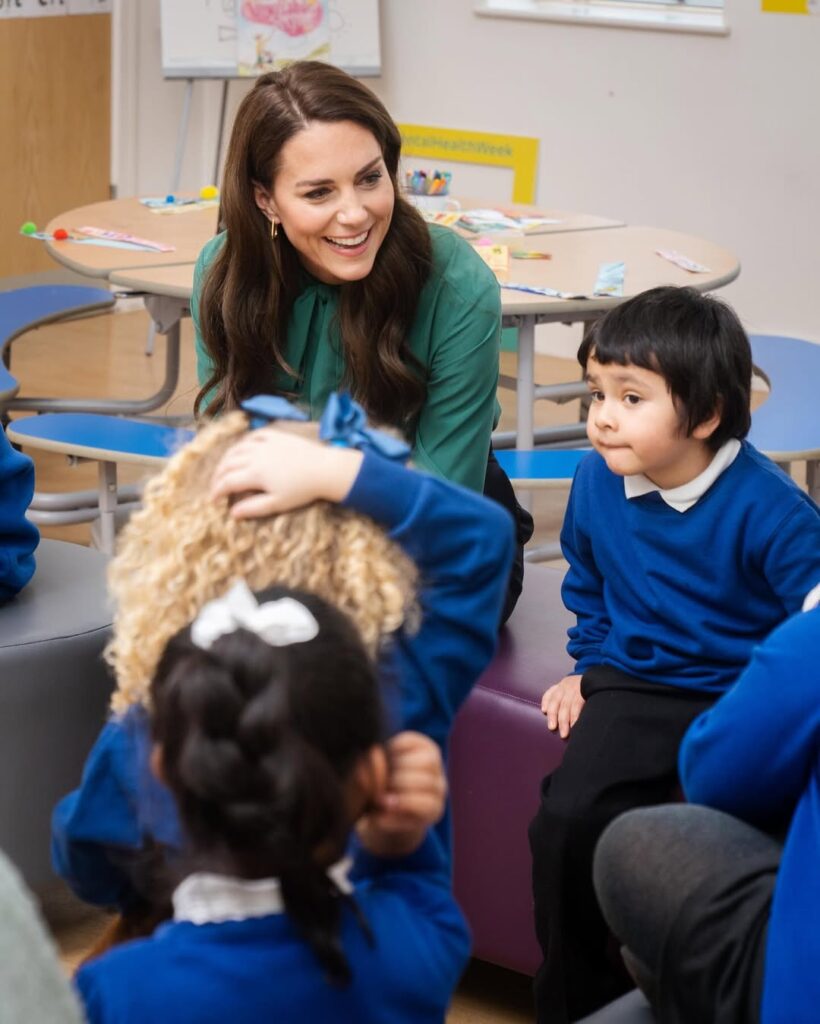
The Princess of Wales doing what she does best – championing early childhood development and looking impossibly polished while doing it.
Credit: @earlychildhood
For families with young children, the stakes are even higher. Neuroscience shows that from pregnancy to age five, children form roughly one million neural connections per second. During this period, warm, attentive interactions help build the social and emotional scaffolding that shapes their future relationships, conflict resolution skills, and emotional stability.
How Digital Detox Tools Are Becoming Chic
The Internet’s New Obsession With Minimalist Tech
Princess Kate’s message is clear: we’re raising a generation that may be more “connected” than any in history – yet lonelier, more distracted, and less emotionally anchored. Her essay notes: “We sit together in the same room while our minds are scattered across dozens of apps, notifications, and feeds.”
The term at the centre of this new research grant is ‘technoference.’ It refers not to deliberate neglect but to micro-moments of disconnection – checking WhatsApp during bathtime, refreshing emails mid-conversation, tapping through TikToks when a toddler seeks attention. None of these behaviours individually seem harmful. But cumulatively, they erode the warmth and attunement young children need to feel secure.
And while parents often blame themselves, the essay acknowledges the structural and emotional context: adults who lack their own emotional support, are overwhelmed, face financial stress, or have experienced adversity may understandably struggle more. The Centre affirms its aim is not to judge – but to understand why.
Inside the Rise of AI-Enabled Lifestyle Gadgets
How Tech Is Quietly Rewiring Our Relationships
Alongside the funding, the Centre for Early Childhood is also releasing resources that focus on those everyday “micro-moments” of connection – bedtime stories, shared glances, whispered encouragement. Their ‘Shaping Us Framework‘, a guide of skills launched earlier this year, focuses on developing social and emotional skills in early childhood – the same skills, research shows, that predict the ability to maintain strong relationships well into adulthood.
Princess Kate sees this as a generational investment: “These social and emotional skills are teachable,” she writes. “Teaching children to better understand both their inner and outer worlds sets them up for a lifetime of more loving and more fulfilling relationships.”
And she doesn’t place all the responsibility on parents alone. Her call to action extends outward – to communities, workplaces, health services, and policymakers – to support families in a world where digital distraction is more predictable than the weather. But the emotional heartbeat of her message rests in one deceptively simple action: “Look the people you care about in the eye and be fully there – because that is where love begins.”
A Royal Intervention for a Hyper-Distracted Era:
At a time when ‘Big Tech’ is inadvertently teaching toddlers to swipe before they can speak, it feels almost radical for anyone to advocate for ‘presence’. But as we at The Modems see it; it appears the Princess of Wales isn’t rejecting technology, she’s simply asking us to renegotiate with it. To use it intentionally. To model balance for the littlest humans who take their cues from us.
Her foundation’s new study will not solve the tech-life balance overnight. But it could give parents – and policymakers – something they haven’t had before: data-driven solutions to a problem that feels universal yet under-examined.
Behind the regal branding and institutional language, the message is profoundly human: If you want your children to thrive, let connection IRL become your home screen.
What Did Princess Kate Actually Say About ‘Digital Distraction’ And Technology?
Her Royal Highness The Princess of Wales’ original essay titled, ‘The Power of Human Connection in a Distracted World’ was first published on the 9 October 2025 in collaboration with Professor Robert Waldinger. Below is the unchanged essay in full, you can also read it in its original context on The Royal Foundation Centre for Early Childhood’s official website here.
The Power of Human Connection in a Distracted World
“What keeps us happy and healthy as we go through life? If you could invest in just one thing that would help you and your family thrive, where would you put your time and energy? These questions might seem simple, but their answers hold profound implications for how we live our lives and raise our children. Science gives us a surprisingly clear answer: the quality of our relationships matters more than almost anything else.
The Harvard Study of Adult Development, which began in 1938, represents the longest investigation into adult life ever conducted. Over the decades, these researchers studied every major domain of life: mental health, physical health, work, relationships, and ageing.
After following thousands of people from their teens through their eighties and nineties, examining data from their twenties, thirties, and forties to predict who would stay healthy and live longest, the researchers discovered something remarkable.
The best predictor of who would live a happy, healthy life wasn’t blood pressure. It wasn’t cholesterol levels. It was the quality of their connections with other people. The people who were more connected to others stayed healthier and were happier throughout their lives. And it wasn’t simply about seeing more people each week. It was about having warmer, more meaningful connections. Quality trumped quantity in every measure that mattered.
It makes sense that warmer relationships can make us happier, but how can they also help to protect us from various diseases and health conditions? As other studies began finding the same patterns, scientists started understanding the powerful biological pathways through which human connection influences our health. Much of it relates to stress regulation: good relationships help us to find balance and manage the inevitable stresses of life, preventing them from breaking down our bodies over time.
The implications extend across generations. People who developed strong social and emotional skills in childhood maintained warmer connections with their spouses six decades later, even into their eighties and nineties. This demonstrates that these skills are not only teachable but have remarkably long-lasting effects.
Teaching children to better understand both their inner and outer worlds sets them up for a lifetime of healthier, more fulfilling relationships.
But if connection is the key to human thriving, we face a concerning reality: every social trend is moving in the opposite direction. For the past 70 years, we have been investing less and less in each other. We are less likely to have dinner together as a family – something we know has an enormous impact on child development. We are less likely to have friends over. We are less likely to join clubs and community groups.
Perhaps most troubling of all, more people than ever report having no one they can confide in about what is going on in their life.
We live increasingly lonelier lives, which research shows is toxic to human health, and it’s our young people (aged 16 to 24) that report being the loneliest of all – the very generation that should be forming the relationships that will sustain them throughout life.
While new technology has many benefits, we must also acknowledge that it plays a complex and often troubling role in this epidemic of disconnection. While digital devices promise to keep us connected, they frequently do the opposite. Our smartphones, tablets, and computers have become sources of constant distraction, fragmenting our focus and preventing us from giving others the undivided attention that relationships require. We sit together in the same room while our minds are scattered across dozens of apps, notifications, and feeds. We’re physically present but mentally absent, unable to fully engage with the people right in front of us.
This technological interference strikes at something fundamental: our undivided attention is the most precious gift we can give another person. Yet, increasingly, it’s the most difficult gift to offer. When we check our phones during conversations, scroll through social media during family dinners, or respond to e-mails while playing with our children, we’re not just being distracted, we are withdrawing the basic form of love that human connection requires.
The challenge is particularly acute for today’s babies and young children who have been born into a world immersed in digital technology.
Neuroscience has shown us that early childhood is the golden opportunity to build strong foundations for future life outcomes. Pregnancy to the age of five is the fastest and most profound period of brain development in our lives, with an astonishing 1,000,000 new neural connections being formed every second. The brains of babies and young children are at their most malleable and open to change, as they constantly adapt to their interactions with the outside world.
Children who are raised in environments rooted in love, safety and dignity, are better able to develop the social and emotional scaffolding required to form healthy relationships, resolve conflict and grow into adults capable of building loving partnerships, families and communities themselves.
Ultimately, by nurturing the development of social and emotional skills in early life, we will be equipping children with the capacity to love and be loved. These skills will influence their success far more than academic achievements alone, and will touch every part of their lives, from how they form friendships, to how they raise their own children, to their values and the decisions they make. Honing these skills could be transformative as we look to the future and imagine a very different world.
The Royal Foundation Centre for Early Childhood’s Shaping Us Framework, and series of animated films launched this summer, are designed to showcase the many ways we can support the development of the social and emotional skills in our youngest children. These films can help everyone understand the remarkable value of routine interactions in forming loving relationships. They celebrate the everyday moments of connection, shared in every story, cuddle and whispered word of encouragement.
Providing this kind of nurturing environment is not always easy. It is important to acknowledge that adults are best able to care for a child when they have good social and emotional skills themselves; when they are healthy and have the resources and assistance they need. Those who have experienced significant adversity, including in their own childhoods, may understandably need more support. Likewise, it is a greater challenge for those facing difficult personal circumstances, whether financial, or due to poor health or social isolation. But just as science is confirming the lifelong importance of connections, we exist in a world that is more distracted than ever.
For babies and young children, the pull of screens will be even stronger than for older children and adults, the habits more deeply ingrained as they grow. Yet this is precisely the period when children should start developing the social and emotional skills that will serve them throughout life. We’re raising a generation that may be more “connected” than any in history while simultaneously being more isolated, more lonely, and less equipped to form the warm, meaningful relationships that research tells us are the foundation of a healthy life.
So, what are we to do about these trends driving us away from human connection? The answer begins with recognising that attention is something we can choose to give each other in every moment – at home, at work, in our communities. It requires conscious effort to be fully present with the people we care about. It means protecting sacred spaces for genuine connection: family dinners, conversations, moments of genuine eye contact and engaged listening.
For parents, it means understanding that the foundations for this are laid at a remarkably young age – in fact, before we are even born and in the earliest weeks and months of our lives when our brains undergo the fastest and most profound period of brain development. It means modeling these behaviors for our babies and children and teaching them skills they will need to navigate a world filled with technological distractions.
It means helping them understand that true connection requires presence, that relationships need tending, and that the quality of their connections will shape not just their happiness but their health for decades to come.
These social and emotional skills are teachable, and teaching children to better understand both their inner and outer worlds and how to best manage them sets them up for a lifetime of more loving and more fulfilling relationships. This may be the most important investment we can make in ourselves, our families and in the future of humankind
The evidence is clear: if you could invest in just one thing to help you and your family thrive, invest in the relationships you have with each other.
This is not just about creating a more loving environment for our children. It’s about creating a more loving world. And that begins with a simple, deliberate act.
Look the people you care about in the eye and be fully there – because that is where love begins. For babies and children who are raised in attentive and loving environments are better able to develop the social and emotional skills that will allow them to grow into adults capable of building loving partnerships, families, communities. This is our children’s greatest inheritance.”
Some of the products and services featured in this article may be from our affiliate partners, which means we may earn a small commission if you make a purchase through these links — at no extra cost to you. Our editorial team only spotlights what we genuinely love and think you will, too.
10 responses to “Princess Kate Wants to Tackle ‘Technoference’ – And She’s Putting £100,000 Behind It”
-
… [Trackback]
[…] There you can find 51699 additional Information to that Topic: themodems.com/health/princess-kate-middleton-technoference-100000-royal-foundation-centre-for-early-childhood/ […]
-
… [Trackback]
[…] Read More here to that Topic: themodems.com/health/princess-kate-middleton-technoference-100000-royal-foundation-centre-for-early-childhood/ […]
-
… [Trackback]
[…] Read More on that Topic: themodems.com/health/princess-kate-middleton-technoference-100000-royal-foundation-centre-for-early-childhood/ […]
-
… [Trackback]
[…] Read More to that Topic: themodems.com/health/princess-kate-middleton-technoference-100000-royal-foundation-centre-for-early-childhood/ […]
-
Thanks for making it so relatable.
-
So glad I stumbled upon this.
-
Clear, concise, and effective.
-
… [Trackback]
[…] Information to that Topic: themodems.com/health/princess-kate-middleton-technoference-100000-royal-foundation-centre-for-early-childhood/ […]
-
… [Trackback]
[…] Information on that Topic: themodems.com/health/princess-kate-middleton-technoference-100000-royal-foundation-centre-for-early-childhood/ […]
-
… [Trackback]
[…] Read More to that Topic: themodems.com/health/princess-kate-middleton-technoference-100000-royal-foundation-centre-for-early-childhood/ […]


Leave a Comment