
Turns out the world’s most famous museum used the world’s laziest password.
When reports emerged that the Louvre Museum’s internal surveillance system had been protected for years by the password “LOUVRE” (yes, in all caps), the internet reacted with the only appropriate response: disbelief and derision.

Through the looking glass: the Louvre Pyramid, both iconic and ironically insecure.
As one user put it, @PierreDeWulf tweeted: “So the video surveillance system password for the Louvre was… ‘Louvre’. But sure, AI is the thing we shouldn’t use because it’s not 100% accurate.”
The revelation sparked a collective facepalm across cyberspace, confirming what many in cybersecurity have long suspected – that some of the world’s most prestigious institutions still operate like it’s 1998.
Instagram’s New Algorithm Control Feature Could Have Prevented This Chaos
LiDAR-Based Spatial Intelligence Could Have Protected the Louvre
The Art of Bad Passwords
The scandal came to light following a multimillion-euro jewel heist at the Paris landmark. During the investigation, cybersecurity analysts discovered that the museum’s video-surveillance network had been running on the password “LOUVRE” for years – despite repeated warnings from France’s national cybersecurity agency, ANSSI.

One of the most retweeted posts of the week – because sometimes, you truly can’t make it up. Credit: @Valen10Francois
According to Libération, the flaw dated back to a 2014 audit that explicitly flagged the system’s vulnerabilities, including “weak password practices” and outdated surveillance servers. Yet somehow, no one thought to change it.
“Unbelievable,” tweeted @Valen10Francois. “One of the security passwords for the Louvre was… ‘Louvre’. You can’t make it up.”
The Vagus Nerve Gadget Everyone’s Talking About
AI Meets Art: How Museums Are Using Tech to Reimagine Culture
The Heist Heard ‘Round the World
In October 2025, thieves executed a seven-minute robbery that saw them escape with €88 million worth of jewels. They reportedly gained access via the museum’s video system – protected, of course, by its now-infamous password.
French officials admitted that the breach highlighted a chronic underestimation of digital threats within heritage institutions. In short: the world’s most visited museum had been prioritising paintings over passwords.
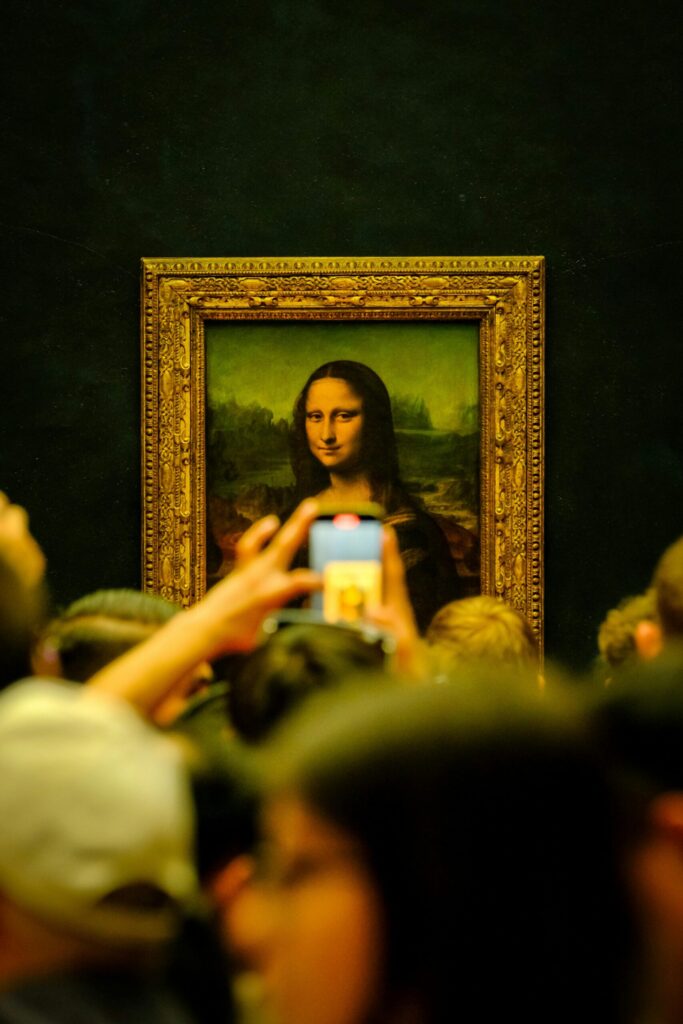
The world’s most guarded painting… except digitally, apparently.
The fallout has been more cultural than criminal. X (or Twitter, for those who refuse to move on) turned the saga into a viral comedy showcase.
User @xmuse_ summed it up perfectly: “Louvre’s budget: €250 million. Louvre’s password: 1234.” The tweet, paired with a photo of jewel-encrusted tiaras, has since gone viral.
Apple’s Health Upgrade: The Wearable Revolution Continues
Inside the Smart Home Security Tech Protecting the Super Rich
“The Concept of ‘Louvre’”
User @chiaswonderland posted a GIF of Cynthia Erivo with the caption: “The concept of ‘Louvre,’ which was the password of Louvre’s video surveillance.” Another user, @leinytae, shared a video of a frog blissfully floating on a lily pad, captioned: “Still thinking about the password for the Louvre video surveillance, aka ‘Louvre.’”
-
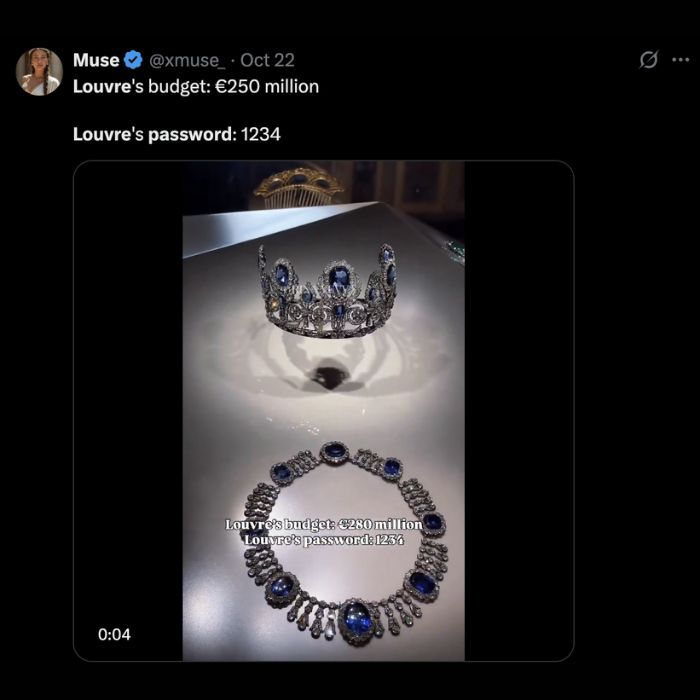
- Louvre’s treasures: €250 million worth of gems, protected by a password that cost €0. Credit: @xmuse_
-

- Even frogs on the internet took a moment to process the Louvre’s password choice. Credit: @leinytae
-

- When the internet heard the Louvre’s surveillance password was literally “Louvre,” chaos – and memes – ensued. Credit: @chiaswonderland
-
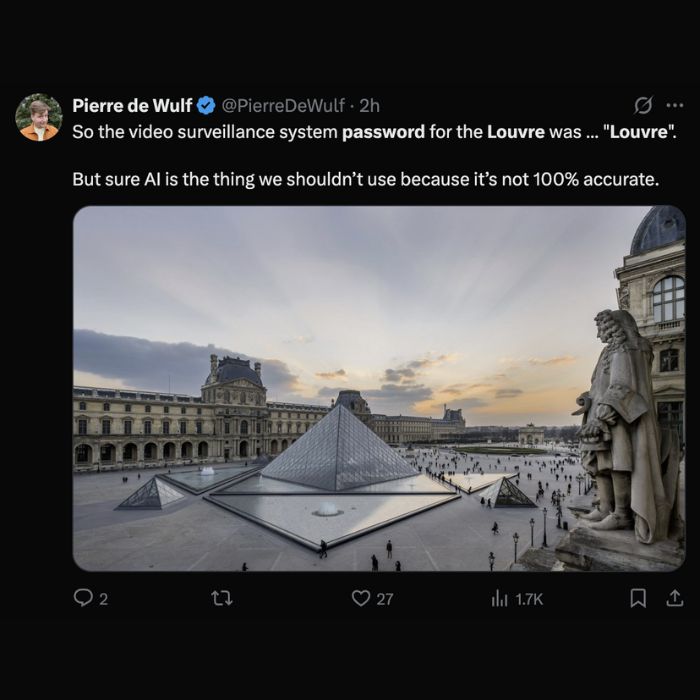
- The Louvre Museum, where the art is priceless and the password was… not. Credit: @PierreDeWulf
It became the perfect storm of digital absurdity – a reminder that in the age of AI art and billion-dollar tech ecosystems, sometimes the weakest link is just… a bas password.
The Digital Dopamine Edit: Tech That Boosts Your Mood
How AI is Quietly Redefining Luxury Design
France’s Password Problem
The Louvre leak is just the latest in a long line of cybersecurity embarrassments for France’s cultural institutions. ANSSI’s audit from 2014 also revealed “obsolete operating systems” and “unsegmented networks,” as reported by FTN News meaning one weak password could expose entire servers.
In today’s world of quantum encryption and biometric access, the fact that a world-class museum relied on a single word – its own name – feels almost performance art.
Neo Robot & The Gendered Future of Housework
Simpson & Partners Bring Quiet Luxury to EV Charging
From Fine Art to Fine Print
While investigators continue to track the missing jewels, the scandal has exposed deeper questions about digital readiness in the art world. Museums, like many heritage institutions, often struggle to balance modernisation with preservation.
France’s Ministry of Culture has since promised a complete overhaul of the Louvre’s surveillance and digital infrastructure by mid-2026. Future systems will reportedly include AI-powered monitoring, encrypted access, and automated password rotation.
The museum remains open, its crowds undeterred. But for cybersecurity experts, the incident is a wake-up call that cultural prestige doesn’t exempt anyone from digital responsibility.
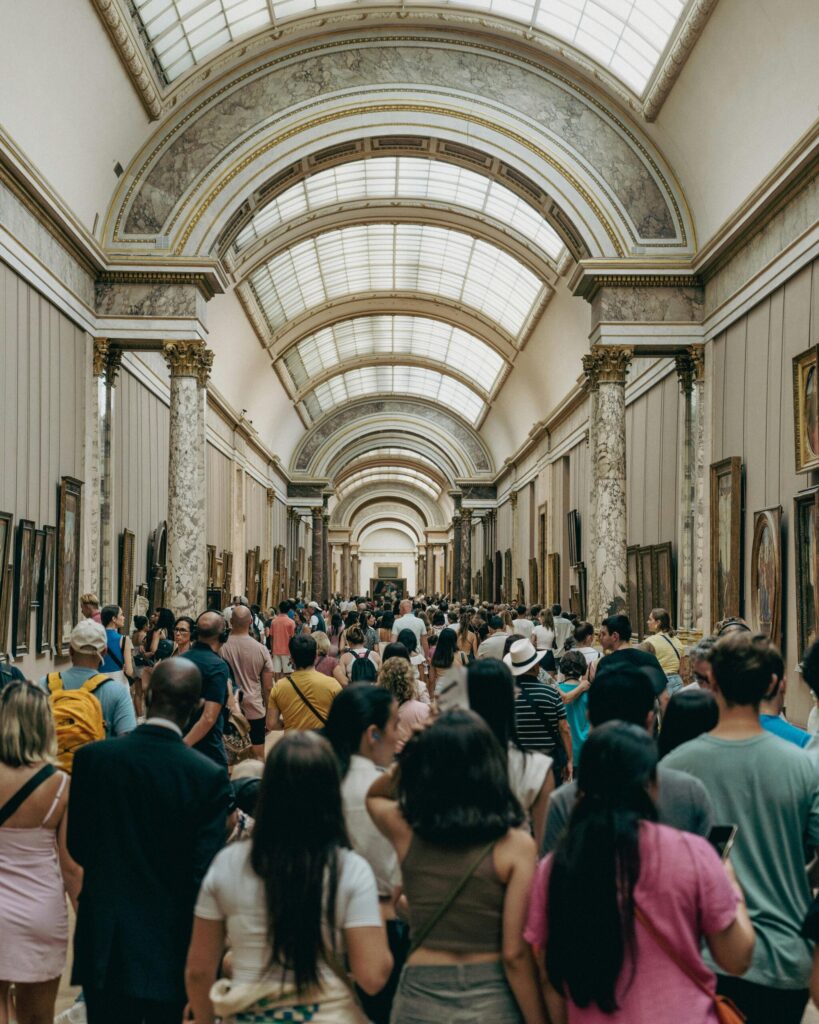
Thousands flock daily to the Louvre’s galleries – meanwhile, hackers stroll right in online.
The Louvre password scandal may have started as a security blunder, but it’s evolved into something much bigger – a parable of modern complacency.
In the digital age, cybersecurity isn’t just about firewalls and encryption keys – it’s about mindset. For every museum, brand, or influencer building a digital empire, the lesson is the same: don’t let your password be the weakest link.
Or as Twitter has so helpfully demonstrated, if you do – be prepared to become a meme.
Some of the products and services featured in this article may be from our affiliate partners, which means we may earn a small commission if you make a purchase through these links — at no extra cost to you. Our editorial team only spotlights what we genuinely love and think you will, too.
15 responses to “The Louvre’s Password Was Literally ‘Louvre’ – and the Internet Has Lost It”
-
backlink services reviews
pywkptfqp ifpxm exwgret qywk mjnfkjinmdftmmh
-
… [Trackback]
[…] Information to that Topic: themodems.com/lifestyle/the-louvres-password-was-literally-louvre-and-the-internet-has-lost-it/ […]
-
… [Trackback]
[…] There you will find 28603 additional Info on that Topic: themodems.com/lifestyle/the-louvres-password-was-literally-louvre-and-the-internet-has-lost-it/ […]
-
… [Trackback]
[…] Find More Info here to that Topic: themodems.com/lifestyle/the-louvres-password-was-literally-louvre-and-the-internet-has-lost-it/ […]
-
I love the structure of your explanation.
-
This answered all my questions.
-
… [Trackback]
[…] There you will find 29334 more Information on that Topic: themodems.com/lifestyle/the-louvres-password-was-literally-louvre-and-the-internet-has-lost-it/ […]
-
Perfectly balanced between detail and simplicity.
-
… [Trackback]
[…] Here you will find 23172 more Info on that Topic: themodems.com/lifestyle/the-louvres-password-was-literally-louvre-and-the-internet-has-lost-it/ […]
-
… [Trackback]
[…] Here you can find 12945 more Info on that Topic: themodems.com/lifestyle/the-louvres-password-was-literally-louvre-and-the-internet-has-lost-it/ […]
-
… [Trackback]
[…] Read More on on that Topic: themodems.com/lifestyle/the-louvres-password-was-literally-louvre-and-the-internet-has-lost-it/ […]
-
… [Trackback]
[…] Find More on to that Topic: themodems.com/lifestyle/the-louvres-password-was-literally-louvre-and-the-internet-has-lost-it/ […]
-
… [Trackback]
[…] Information on that Topic: themodems.com/lifestyle/the-louvres-password-was-literally-louvre-and-the-internet-has-lost-it/ […]
-
… [Trackback]
[…] Read More here on that Topic: themodems.com/lifestyle/the-louvres-password-was-literally-louvre-and-the-internet-has-lost-it/ […]
-
… [Trackback]
[…] Read More to that Topic: themodems.com/lifestyle/the-louvres-password-was-literally-louvre-and-the-internet-has-lost-it/ […]


Leave a Comment