
Welcome to the Future, Where the Dishwasher Loads Itself (Almost)…
If you’ve ever ended a 10-hour workday only to find yourself unloading the dishwasher, folding laundry, or picking up socks that aren’t even yours, you’re not alone. Women – even in 2025 – still perform the majority of domestic labour worldwide. According to the European Institute for Gender Equality, about 91 % of women with children spend at least an hour a day on housework compared to 30 % of men. In the UK, 63 % of women in mixed-sex households say they do more than their fair share of chores. Men, when asked the same, largely believe the division is equal.
Sociologists call it the second shift – the unpaid, invisible work that starts when the paid workday ends. It’s cooking, cleaning, organising, remembering birthdays, ordering groceries, wiping countertops, and managing the never-ending to-do list of modern adulthood. It’s emotional labour, domestic maintenance, and mental logistics rolled into one exhausting loop.
It’s no wonder, then, that the idea of a household robot – one that could pick up socks, tidy surfaces, and maybe even scrub the loo – sounds less like science fiction and more like salvation.

Credit: 1X Technologies
And that’s exactly what 1X Technologies, a Palo Alto-based robotics company, is promising with its new creation: the NEO robot, a humanoid household assistant arriving in homes as early as 2026. Standing five foot six and weighing just 66 pounds, NEO is marketed as soft, quiet, safe – and, crucially, helpful. It can pick things up, walk around, and (in theory) handle the mundane tasks that still, disproportionately, fall to women.
“NEO takes on the boring and mundane tasks around the house so you can focus on what matters to you,” explains 1X Technologies in a statement on its official website. But as with all things in tech, the promise of liberation comes with fine print – and a rather hefty price tag.
Related article: The Modems Home – representing the expansive community that the tech world strives to serve
Related article: Emerging Monetisation Models for Tech Creators – The Modems
The $20,000 Butler (Who Needs Wi-Fi and a Human Supervisor)
You can order a NEO right now for a fully refundable $200 deposit, and you’ll have two payment options:
- $20,000 outright (with a three-year warranty and premium support), or
- $499 per month on subscription, what 1X calls its Starter Productivity Package.
Deliveries start in the United States in 2026, with international orders to follow.

Meet NEO: soft on the outside, Silicon Valley on the inside. Credit: 1X Technologies
At first glance, the marketing copy reads like a luxury-meets-lifestyle manifesto: Automate your chores. Reclaim your time. Focus on what matters. For many working women – especially those balancing childcare, side hustles, and hybrid jobs – that line feels almost utopian.
But there’s one problem: NEO isn’t fully autonomous. Behind those soft knitted panels and polite blinking lights, there’s a human operator – somewhere across the world – remotely controlling your robot through a VR headset. Your $20,000 robotic butler is, for now, a telepresence puppet. “If we don’t have your data, we can’t make the product better,” 1X’s CEO Bernt Børnich told The Wall Street Journal.
It’s a bold admission: the robot that’s meant to give you back your time will, in fact, be watching how you live – collecting sensor data to train future models. In other words, your home is part of the experiment.
Related article: How AI Is Changing Social Media Experiences – The Modems
Related article: Digital Trust & Verification in 2025 – The Modems
The Tech Under the Hood: Redwood AI and the Rise of “Soft Robotics”
So what can NEO actually do?
At its core lies Redwood AI – 1X’s proprietary “vision-language transformer” model that fuses visual perception, spatial reasoning, and natural-language understanding. Think of it as ChatGPT with limbs.
Redwood allows NEO to:
- Navigate uneven household environments,
- Identify and grasp new, never-before-seen objects,
- Open doors, retrieve items, and even climb stairs.
Unlike many robots that separate walking from manipulation, NEO performs whole-body control: it can bend, brace, and lean like a human. Its internal design features tendon-driven actuators that mimic muscle elasticity, wrapped in a deformable 3D lattice shell for safety. The result? Movements that are slow but surprisingly lifelike – and, crucially, non-threatening.
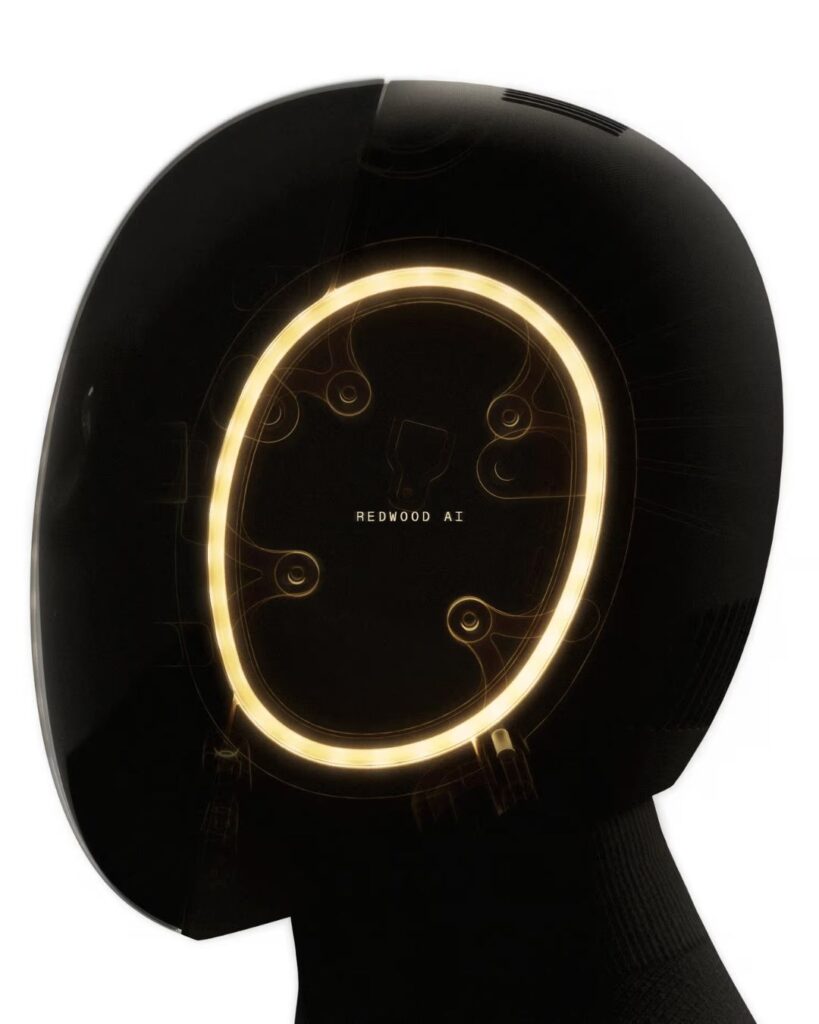
Behind every gentle face lies a powerful Redwood AI. Credit: 1X Technologies
“Redwood empowers NEO Gamma to learn from real-world experience, on top of hardware designed for compliance, safety, and resilience,” explains 1X.
1X has even branded its approach “Soft and Safe.” The company promises NEO will operate “quieter than a refrigerator,” and its emotive LED earrings change colour when a remote human operator is active – a small nod to transparency in a potentially invasive system.
Yet for all its engineering finesse, the robot remains a work-in-progress. Cooking is currently off-limits (“NEO can provide recipes or help clean up instead”), and outdoor chores are discouraged (“contact with moisture may damage your NEO”).
This is, after all, version 1.0 of the humanoid home era – a moment when robotics is still finding its footing between hype and household utility.
Related article: Vintage Tech Is the New It-Girl Status Symbol – The Modems
Related article: Pinterest Just Launched ‘Thrift Shop’ – So TikTok … – The Modems
The Feminist Subtext: Who Cleans, and Who Commands?
The irony of a $20,000 robot designed to clean is that the people most overburdened by unpaid housework are least likely to afford it. Globally, women – particularly mothers, migrant women, and those in low-paid jobs – still perform the majority of unpaid domestic labour.
The European Institute for Gender Equality notes that even employed women spend on average 2.3 hours a day on housework, compared with 1.6 hours for men. In homes with children, the gap widens further.

You answer emails, it handles the mess. The NEO robot could transform domestic labour. Credit: 1X Technologies
Sociologists call this a care economy feedback loop: when women gain paid work, they often outsource domestic chores to other (usually poorer) women, extending gendered inequality across class and geography. Robots like NEO, at least in theory, could interrupt that loop – automating tasks without exploiting human labour.
But that depends entirely on access, affordability, and design. If robots become another luxury convenience, the gender gap simply shifts from invisible domestic labour to invisible data labour – women providing the behavioural data that trains these systems for profit.
Automation doesn’t automatically make life fairer – it depends who controls the code.
The Price of Convenience – and the Hidden Labour Behind It
Even in the glossy future that 1X is selling, convenience has a cost. And not just the $20,000 upfront payment or the $499 monthly subscription. The real cost is one we’re still learning to count: our privacy, our data, and the quiet redefinition of what “work” means inside the home.
To train NEO’s Redwood AI, your home effectively becomes a testing lab. Every movement, every object, every voice command, every interaction between you and your robot contributes to a dataset that 1X can use to refine its models.
The company insists that this data is not used “to build a profile of you, nor do we sell this data,” but rather to “advance NEO’s autonomous capabilities and safety.” Users can opt out of data-sharing, but they’re also reminded that without it, “the product won’t learn.”
It’s the same logic that’s quietly governed the last decade of tech – the ‘freemium’ model of digital life. Except this time, the trade-off isn’t your search history or facial data. It’s your home itself.
Related article: AI & Digital Transformation Bottlenecks – The Modems
Related article: Digital Trust & Verification in 2025 – The Modems
When Your Robot Has a Human Handler
NEO, for all its humanoid promise, is not yet autonomous. It relies on remote operators – known as 1X Experts – who “guide” it through household tasks in real-time via VR headsets. These operators can see what the robot sees, hear your commands, and even mimic gestures through teleoperation.
The company has tried to make this as transparent as possible. When a human operator takes over, NEO’s “emotive earrings” glow a different colour. Users can schedule sessions, restrict access to certain rooms, and even mute the robot’s sensors.
But still – the idea that a stranger might see your living room, your dishes, your toddler’s toys, or your laundry pile, through a pair of robotic eyes, feels uncomfortably invasive.
1X calls it a “social contract.” In exchange for help, you agree to be observed.

When your house robot starts appreciating florals, you know it’s been will trained. Credit: 1X Technologies
This is where NEO’s “Big Sister” branding starts to feel slightly Orwellian. Børnich insists 1X isn’t “Big Brother,” but the softer label doesn’t make the surveillance any less real.
Early adopters will need to get comfortable with a stranger peeping around every square inch of their homes. For a generation already wary of Alexa listening in, that’s a lot to ask.
And yet, this is the paradox of progress: we crave help but fear intrusion. We want to be seen – but only on our own terms.
Related article: How AI Is Changing Social Media Experiences – The Modems
Related article: Asia’s Social Media Trends Are Taking Over – The Modems
From Maid to Machine: Automation and the Feminisation of Service
The home has always been a stage for invisible labour. For centuries, that labour was unpaid, undervalued, and almost entirely gendered. In the 20th century, middle-class women outsourced it to working-class women and migrant workers – an invisible global care chain that still underpins much of the economy today.
Now, as domestic robotics matures, we’re on the verge of outsourcing again – this time, to machines.
Sociologists have already identified a striking pattern: domestic robots, whether vacuum cleaners, kitchen gadgets, or humanoid helpers, are almost always marketed with women in mind. The language – “reclaim time,” “simplify your day,” “focus on what matters” – mirrors decades of advertising that positioned appliances as tools of female freedom.

The robot knows how to let guests out – and maybe let the future in. Credit: 1X Technologies
The subtext is clear: men invent; women tidy.
The irony, of course, is that those same women have always been early adopters of technology. Whether it was the washing machine in the 1950s or the smart speaker in the 2010s, women have embraced innovation not as novelty, but as necessity.
As the European Institute for Gender Equality puts it, “Housework is the most unequally shared of the three most common forms of unpaid care, the other two being childcare and long-term care for older people and people with disabilities and other chronic conditions.”
And while digital assistants and smart appliances have chipped away at that imbalance, they haven’t yet erased it. In fact, they’ve often added new layers of “digital domesticity” – programming the smart home, troubleshooting apps, managing devices. In heterosexual households, it’s still usually women who maintain the invisible system.
NEO, theoretically, could change that. If it truly works as promised, it could redistribute the physical labour of housework, allowing both partners to participate more equitably.
But here’s the rub: if it’s priced beyond reach, it risks cementing inequality instead – making domestic automation another luxury of the affluent, rather than a democratized tool of liberation.
A Brief History of Chore Liberation
This isn’t the first time we’ve been promised freedom through innovation. In the early 20th century, home appliances like the washing machine, the vacuum cleaner, and the electric iron were heralded as emancipatory inventions for women. They did make domestic work more efficient – but not necessarily easier.
As historian Ruth Cowan wrote in More Work for Mother, these technologies didn’t actually reduce women’s workload. They simply raised the standards of cleanliness. Once you could vacuum daily, you were expected to.
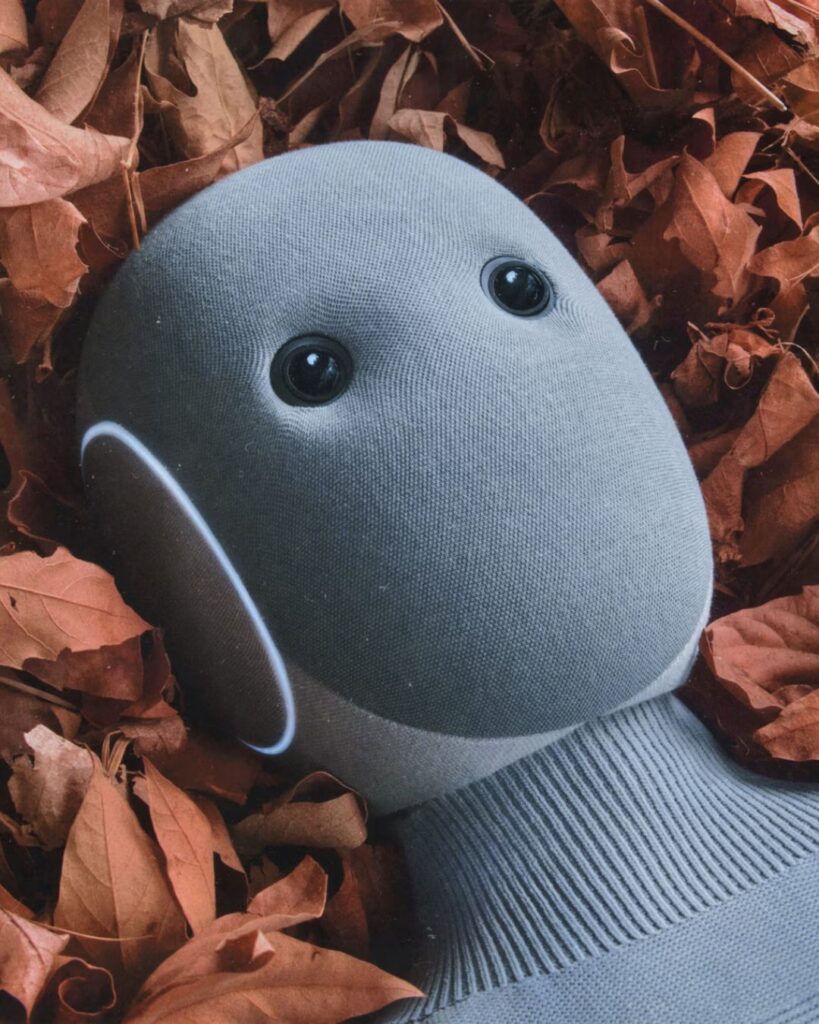
Credit: 1X Technologies
The same logic applies to the modern smart home. Convenience doesn’t always mean less work – it often means new work: updating software, maintaining subscriptions, managing automation.
As feminist technology scholar Judy Wajcman writes in Pressed for Time, “While technologies have transformed the nature of work and home life, they have not altered the gendered division of labour that structures them.”
And therein lies the challenge for NEO. The robot’s marketing speaks to liberation, but the reality may simply be a reconfiguration of domestic labour – outsourcing the execution, while women still manage the orchestration.
Related article: Pinterest Just Launched ‘Thrift Shop’ – So TikTok … – The Modems
Related article: The Top Trends Coming in 2025 According to Pinterest – The Modems
The $499 Question: Who Can Afford to Opt Out of Chores?
Let’s talk economics.
At $499 a month, NEO’s subscription plan costs more than most people’s utility bills – and nearly as much as hiring a part-time cleaner. For households earning under £60,000, that makes it a tough sell.
But that doesn’t mean the demand won’t exist. A report from Next Move Strategy Consulting estimates the “household robots” market at £11.98 billion in 2024, projected to reach £34.11 billion by 2030, driven by advances in AI, aging populations, and the rise of subscription-based “robots-as-a-service.”
1X’s business model – early access, data-driven development, monthly plans – mirrors Silicon Valley’s favourite playbook: turn tech into lifestyle infrastructure. The robot is not just a product; it’s a service, an ecosystem, a relationship.
And like all relationships, it’s built on trust.
A Feminist Lens on the Future of Work
Here’s the thing: automation isn’t gender-neutral.
The World Economic Forum reported that nearly 40% of domestic tasks could be automated within a decade – a change that would ‘disproportionately affect women,’ since they perform the majority of those tasks globally.

The minimalist home companion that might just out-style your furniture. Credit: 1X Technologies
But whether that impact is positive or negative depends entirely on who designs, owns, and benefits from these systems.
At its best, NEO could help redistribute time and reduce burnout. Imagine coming home from work to a house that’s already tidy, dinner surfaces wiped, laundry folded. That could change the mental health of millions of women. At its worst, it could deepen the data divide – collecting behavioural information from women’s daily routines to train corporate AI, with little transparency or reward.
Automation, after all, doesn’t eliminate labour; it often just moves it elsewhere.
Related article: AI & Digital Transformation Bottlenecks – The Modems
Related article: The Ethics of AI Influencers – The Modems
When the Home Becomes a Dataset
There’s a quiet irony in how home robots are pitched as tools of “privacy” – freeing you from the exposure of cleaners, babysitters, or service workers entering your home. In reality, they turn your living room into a data environment.
1X insists that users maintain full control:“Owners have to actively schedule a time for an Expert to support with their chores and accept them into their robot using voice or mobile. NEO’s emotive ear rings will change color while a 1X Expert Operator is active.”
The same technology that lets it remember where you keep your wine glasses also logs how often you open the fridge, how you move through your house, and how you speak. It’s a mirror of domestic life – one that never blinks.
We’ve been here before: smart speakers that listen “by accident,” robot vacuums that map entire homes, fridges that text when you’re low on milk. NEO is simply the next step – a moving camera, trained to tidy.
And if history is any indication, the people most impacted by this trade-off will, again, be women – because women spend the most time inside the environments these devices record.
The Gendered Future of Domestic Automation
The story of the modern home has always been a story about power – who has it, who performs it, and who gets to walk away from it. For most of history, housework has been women’s invisible contribution to the world’s GDP – unpaid, undervalued, and assumed. Now, as robotics inches its way into our living rooms, we’re being told technology can finally equalise the load.
The marketing is seductive: liberation through automation. But liberation for whom?
Because here’s the reality – while men and women may live in the same smart homes, they experience them very differently. The same AI that reads your grocery lists and optimises your lighting also perpetuates the biases of the people who built it. Smart home assistants still respond better to male voices. Fitness trackers still misread female physiology. And now, humanoid robots like NEO are learning what “help” looks like from data rooted in the old divisions of care.

Credit: 1X Technologies
The danger isn’t that these robots will become our overlords – it’s that they’ll quietly reproduce the same gendered patterns we’ve spent decades trying to unlearn.
Related article: The Ethics of AI Influencers – The Modems
Related article: At-Home Beauty Tech & the New Self-Care Economy – The Modems
Designing for the Default Woman
There’s a saying in tech: ‘Design for the default user, and you’ll reveal who you think matters.’
For decades, that default user has been male – from seatbelt testing dummies to smartphone hand sizes. The same pattern exists in robotics, where design teams remain overwhelmingly male and Western.
But the use case for NEO – the domestic environment – is distinctly feminised. As one senior engineer who wished to remain anonymous told The Modems, “Most of the time, when we’re training robots to do housework, we should be training them on the behaviours of women.”
In that sense, NEO isn’t just an assistant; it’s a mirror reflecting the gendered division of labour embedded in the data it learns from.
1X frames its mission around empathy and care, not dominance. It calls its ethos “soft robotics” and its brand archetype “Big Sister, not Big Brother.” And yet, this branding reveals something deeper: that even in 2026, technology marketed to women must promise both safety and subservience.
That promise matters – because it speaks to how women are still asked to manage not just homes, but emotions, relationships, and increasingly, technology itself.
The Unpaid Work of Managing Machines
If NEO succeeds in cleaning floors, folding laundry, or picking up toys, it may free up physical time – but not necessarily mental time. As anyone who owns a smart home ecosystem knows, automation often replaces doing the task with managing the task.
Robots, no matter how intelligent, still need scheduling, maintenance, supervision, and calibration. And who tends to manage the household systems? The same person who already manages everything else.
Sociologist Allison Daminger coined the term cognitive labour to describe the invisible management work women perform in households: anticipating needs, planning, decision-making, emotional monitoring. NEO might fold the laundry, but someone still needs to tell it when, how, and where.
That’s why feminist scholars warn that unless we consciously design automation to reduce cognitive labour – not just physical labour – it risks becoming another layer of ‘admin feminism.’
It’s the digital version of “just delegate more” – only now, you’re delegating to a $20,000 robot that needs firmware updates.
Related article: AI & Digital Transformation Bottlenecks – The Modems
Related article: Emerging Monetisation Models for Tech Creators – The Modems
The Class Divide of Automation
For the women who can afford it, robots like NEO might genuinely shift the calculus of time. For everyone else, they could simply reinforce the class divide already baked into domestic labour.
In the UK, the average part-time cleaner costs between £15–£25 per hour. A $499 monthly robot subscription sits at roughly the same price point – but without the human accountability, empathy, or nuance.
Meanwhile, for lower-income women – especially those working as cleaners, carers, or domestic aides – the rise of home robotics could mean something far more destabilising: job displacement.
Economists have warned of a “gendered automation gap,” where technologies that replace traditionally female roles (administration, domestic work, retail) advance faster than those that replace male-dominated sectors (construction, logistics). The risk isn’t just unemployment, but the erosion of one of the few income sources available to migrant women globally.
As 1X continues to refine its AI with real-world data, that tension will only grow sharper. The company claims its long-term mission is to “reshape quality of life for the elderly, for busy parents, and for use cases that scarcely cannot be imagined today.” Noble, perhaps – but who decides what quality of life means?
The answer, as always, depends on who’s doing the imagining.
“Soft Power” or Soft Surveillance?
1X’s engineers insist NEO was built with safety “at every step.” Its light weight, deformable skeleton, and tendon-driven joints are all designed to prevent accidents. Even its rounded head and fabric-wrapped limbs are intentional – a visual language of gentleness, made to soothe the anxieties of humans sharing space with machines.
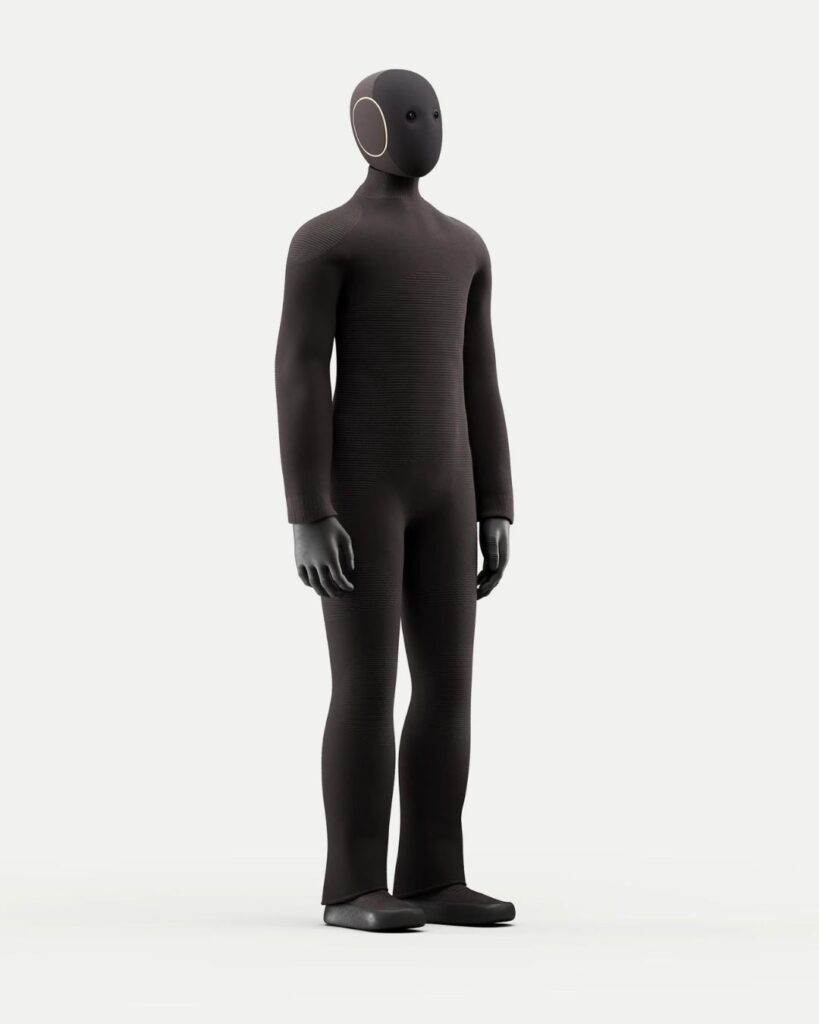
The NEO robot comes in three colourways. Credit: 1X Technologies
And that brings us back to the gendered dimension of surveillance. Women, particularly mothers, have long been the most surveilled subjects of domestic life – judged for cleanliness, order, and caregiving. The smart home, if we’re not careful, risks automating that scrutiny.
Related article: Vintage Tech Is the New It-Girl Status Symbol – The Modems
Related article: Book Lovers Can’t Get Enough Of The #SmutTok Trend – The Modems
Tech’s “Big Sister” Complex
To its credit, 1X has been unusually transparent about the human operators behind NEO. Early users must schedule sessions where a remote worker – a “1X Expert” – temporarily controls the robot via VR headset. During that period, the user’s home becomes a remote workstation.
1X says these operators are vetted, trained, and subject to strict privacy protocols. But the optics are striking: a largely female demographic outsourcing domestic labour to an unseen (likely underpaid) global workforce, many of whom may be women themselves.
The globalised digital maid has arrived – only now she’s wearing haptic gloves. This is why scholars refer to automation not as replacement but re-placement – labour doesn’t disappear, it moves. And in the case of NEO, it moves from one woman’s home to another’s headset.
Which begs the question: is this empowerment, or another iteration of invisible service?
The Hopeful Case for NEO
It’s not all doomscrolling and dystopia, though. If done ethically, NEO and its successors could meaningfully transform domestic life.
Imagine a world where elderly people live independently longer because humanoid assistants handle mobility and chores. Where working parents and mothers get an extra hour of rest. Where the cognitive load of household coordination – the “who’s-doing-what-when” that drains so many women – is finally reduced by adaptive, intelligent systems.
That future isn’t impossible. It just requires intention.
1X has already signalled a more human-centred design philosophy than many of its Silicon Valley peers. Its engineers emphasise safety, comfort, and “social acceptance” – a departure from the cold futurism of earlier robotics. If the company succeeds in creating a robot that genuinely integrates into daily life without surveillance creep, NEO could become what the washing machine once was: a symbol of progress, both technical and social.
But that’s a very big if.
The Cultural Mirror
Pop culture has always known this story before Silicon Valley did. From The Jetsons’ Rosie to Westworld’s Dolores, from Her to Apple TV’s Sunny, our fantasies about domestic robots have never really been about machines. They’ve been about us.
They reflect our desires for control, care, and companionship – and our fears of being replaced, watched, or outsmarted.
NEO, in its knitted softness and cautious smile, is simply the latest chapter in that mythology: part servant, part symbol, part experiment. It’s the machine embodiment of our most modern contradiction – craving help, fearing dependence, and outsourcing intimacy to code.
The Modems Verdict:
The NEO robot isn’t the end of housework. It’s the beginning of a new conversation about who does it, who benefits, and who gets to opt out.
For women, especially those straddling the demands of career, caregiving, and the endless mental spreadsheet of domestic life, the idea of a “helping hand” is both tempting and necessary. But if NEO really wants to serve that demographic, it must go beyond PR slogans and pretty design. It needs to confront the structural realities its existence exposes: the feminisation of labour, the commodification of care, and the ethics of data in domestic space.
Because true liberation isn’t about replacing women’s work with machines. It’s about revaluing that work – recognising that the time, thought, and energy that hold homes (and economies) together are not infinite resources to be mined for machine learning.
As we stand on the threshold of a humanoid future, perhaps the most radical act of design isn’t teaching robots to serve women – it’s building a world where women no longer have to serve everyone else first.
Until then, NEO may pick up socks, but it won’t pick up the patriarchy.
Some of the products and services featured in this article may be from our affiliate partners, which means we may earn a small commission if you make a purchase through these links — at no extra cost to you. Our editorial team only spotlights what we genuinely love and think you will, too.
12 responses to “Who Will Benefit Most From The NEO Robot? Women, Of Course – They Still Do the Most Household Labour”
-
… [Trackback]
[…] Read More here on that Topic: themodems.com/tech/neo-robot-women-household-labour/ […]
-
… [Trackback]
[…] There you will find 74835 additional Information on that Topic: themodems.com/tech/neo-robot-women-household-labour/ […]
-
… [Trackback]
[…] Read More Info here on that Topic: themodems.com/tech/neo-robot-women-household-labour/ […]
-
… [Trackback]
[…] Read More Info here on that Topic: themodems.com/tech/neo-robot-women-household-labour/ […]
-
… [Trackback]
[…] Find More Information here to that Topic: themodems.com/tech/neo-robot-women-household-labour/ […]
-
… [Trackback]
[…] Here you can find 42126 more Information to that Topic: themodems.com/tech/neo-robot-women-household-labour/ […]
-
… [Trackback]
[…] Here you can find 30581 additional Information on that Topic: themodems.com/tech/neo-robot-women-household-labour/ […]
-
… [Trackback]
[…] Info on that Topic: themodems.com/tech/neo-robot-women-household-labour/ […]
-
… [Trackback]
[…] Read More to that Topic: themodems.com/tech/neo-robot-women-household-labour/ […]
-
… [Trackback]
[…] Find More Info here on that Topic: themodems.com/tech/neo-robot-women-household-labour/ […]
-
… [Trackback]
[…] Find More Information here to that Topic: themodems.com/tech/neo-robot-women-household-labour/ […]
-
… [Trackback]
[…] Read More here on that Topic: themodems.com/tech/neo-robot-women-household-labour/ […]
Leave a Comment